
Key takeaways
- Compare the best laptops for trading forex on screen size, RAM, processor and ports for charting platforms, multiple charts and fast, reliable multitasking.
What's inside
As an Amazon Associate I earn from qualifying purchases. This post may contain affiliate links at no extra cost to you.
As an Amazon Associate we earn from qualifying purchases.
Disclosure: This article contains affiliate links, and we may earn a commission if you buy through links on this page, at no extra cost to you.

Introduction
Forex trading makes a specific set of demands on a laptop, and they are different from gaming, video editing, or general office work. A trading session usually means a charting and trading platform open all day, several currency pairs on screen at once, a browser with news and an economic calendar, a spreadsheet tracking positions, and messaging or analysis tools running alongside. None of that needs a powerful graphics card, but all of it rewards screen space, memory, a responsive processor, and a machine that stays stable for long sessions.
Screen size is the first decision. A 17.3-inch display keeps more charts visible without switching windows, and a 15.6 or 16-inch screen is the portable compromise most traders settle on. Memory is the second decision: a platform plus a browser full of tabs plus office tools adds up, and 16GB of RAM is where that combination stays smooth. A solid-state drive also keeps the platform and system responsive when markets open.
This guide compares four laptops chosen for trading-relevant specifications taken from their listings: a large-screen HP with a 17.3-inch Full HD display, a Dell with a 15.6-inch touchscreen and 16GB of memory, a Lenovo IdeaPad with a Ryzen 7 processor and a touchscreen, and an ASUS Vivobook with a 16-inch format and a larger 1TB drive. None of them is presented as a trading machine by its maker; they are suitable because of their screens, memory, processors, and ports, which is exactly how a forex trader should judge any laptop.
Quick Picks
- Best for maximum chart space: HP 17.3-inch Laptop (17-cn3399nr) — the biggest screen in this guide, with 16GB of memory and a Core i5 processor.
- Best all-round trading desk laptop: Dell Inspiron 3530 — 15.6-inch Full HD touchscreen, Core i5, 16GB of memory, and 512GB SSD.
- Best processor for heavy multitasking: Lenovo IdeaPad Slim 3 — an 8-core Ryzen 7 5825U with 16GB of memory and a 15.6-inch touchscreen.
- Best for storage and a larger format: ASUS Vivobook 16 — a 16-inch class laptop with 16GB of memory and a 1TB SSD for platform data, records, and recordings.
1. HP 17.3-inch Laptop (17-cn3399nr) — B0DWMMJS33
If your trading happens mainly at one desk, screen size is the feature you will appreciate every single session, and this HP offers the largest display in the guide. The listing describes a 17.3-inch Full HD display, which gives chart windows, watchlists, and an order panel room to sit side by side instead of stacked behind each other. For traders who follow several pairs or keep a higher timeframe chart next to an entry timeframe chart, that extra width reduces the window switching that causes mistakes during fast moves.
The hardware behind the screen is sensibly matched to trading. The listing shows an Intel Core i5-1334U processor, 16GB of RAM, a 512GB PCIe NVMe M.2 SSD, Intel Iris Xe graphics, and Windows 11 Home, in the model named 17-cn3399nr. A modern Core i5 is more than enough for charting platforms, browser-based dashboards, and spreadsheets, and 16GB of memory is the important figure: it lets the platform, a browser with news and calendar tabs, and your tracking spreadsheet stay open together through a full session without the machine slowing down as the day goes on.
The trade-off is portability. A 17.3-inch laptop is a desk machine that can be moved, rather than one you will happily carry every day, and traders who split time between home, office, and travel may prefer one of the 15.6-inch models below, possibly with a monitor at their main desk. As a fixed trading station that can also close and move rooms when needed, though, this is the most chart-friendly configuration here.
Key specifications from the listing
- Processor: Intel Core i5-1334U
- Memory: 16GB RAM
- Storage: 512GB PCIe NVMe M.2 SSD
- Display: 17.3-inch Full HD
- Graphics: Intel Iris Xe Graphics
- Operating system: Windows 11 Home
- Model: HP Laptop 17-cn3399nr
Pros
- Largest screen in this guide for multiple charts side by side
- 16GB of memory suits a platform plus browser and spreadsheets together
- Fast NVMe SSD keeps the platform and system responsive
- Core i5 performance comfortably covers charting and analysis tools
Cons
- Large chassis is best kept at a main desk rather than carried daily
- Integrated graphics only, which is fine for charts but not for gaming
- Traders wanting touch input should look at the Dell or Lenovo below
2. Dell Inspiron 3530 — B09NP61C3J
The Inspiron 3530 is the balanced option for traders who want a proper trading screen without moving up to a 17-inch chassis. Its listing headline describes a 15.6-inch Full HD touchscreen display at 1920 x 1080, an Intel Core i5-1335U processor, 16GB of DDR4 RAM, a 512GB SSD, Intel Iris Xe graphics, and Windows 11 Home, in Carbon Black, with the model number i3530-5067BLK-PUS.
For trading, that specification reads well in every area that matters. The Full HD panel is sharp enough for small chart text and indicator labels. The touchscreen is a genuine convenience when you are reviewing charts away from a mouse, zooming a chart or tapping through watchlists on a sofa or in a hotel room, even if most order entry will still happen with a keyboard and mouse at a desk. The 16GB of memory supports the usual trading stack of platform, browser, calendar, and spreadsheet, and the 512GB SSD leaves comfortable room for platform data, exported trade records, and screen recordings of sessions you review later.
This is also the easiest model here to picture in a small multi-screen desk setup, because a 15.6-inch laptop pairs naturally with a single external monitor: charts on the monitor, platform and execution on the laptop screen, or the other way around. Check the exact port configuration on the listing before planning a specific monitor setup, and remember that a laptop screen this size is a compromise — bigger and clearer than a compact travel laptop, smaller than the HP above if you want everything on one panel.
Key specifications from the listing
- Processor: Intel Core i5-1335U
- Memory: 16GB DDR4 RAM
- Storage: 512GB SSD
- Display: 15.6-inch Full HD touchscreen, 1920 x 1080
- Graphics: Intel Iris Xe Graphics
- Operating system: Windows 11 Home
- Model: i3530-5067BLK-PUS, Carbon Black
Pros
- Full HD touchscreen is flexible for chart review away from a desk
- 16GB of memory and 512GB SSD fit a full trading workspace
- 15.6-inch size balances chart space with portability
- Core i5 processor handles platforms and multitasking smoothly
Cons
- Smaller chart area than the 17.3-inch HP for many simultaneous charts
- Touchscreen adds little during mouse-and-keyboard order entry
- Serious multi-monitor traders should confirm ports on the listing first
3. Lenovo IdeaPad Slim 3 (15ABR8) — B0F2MLQPL3
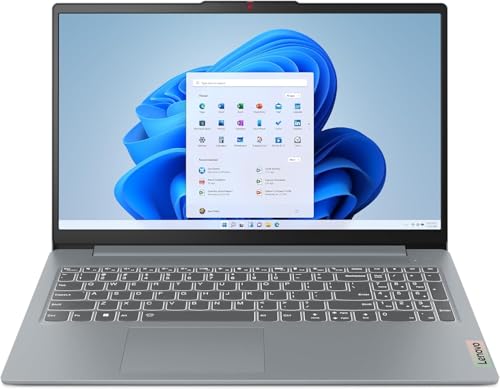
The IdeaPad Slim 3 is the multitasking pick. Traders who run more than charts — for example a platform, a second browser-based dashboard, screen-sharing for a trading community, recording software, and a spreadsheet — put more load on the processor and memory than a chart-only user, and this Lenovo brings the strongest processor specification in the guide.
The listing describes a 15.6-inch Full HD touchscreen at 1920 x 1080, an AMD Ryzen 7 5825U processor with 8 cores, AMD Radeon integrated graphics, 16GB of DDR4 memory, and a 512GB SSD, with Wi-Fi 6, Bluetooth 5.2, a 720p HD camera, and Windows 11 Home. The 8-core Ryzen 7 gives headroom for everything running at once during volatile sessions, when a platform is redrawing several charts, news is breaking, and you are switching between analysis and execution. The camera and wireless specifications also suit traders who join video calls or mentoring sessions from the same machine they trade on.
In a slim chassis, this is the model for a trader who moves around: home desk in the morning, a different room or location later, without giving up a full-size screen or 16GB of memory. As with the Dell, the integrated graphics are entirely adequate for two-dimensional charts and video, because forex platforms do not need gaming graphics; what they need is exactly what this listing emphasises, namely cores, memory, and a clear Full HD panel.
Key specifications from the listing
- Processor: AMD Ryzen 7 5825U, 8 cores
- Memory: 16GB DDR4
- Storage: 512GB SSD
- Display: 15.6-inch Full HD touchscreen, 1920 x 1080
- Graphics: AMD Radeon integrated graphics
- Connectivity: Wi-Fi 6, Bluetooth 5.2
- Camera: 720p HD
- Operating system: Windows 11 Home
Pros
- 8-core Ryzen 7 gives the most multitasking headroom in this guide
- 16GB of memory supports platform, dashboards, and recording together
- Touchscreen Full HD display suits chart review on the move
- Wi-Fi 6 and a built-in camera fit calls and community sessions
Cons
- 15.6-inch screen still benefits from a monitor for many-chart layouts
- Slim design prioritises portability over a large-desk feel
- Integrated graphics are for charts and video, not 3D applications
4. ASUS Vivobook 16 — B0DGL3Q2N5
The Vivobook 16 sits between the portable 15.6-inch models and the big HP: a 16-inch class screen that gives charts a little more breathing room, in a laptop still designed to be carried. For traders who want one machine for both a main desk and occasional travel, and who do not want to rely on an external monitor everywhere they go, that in-between size is often the most practical answer.
Listing records for this configuration show 16GB of DDR4 memory, arranged as 8GB on-board plus an 8GB SO-DIMM, and a 1TB NVMe PCIe 3.0 SSD. The memory matches the 16GB level recommended throughout this guide, so a trading platform, browser, and office tools can stay open together. The 1TB drive is the standout specification: it is double the storage of the other models here, which matters more than traders first expect. Charting platforms accumulate data, traders export years of statements and journals, and many record their sessions for review; a larger SSD means that archive lives on the machine instead of being constantly moved off it.
Choose this model if storage and a slightly larger panel matter more to you than touch input or the maximum screen size of the HP. Because Vivobook 16 configurations vary, confirm the processor and display details on the listing for this exact ASIN before buying, and match them against the guidance in the buying section below: a modern mid-range processor, 16GB of memory, and a Full HD or better panel are the combination that keeps a trading workspace feeling responsive.
Key specifications from the listing records
- Memory: 16GB DDR4, 8GB on-board plus 8GB SO-DIMM
- Storage: 1TB NVMe PCIe 3.0 SSD
- Display: 16-inch class display
- Type: ASUS Vivobook 16 laptop
Pros
- 1TB SSD gives the most room for platform data, journals, and recordings
- 16GB of memory fits a full multi-application trading workspace
- 16-inch format adds chart space over 15.6-inch models
- Still portable enough for trading away from a main desk
Cons
- Configurations vary, so verify processor and display on the listing
- Smaller screen than the 17.3-inch HP for single-screen trading
- No touchscreen is highlighted in the records for this configuration
How to Choose a Laptop for Forex Trading
Put screen size and resolution first. Charts are visual work. A 15.6-inch Full HD screen is the practical minimum for a main trading laptop, a 16-inch panel adds a little more room, and a 17.3-inch Full HD display is best if the laptop stays at one desk and you trade several pairs at once. Whatever the size, Full HD resolution at 1920 x 1080 or higher keeps price action, indicators, and small platform text legible during long sessions.
Buy 16GB of memory for a real trading workspace. A single charting platform can run on less, but traders do not run a single application. Platform, browser with news and an economic calendar, spreadsheet journal, and communication tools together are the real workload, and 16GB is where that stack stays responsive through a volatile session. Every model in this guide meets that level, deliberately.
Do not overspend on graphics, do not underspend on the processor. Forex platforms draw two-dimensional charts, so integrated graphics such as Intel Iris Xe or AMD Radeon integrated graphics are sufficient, as the listings above show. Spend attention instead on a modern mid-range processor — a recent Core i5 or a Ryzen 5 or Ryzen 7 — which keeps chart redraws, platform calculations, and multitasking smooth when several charts update at once.
Plan your monitor setup before you buy. Many traders eventually add one or two external monitors. If that is your plan, a 15.6-inch laptop plus a monitor can beat a larger laptop on total screen space, but only if the ports support your setup, so check the listing for the exact model, consider whether you need HDMI or USB-C display output, and factor in a hub if you also connect a keyboard, mouse, and drives.
Treat stability and connectivity as trading features. A wired Ethernet connection, where a model provides it, or a stable Wi-Fi 6 connection reduces one source of stress during news releases. An SSD rather than a hard drive keeps the system and platform quick to open and recover. Battery life matters less at a desk, but a machine that survives a power interruption long enough to manage open positions calmly is worth valuing if outages are a risk where you trade.
Keep the trading laptop’s job focused. A laptop used for live trading should stay lean: the platform, your journal, and trusted tools, with updates and heavy downloads kept outside market hours. Whichever model you choose, set it up, test your platform and broker connection on it thoroughly in demo mode, and only then trade live — the hardware guidance here supports your workflow, but no laptop specification can substitute for a tested setup and disciplined risk management.
FAQs
How much RAM does a forex trading laptop need?
For a platform on its own, less can work, but for a realistic workspace with a trading platform, browser, calendar, and spreadsheet open together, 16GB is the recommended level. All four laptops in this guide have 16GB, because that is where multitasking stays smooth during busy sessions.
Is a 17-inch laptop better for trading than a 15.6-inch one?
At a fixed desk, usually yes: the HP in this guide shows how a 17.3-inch Full HD screen fits more charts side by side. If you travel or plan to use an external monitor, a 15.6 or 16-inch model is more portable and can offer just as much total screen space once a monitor is connected.
Do I need a dedicated graphics card for forex charts?
No. Charting platforms are two-dimensional, and the integrated Intel Iris Xe and AMD Radeon graphics in these listings are sufficient for charts, video, and everyday analysis. Processor performance, memory, and screen quality matter far more for trading.
Can one laptop run multiple monitors for trading?
Often yes, but it depends on the exact ports and graphics support of the specific model. Check the listing for the exact ASIN you are buying, confirm the display outputs available, and test your full monitor setup with your trading platform before relying on it for live sessions.
What matters more for trading, the processor or the SSD?
Both play different roles. The processor keeps charts redrawing and applications responsive when markets move quickly, while an SSD keeps the system, platform, and your records loading quickly. A modern Core i5 or Ryzen processor paired with an SSD, as in every pick here, covers both needs for typical retail forex platforms.
Conclusion
The best laptop for trading forex is the one whose screen, memory, and processor match how you actually trade. If you trade from one desk and watch several pairs at once, the HP 17.3-inch model gives you the most chart space, backed by 16GB of memory and a Core i5 processor. The Dell Inspiron 3530 is the balanced all-rounder, with a Full HD touchscreen and the same 16GB and 512GB foundation in a more portable size. The Lenovo IdeaPad Slim 3 adds the strongest multitasking processor here for traders who record, stream, and analyse alongside their charts. The ASUS Vivobook 16 answers with a larger format and double the storage for journals, data, and session recordings. Whichever you choose, set it up and test it in demo mode first, keep the workspace focused, and let the hardware do its quiet job: showing you the market clearly, without getting in the way.
Related guides
More from Amazon
Programs that pair well with the guide above. Offers and eligibility are set by Amazon and may change.
Free shipping on eligible items, Prime Video and more. Eligible new members can start with a free trial.
Start a Prime free trialAd-free music streaming. Eligible new subscribers can start with a free trial.
Try Music Unlimited freeA Prime membership for ages 18-24 with a trial period. Eligibility is set by Amazon.
See Prime for Young AdultsAudiobooks and podcasts to listen to on the go. Eligible new members can start with a free trial.
Try Audible freeAs an Amazon Associate we earn from qualifying purchases.










Write Your Review
No reviews yet. Be the first to share your experience!