
Key takeaways
- Find the best laptops for Windows 11 for work, study and home use, with clear guidance on processors, memory, storage, displays and S mode.
What's inside
As an Amazon Associate I earn from qualifying purchases. This post may contain affiliate links at no extra cost to you.
As an Amazon Associate we earn from qualifying purchases.
Disclosure: This article contains affiliate links. If you buy through a link on this page, the site may earn a commission at no extra cost to you.
Introduction
Choosing among the best laptops for Windows 11 is not really about finding a machine that can install the operating system. Almost every new Windows laptop sold today ships with Windows 11 already installed. The real question is whether the hardware underneath it is balanced enough that Windows 11 feels smooth in daily use, stays responsive after updates, and still has room for your files, browser tabs and work applications a year or two from now.
Windows 11 asks more of a laptop than older versions did. It expects a modern processor, solid state storage, enough memory for multitasking, and security hardware working quietly in the background. A laptop that only just meets the minimum requirements can feel slow when you open a video call, a large spreadsheet and a dozen browser tabs at the same time. A laptop with a sensible processor, at least eight gigabytes of memory and a proper solid state drive feels completely different, even when the screen size and the general shape look similar on a product page.
This guide focuses on everyday use cases: office work, study, writing, email, web research, video calls, streaming and light photo organisation. None of the machines below is presented as a gaming laptop or a workstation for heavy video editing. Each one is a standard clamshell laptop that runs Windows 11 according to its listing, from a recognised brand, with specifications taken from its product page. Where a model ships with Windows 11 Home in S mode, that is stated clearly, because S mode changes which applications you can install until you switch out of it.
Quick picks
- Best balanced everyday choice: Lenovo IdeaPad Slim 3 — a fifteen inch Full HD screen, a Ryzen 5 processor, eight gigabytes of memory and a larger solid state drive make it the most rounded option here for mixed work and study.
- Best for a smaller desk and carrying every day: HP 14 Laptop, model 14-ep0299nr — a fourteen inch screen and a lighter body, with an eight core Intel processor and generous storage for documents and coursework.
- Best large screen for home and family use: Acer Aspire 3 A315-24P-R7VH — a fifteen inch Full HD display, a Ryzen 3 processor, Wi-Fi 6 and a full set of everyday ports in a straightforward home laptop.
- Best simple big screen option: ASUS Vivobook 15, model M515DA-WS33 — a fifteen inch Full HD anti-glare display, a full size keyboard with number keys, and a light chassis for writing, browsing and calls.
1. Lenovo IdeaPad Slim 3

The Lenovo IdeaPad Slim 3 is the most balanced machine in this roundup for someone who wants one laptop to cover work, study and home life without specialising in any single task. Its listing describes it as an everyday, lightweight laptop running Windows 11 Home, built around an AMD Ryzen 5 7520U processor. That processor has the headroom to handle document work, browser research, video calls and streaming at the same time, which is exactly the workload Windows 11 is usually asked to handle in a home or a small office.
Storage is a two hundred fifty six gigabyte solid state drive, which gives more breathing room for applications, downloads and a growing photo library than the smallest drives in this class. Eight gigabytes of memory is the sensible baseline for Windows 11 multitasking, and it is what this configuration provides.
Key specifications
- Operating system: Windows 11 Home
- Processor: AMD Ryzen 5 7520U
- Memory: 8GB LPDDR5
- Storage: 256GB solid state drive, NVMe interface
- Display: 15.6 inch Full HD, 1920 by 1080, anti-glare
- Graphics: AMD Radeon 610M integrated graphics
- Connectivity: Wi-Fi 6, Bluetooth, USB, HDMI
- Extras: webcam, fingerprint recognition listed for this configuration
Pros
- Strongest all-round processor in this guide for everyday multitasking
- Larger solid state drive gives more room for files and applications
- Full HD screen suits split screen document and browser work
- Windows Hello fingerprint sign-in is convenient for daily use
Cons
- Memory is fixed at eight gigabytes, so heavy multitaskers should plan around that
- Larger screen makes it less compact in a small bag than a fourteen inch model
- Integrated graphics are for everyday tasks, not demanding games
Check the current listing and configuration on Amazon: Lenovo IdeaPad Slim 3 on Amazon
2. HP 14 Laptop, model 14-ep0299nr

The HP 14 is the pick for people who move around with their laptop. Its fourteen inch screen and lighter body make it easier to carry between rooms, classes or a shared workspace, while the specification underneath remains serious enough for full Windows 11 use. The listing gives an Intel Core i3-N305 processor. Despite the Core i3 name, this chip has eight cores and reaches higher clock speeds than the low power chips found in many small laptops, so it handles browser work, documents, calls and streaming without the hesitant feel of older entry level machines.
Storage is a two hundred fifty six gigabyte PCIe NVMe solid state drive, which helps Windows 11 start quickly and helps applications open without long pauses. The title of the listing describes eight gigabytes of memory, which matches the sensible baseline for this operating system. The display is a fourteen inch HD panel at 1366 by 768. That resolution is lower than Full HD, so text and images are less sharp than on the fifteen inch Full HD models in this guide, but it is still workable for documents, email, learning platforms and video.
Key specifications
- Operating system: Windows 11 Home in S mode, listed as Windows 11 Home
- Processor: Intel Core i3-N305, eight cores, up to 3.8 GHz
- Memory: 8GB as described in the listing title
- Storage: 256GB PCIe NVMe M.2 solid state drive
- Display: 14 inch HD, 1366 by 768
- Graphics: Intel UHD Graphics, integrated
- Connectivity: Wi-Fi 6 standard wireless listed as 802.11ax, Bluetooth
- Weight: about 3.09 pounds in the product information
Pros
- Compact fourteen inch size is easy to carry every day
- Eight core processor is capable for study and office workloads
- Generous solid state storage for a smaller laptop
- Light body suits students and hybrid workers
Cons
- HD display is less sharp than the Full HD screens in this guide
- S mode needs a deliberate decision if you rely on desktop programs outside the Microsoft Store
- Smaller screen is less comfortable for long split screen sessions
Check the current listing and configuration on Amazon: HP 14 Laptop on Amazon
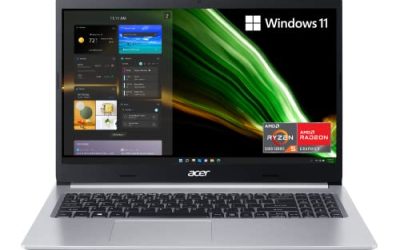
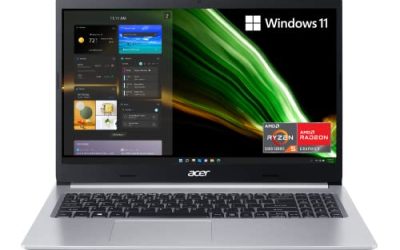
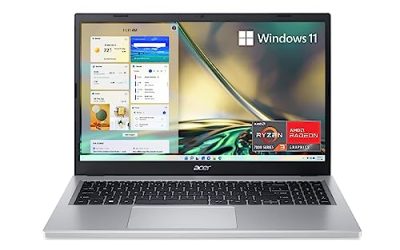
3. Acer Aspire 3 A315-24P-R7VH

The Acer Aspire 3 A315-24P-R7VH is a straightforward fifteen inch home laptop. Its listing describes a slim laptop with a Full HD display, an AMD Ryzen 3 7320U quad core processor, AMD Radeon graphics, eight gigabytes of LPDDR5 memory, a one hundred twenty eight gigabyte NVMe solid state drive, Wi-Fi 6 and Windows 11 Home. The product description also explains that the machine arrives with Windows 11 Home in S mode, so the same S mode guidance applies here: check the applications you depend on before you decide whether to stay in S mode or switch out of it.
The main compromise is storage. One hundred twenty eight gigabytes fills faster than people expect once Windows, applications, downloads and photos are counted. This model suits someone who works mainly in cloud storage or who keeps a tidy local library. If you store large video files or many games locally, choose a configuration with a larger drive instead.
Key specifications
- Operating system: Windows 11 Home, described as Windows 11 Home in S mode in the product text
- Processor: AMD Ryzen 3 7320U, quad core, up to 4.1 GHz
- Memory: 8GB LPDDR5
- Storage: 128GB NVMe solid state drive
- Display: 15.6 inch Full HD, 1920 by 1080
- Graphics: AMD Radeon Graphics, integrated
- Connectivity: Wi-Fi 6, Bluetooth, HDMI, USB
- Weight: 3.92 pounds in the product information
Pros
- Full HD display is clear for work and streaming
- Modern Ryzen processor and fast memory type for everyday tasks
- Wi-Fi 6 suits current home and office networks
- Sensible choice for cloud based work and study
Cons
- Smallest storage capacity in this guide
- S mode needs checking against the programs you plan to install
- Integrated graphics limit demanding creative and gaming workloads
Check the current listing and configuration on Amazon: Acer Aspire 3 on Amazon
4. ASUS Vivobook 15, model M515DA-WS33

The ASUS Vivobook 15 M515DA-WS33 focuses on the basics that matter at a desk: a large screen, a full size keyboard and a light body for a fifteen inch laptop. The listing describes a 15.6 inch Full HD laptop with an AMD Ryzen 3 3250U processor, eight gigabytes of memory in the title and product description, a one hundred twenty eight gigabyte solid state drive, and Windows 11 Home in S mode. The colour listed is Transparent Silver.
The Ryzen 3 3250U is an older and simpler processor than the chips in the Lenovo and Acer above. It is suitable for browsing, documents, email, calls and streaming, but it is not the choice for heavy multitasking or demanding software. The port selection listed includes USB-A, USB-C, HDMI, an audio jack and a microSD card reader, which is useful if you move photos from a camera or expand your file access with a card. Wi-Fi is listed as Wi-Fi 5 rather than Wi-Fi 6, another sign that this model is about simple everyday service rather than the newest standards.
Key specifications
- Operating system: Windows 11 Home in S mode, listed as Windows 11 Home
- Processor: AMD Ryzen 3 3250U, up to 3.5 GHz
- Memory: 8GB as described in the listing title and product description
- Storage: 128GB solid state drive
- Display: 15.6 inch Full HD, 1920 by 1080, anti-glare
- Graphics: AMD Radeon Graphics, integrated
- Connectivity: Wi-Fi 5, Bluetooth, USB-A, USB-C, HDMI, microSD card reader
- Weight: about 3.9 pounds in the manufacturer text
Pros
- Large Full HD screen and full size keyboard with number keys
- Light for a fifteen inch laptop and easy to move around the home
- Card reader and HDMI are practical for photos and second screens
- Clear fit for writing, browsing, study and calls
Cons
- Older processor is best kept to everyday workloads
- Storage is limited for large local libraries
- Wi-Fi 5 is an older wireless standard than Wi-Fi 6
- S mode applies, so check your required applications first
Check the current listing and configuration on Amazon: ASUS Vivobook 15 on Amazon
How to choose a laptop for Windows 11
Start with the processor and memory together, not separately. Windows 11 itself runs in the background all the time, along with security tools, cloud sync and updates. A modern Ryzen 3, Ryzen 5 or Intel Core i3 processor paired with eight gigabytes of memory is a realistic baseline for smooth everyday use. Four gigabytes can work for very light tasks, but it leaves little room when a video call, a browser and a document editor are open together. If you regularly keep many applications open, treat memory as a priority rather than an afterthought.
Understand S mode before you buy. Several everyday Windows 11 laptops ship in S mode. In that mode you can install applications only from the Microsoft Store, which can be simpler and more controlled for a family machine or a student laptop. If you need a specific desktop program, a different browser as your main tool, or specialist work software, you may need to switch out of S mode. That switch is free in normal Microsoft guidance but it is one-way, so make the decision based on the software you truly need, not on habit.
Choose the screen for the work you do most. Fourteen inches is easier to carry and fits smaller desks and bags. Fifteen inch screens are better for split screen work, spreadsheets and long reading sessions. Full HD resolution gives sharper text than HD at these sizes, which reduces eye strain over a long day. An anti-glare finish is worth having if your desk faces a window.
Check ports against your existing equipment. HDMI saves trouble if you use an external monitor or present on a television. USB-C is increasingly useful for docks and accessories, while USB-A still matters for older drives, receivers and printers. A card reader is a small feature that becomes important if you move photos regularly. Also confirm the webcam and microphone arrangement if you join calls often, and look at the listed weight honestly if the laptop will travel daily.
FAQs
Do all of the laptops in this guide run Windows 11?
Yes. Each model above was chosen because its listing states Windows 11, either as Windows 11 Home or as Windows 11 Home in S mode. No Chromebook and no macOS machine is included in this guide, because neither runs Windows 11 as its operating system.
What does Windows 11 Home in S mode mean for daily use?
It means the laptop is set to install applications from the Microsoft Store only. That can be enough for browsing, Microsoft 365 web tools, streaming and many common applications. If you need traditional desktop software from another source, you would need to switch out of S mode, and that change cannot be reversed on the same installation.
How much memory do I need for Windows 11?
For most buyers, eight gigabytes is the practical starting point. It allows Windows 11, a browser, documents and a video call to run together comfortably. Very light users can manage with less, but the machine will feel restricted sooner, especially as applications grow over time.
Is a Full HD screen worth choosing over an HD screen?
At fourteen and fifteen inches, Full HD usually gives noticeably sharper text and more usable space for side by side windows. HD screens remain usable for email, documents and video, and they are common on smaller or simpler models, but Full HD is the better choice for long work sessions if the rest of the specification fits your needs.
Can these laptops handle work and study software?
They are aimed at everyday work and study: documents, spreadsheets, presentations, learning platforms, email, research and video calls. For specialist software, check that program’s own system requirements, especially if it needs more memory, a stronger graphics chip or a specific Windows edition.
Should I choose fourteen inches or fifteen inches?
Choose fourteen inches if you carry the laptop often, work in tight spaces or use smaller bags. Choose fifteen inches if the laptop mostly stays at home or at one desk, or if you value a larger keyboard area, number keys on some models, and easier split screen work.
Conclusion
The best laptops for Windows 11 are not the ones with the longest feature list. They are the ones with a balanced specification that matches your routine: a capable modern processor, enough memory for your multitasking, a solid state drive with room for your files, a screen you can read comfortably, and an operating system setup you understand before you buy.
Choose the Lenovo IdeaPad Slim 3 for the most rounded mix of performance and storage. Choose the HP 14 if portability matters most and you accept an HD screen. Choose the Acer Aspire 3 for a clear Full HD home laptop with modern wireless, especially if your files live mainly in the cloud. Choose the ASUS Vivobook 15 if you want a large screen and a full keyboard for simple, steady everyday tasks. Whichever model you pick, confirm the exact configuration and operating system line on the Amazon listing before ordering, because laptop families often share a name across several different specifications.
Related guides
- Best Laptops to Play Roblox: From Budget Integrated Graphics to Dedicated GPUs
- Best Laptops for Zoom Teaching: Clear Video, Reliable Audio and All-Day Class Power
- Best Laptops for Video Editing and Music Production: Power, Screen and Storage
- Best Laptops for Network Engineers: Ethernet, RAM for Labs and Ports That Matter
More from Amazon
Programs that pair well with the guide above. Offers and eligibility are set by Amazon and may change.
Free shipping on eligible items, Prime Video and more. Eligible new members can start with a free trial.
Start a Prime free trialAd-free music streaming. Eligible new subscribers can start with a free trial.
Try Music Unlimited freeA Prime membership for ages 18-24 with a trial period. Eligibility is set by Amazon.
See Prime for Young AdultsAudiobooks and podcasts to listen to on the go. Eligible new members can start with a free trial.
Try Audible freeAs an Amazon Associate we earn from qualifying purchases.
Write Your Review
No reviews yet. Be the first to share your experience!