
Key takeaways
- Compare the best 16:10 laptops with 1920 x 1200 and 2880 x 1800 displays, for more vertical space for documents, spreadsheets, code and reading.
As an Amazon Associate I earn from qualifying purchases. This post may contain affiliate links at no extra cost to you.
As an Amazon Associate we earn from qualifying purchases.
A 16:10 laptop gives you more vertical screen than the familiar 16:9 shape, and that extra height is exactly where documents, web pages, code and spreadsheets live. Instead of a wider strip of screen, you get more lines of text, more rows in a table and more of a page visible before you scroll. On a 14 inch machine that can be the difference between a cramped editor and a comfortable one, and on a 16 inch machine it turns long reading and editing sessions into noticeably calmer work.
Every laptop in this guide has a display resolution that matches the 16:10 shape in its listing: 1920 x 1200 on the larger mainstream models, and 2880 x 1800 on the sharper 14 inch models. Machines with 1920 x 1080 or other 16:9 panels were deliberately left out, even when they were otherwise strong laptops, because the whole point of this search is the taller panel. Check the resolution line on any listing you compare against these picks, since the same laptop family is often sold with both shapes of screen.
The four picks cover the main ways people use a taller display. There is a straightforward 16 inch ASUS for everyday work, an efficient Snapdragon 16 inch model for long days, a high resolution OLED ASUS for dense text, and a Lenovo with a 2.8K touch panel for people who want the sharpest 14 inch option. Read the quick picks, then confirm the exact resolution and configuration on the listing you choose.
Disclosure: This article contains affiliate links. If you buy through a link on this page, the site may earn a commission at no extra cost to you.
Quick picks
- Best straightforward 16:10 pick: ASUS Vivobook 16 (M1605YA-EH54), with 1920 x 1200 stated as 16:10 in its listing.
- Best efficient large screen: ASUS Vivobook 16 with Snapdragon X, pairing the same taller resolution with 16GB of memory.
- Best sharp OLED option: ASUS Zenbook 14 OLED, with a 2880 x 1800 touch display and a Core i9 configuration.
- Best Lenovo alternative: Lenovo IdeaPad Slim 7 14, with a 2880 x 1800 touchscreen, 16GB of memory and a 1TB SSD.
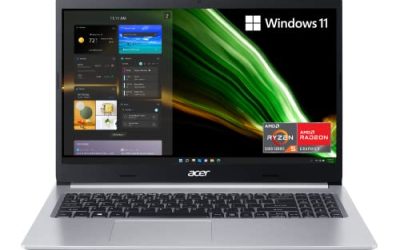
ASUS Vivobook 16 (M1605YA-EH54)

The Vivobook 16 in this listing is the clearest expression of the 16:10 idea at a mainstream specification. Its 16 inch WUXGA display runs at 1920 x 1200 with a 16:10 aspect ratio named directly in the listing, framed by slim NanoEdge bezels. The AMD Ryzen 5 5625U, 8GB of memory and a 512GB SSD suit documents, browsing, study and office work, and a fingerprint sensor adds quick sign in. Choose this one if you want the taller screen benefit in a large, simple, everyday laptop.
Key specs
- Display: 16 inch WUXGA, 1920 x 1200, 16:10 aspect ratio
- Processor: AMD Ryzen 5 5625U
- Graphics: AMD Radeon integrated graphics
- Memory: 8GB
- Storage: 512GB SSD
- Security: Fingerprint sensor in the listing
- Operating system: Windows 11 Home
- Colour: Indie Black
Pros
- 16:10 resolution is stated directly in the listing title and description
- Large screen shows long documents with less scrolling
- 512GB SSD is a practical size for everyday files
Cons
- 8GB memory is the limit for heavier multitasking
- Integrated graphics suit productivity rather than gaming
ASUS Vivobook 16 with Snapdragon X (X1607QA-DS54)

This second Vivobook 16 keeps the same 1920 x 1200, 16:10 screen idea and changes the platform underneath it. The listed configuration uses a Qualcomm Snapdragon X processor with Adreno graphics, 16GB of memory and a 512GB SSD, and the listing describes a 300 nit display at a 60Hz refresh rate. It suits readers, writers and browser based workers who want the taller panel, more memory headroom and an efficient processor in a 16 inch chassis they can carry between rooms.
Key specs
- Display: 16 inch WUXGA, 1920 x 1200, 16:10, 60Hz
- Processor: Qualcomm Snapdragon X
- Graphics: Qualcomm Adreno integrated graphics
- Memory: 16GB
- Storage: 512GB SSD
- Operating system: Windows 11
- Colour: Quiet Blue
Pros
- Taller 1920 x 1200 panel with double the memory of the Ryzen configuration
- Efficient Snapdragon platform for long reading and writing days
- Large screen still works well for side by side documents
Cons
- Check compatibility for specialist Windows software on this platform
- 60Hz panel is for productivity, not fast paced gaming
ASUS Zenbook 14 OLED (i9-13900H configuration)

At 2880 x 1800, the Zenbook 14 OLED has the sharpest 16:10 panel in this guide. The listing describes a 14 inch Lumina OLED touch display, an Intel Core i9-13900H, 16GB of memory and a 1TB SSD, which together make it the pick for editors, analysts and developers who stare at dense text all day. The taller shape plus the high resolution means more lines stay visible at scaling settings that remain easy on the eyes, and Thunderbolt connectivity in the listing supports a single cable desk setup.
Key specs
- Display: 14 inch OLED touch, 2880 x 1800, 16:10 shape
- Processor: Intel Core i9-13900H
- Memory: 16GB
- Storage: 1TB SSD
- Operating system: Windows 11 Pro
- Security: Fingerprint reader in the listing
- Connectivity: Thunderbolt ports in the listing
Pros
- 2880 x 1800 resolution keeps dense text exceptionally crisp
- Strong processor and 1TB storage for demanding projects
- Compact 14 inch size carries the 16:10 benefit anywhere
Cons
- More performance than a light documents workload requires
- Take sensible OLED care with static toolbars and windows
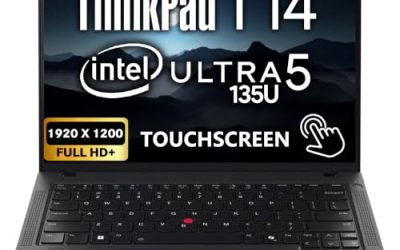
Lenovo IdeaPad Slim 7 14 (82SX0002US)

Lenovo lists this IdeaPad Slim 7 configuration with a 14 inch 2.8K touchscreen at 2880 x 1800, an Intel Core i7 processor, 16GB of memory and a 1TB SSD in Cloud Gray. That is the same tall, sharp panel formula as the Zenbook in a Lenovo design, which makes it a strong alternative for people who prefer this keyboard and chassis style. The touch layer suits annotation and presentation work, and the resolution keeps spreadsheets, documents and code readable without constant zooming.
Key specs
- Display: 14 inch touchscreen, 2880 x 1800
- Processor: Intel Core i7, 12th generation platform in the listing
- Memory: 16GB
- Storage: 1TB SSD
- Colour: Cloud Gray
- Operating system: Windows
Pros
- 2880 x 1800 touch panel is tall and very sharp
- 16GB memory and 1TB SSD suit large project libraries
- Good alternative shape and style to the other 14 inch pick
Cons
- Confirm the full processor model name on the configuration you select
- Touch and high resolution are wasted if your work is mostly an external monitor
How to choose a 16:10 laptop
Verify the shape from the resolution, not from the marketing name. Divide the width by the height: 1920 x 1200, 2560 x 1600 and 2880 x 1800 all give the 16:10 ratio, while 1920 x 1080 and 2560 x 1440 do not. Listings for one laptop family often mix both shapes across configurations, so read the resolution line of the exact configuration in your cart rather than trusting the family name or a photo of the machine.
Then choose the resolution for your screen size and work. At 16 inches, 1920 x 1200 is comfortable for documents and browsing with modest scaling. At 14 inches, 2880 x 1800 is noticeably sharper and lets you use finer scaling for code, design and dense tables, at the cost of more processing for the panel. Panel type matters too: OLED gives deep contrast for reading and media, while IPS panels are a steady choice for bright rooms and long static documents. Finally, balance the screen against the rest of the machine, because memory, storage and ports decide whether a beautiful taller display sits in a laptop you actually enjoy using every day.
Scaling settings are where a 16:10 laptop either shines or frustrates, so spend ten minutes setting them up. On a 2880 x 1800 panel, a scaling level that keeps text at a comfortable size still leaves far more visible lines than a basic Full HD screen, which is the real productivity gain. On a 1920 x 1200 panel, default scaling is usually right immediately. Pair the taller screen with window snapping habits, two documents side by side or a full height editor, and the shape starts paying for itself within the first working day.
Remember that an external monitor does not have to match. Many owners use the taller laptop panel for documents and chat while a larger monitor carries the main project, and the mismatch in shapes causes no problem in daily use. What matters is that the built in panel, the one you rely on away from the desk, has the height your reading and editing work needs.
Frequently asked questions
Is 16:10 really better than 16:9 for work?
For vertical content, yes. Documents, web pages, email, code and spreadsheets all scroll vertically, so the extra height shows more lines and rows before you scroll. Video is usually made in a wider shape, so a 16:10 screen may show bars above and below films, which is the main trade off to accept.
Which resolutions count as 16:10?
Common 16:10 resolutions include 1920 x 1200, 2560 x 1600 and 2880 x 1800. If a listing shows 1920 x 1080, 2560 x 1440 or 3840 x 2160, that panel has a different, wider shape and does not belong in a 16:10 shortlist, however good the rest of the laptop may be.
Does a 16:10 screen make a laptop bigger?
Not necessarily. A 14 inch 16:10 laptop is usually a little taller and a little less wide than a similar 16:9 machine, and many people find the footprint easy to live with. Check the listed dimensions if your bag or desk tray is a tight fit, especially with 16 inch models.
Should I choose OLED or IPS in a 16:10 laptop?
Choose OLED for contrast, colour and sharp text in controlled light, and IPS for a bright room or a workflow full of static windows left open for hours. Both appear in this guide at 16:10 resolutions, so decide by your room and habits rather than by the aspect ratio alone.
Conclusion
Choose the Vivobook 16 with the Ryzen processor for the simplest route to a taller screen, or its Snapdragon sibling if you want more memory and an efficient platform in the same size. Pick the Zenbook 14 OLED or the IdeaPad Slim 7 if sharpness matters most and your work is dense text at a desk or on the move. In every case, read the resolution line on the exact configuration before ordering, because 1920 x 1200 and 2880 x 1800 are what make these laptops 16:10, and that single check protects you from ordering a same named model with a wider, shorter panel.
Related guides
- Best Laptops to Play Roblox: From Budget Integrated Graphics to Dedicated GPUs
- Best Laptops for Zoom Teaching: Clear Video, Reliable Audio and All-Day Class Power
- Best Laptops for Video Editing and Music Production: Power, Screen and Storage
- Best Laptops for Network Engineers: Ethernet, RAM for Labs and Ports That Matter
More from Amazon
Programs that pair well with the guide above. Offers and eligibility are set by Amazon and may change.
Free shipping on eligible items, Prime Video and more. Eligible new members can start with a free trial.
Start a Prime free trialAd-free music streaming. Eligible new subscribers can start with a free trial.
Try Music Unlimited freeA Prime membership for ages 18-24 with a trial period. Eligibility is set by Amazon.
See Prime for Young AdultsAudiobooks and podcasts to listen to on the go. Eligible new members can start with a free trial.
Try Audible freeAs an Amazon Associate we earn from qualifying purchases.

Write Your Review
No reviews yet. Be the first to share your experience!