
Key takeaways
- Laptops for Minecraft chosen on listing specs: discrete RTX and Radeon graphics for shaders and modpacks, 16GB memory, fast SSDs and high-refresh screens.
What's inside
As an Amazon Associate I earn from qualifying purchases. This post may contain affiliate links at no extra cost to you.
Minecraft looks simple and is not. Vanilla play is gentle, but the game most people actually want: Java Edition with a modpack, or Bedrock with pretty lighting, or a shader pack that turns water into glass, asks real things of a laptop. The decision is which version of Minecraft you play. That answer decides whether integrated graphics suffice or a discrete card earns its place, and how much memory your worlds will consume.
This guide is for players and parents buying for players, covering school-age laptop buyers through adult hobbyists with modded servers. The picks were chosen from their Amazon listing specifications: graphics hardware and its dedicated memory, system memory, storage and screen refresh rate. No frame-rate claims are made, because listings do not provide them; the reasoning matches hardware classes to Minecraft editions and modding ambitions instead.
Quick Picks
As an Amazon Associate we earn from qualifying purchases
| Product | Best for | Key spec from title |
|---|---|---|
| Lenovo LOQ 15 (Ryzen 7 170) | Discrete RTX graphics for shaders and modpacks | Ryzen 7 170, RTX 4050, 144Hz display |
| HP Victus 15 (RX 6550M) | A 144Hz screen and 1TB for big world libraries | Ryzen 5 7535HS, RX 6550M, 144Hz, 1TB SSD |
| Acer Nitro 5 AN515-45-R92M | RTX 3060 headroom for heavier mod lists | Ryzen 7 5800H, RTX 3060, 16GB RAM |
| Lenovo IdeaPad Slim 3 (Ryzen 7, Touch) | Integrated graphics for vanilla and light play | Ryzen 7 5825U, 16GB RAM, 512GB SSD, touchscreen |
How to Choose
Decide your Minecraft: vanilla, modded or shaders
Vanilla Minecraft and Bedrock run on modest hardware, and the integrated-graphics IdeaPad here covers that honestly. Java modpacks raise the stakes: large packs load hundreds of mods and want both a discrete card and memory headroom. Shader packs are the most demanding of all and are the real reason to buy RTX graphics. Name your version of the game first, then buy the hardware class it needs, rather than paying for shaders you will never enable.
Graphics hardware is the dividing line
Three picks here carry discrete graphics with dedicated memory: the RTX 4050 in the LOQ, the Radeon RX 6550M in the Victus and the RTX 3060 in the Nitro. Dedicated memory matters because textures, shaders and rendered distance stop competing with system RAM. The IdeaPad’s integrated Radeon graphics share system memory, which is fine for standard play at modest settings. Check the exact graphics line on the listing, because one model name often spans integrated and discrete variants.
Memory feeds modpacks and multitasking
Minecraft itself is not huge, but a modded Java instance plus a browser of guides, a voice chat and the operating system adds up. Sixteen gigabytes, which every pick here provides, is the comfortable level for modded play and keeps vanilla play effortless. It also future-proofs the laptop for the rest of its life as a school or work machine. Avoid dropping below 16GB if modpacks are even a possibility in the next few years.
Storage and screens complete the experience
Worlds, backups, modpacks and several editions of the game accumulate quickly, so the Victus’s 1TB SSD is genuinely useful, while 512GB models need occasional tidying. Screens matter too: the 144Hz panels listed on the LOQ, Victus and Nitro make motion smoother in every game, not just Minecraft. Finally, confirm the Windows edition on the listing, since Java Edition needs a standard Windows installation rather than a restricted mode.
The 4 Best Options
Lenovo LOQ 15 (Ryzen 7 170)

The LOQ is the modded-Minecraft machine in this guide. Its listing specifies a Ryzen 7 170 eight-core processor, an RTX 4050 with 6GB of dedicated GDDR6 memory, 16GB of DDR5 RAM and a 512GB SSD, behind a 144Hz Full HD IPS screen. That combination is aimed squarely at Java with modpacks and at shader packs, which are exactly the workloads that punish lesser hardware. It doubles as a strong school and general gaming laptop, which makes it the easiest recommendation for a player whose ambitions are growing.
Specs
- 15.6-inch Full HD IPS display, 144Hz
- AMD Ryzen 7 170 eight-core processor
- NVIDIA GeForce RTX 4050 graphics with 6GB GDDR6
- 16GB DDR5 memory
- 512GB PCIe SSD storage
- Wi-Fi 6, HDMI and USB-C ports as listed
- Backlit keyboard
- Windows 11
Best for: Players who want modpacks and shaders, not just vanilla.
Watch out for: The 512GB SSD fills with several large modpacks and world backups; keep an archive habit or an external drive for old worlds.
HP Victus 15 (RX 6550M)

The Victus brings a different balance: a Ryzen 5 7535HS, a Radeon RX 6550M discrete card, 16GB of DDR5 memory and a full 1TB SSD, with a 144Hz screen. The storage is the headline for Minecraft hoarders, holding many worlds, packs and recordings without deletion anxiety, and the discrete graphics cover modded play and lighter shader use. It suits the player who keeps everything and plays a bit of everything else too, since the hardware is a general gaming specification.
Specs
- 15.6-inch Full HD display, 144Hz
- AMD Ryzen 5 7535HS processor
- AMD Radeon RX 6550M graphics
- 16GB DDR5 memory
- 1TB SSD storage
- Backlit keyboard
- Windows 11 Home
Best for: Players with big world libraries who also play other games.
Watch out for: The RX 6550M is a step below the RTX cards here for the most demanding shader packs; vanilla and modded play are its home ground.
Acer Nitro 5 AN515-45-R92M

The Nitro 5 is the older but muscular option: an eight-core Ryzen 7 5800H, an RTX 3060 with 6GB of GDDR6 memory, 16GB of RAM and a 512GB NVMe SSD, with a 144Hz IPS display. That graphics card gives shader packs and heavy mod lists real headroom, and the processor keeps chunk generation and background apps moving. It suits the committed Java player who knows mods are the point. As a slightly older platform, its value depends on the exact listing configuration, so read it carefully.
Specs
- 15.6-inch Full HD IPS display, 144Hz
- AMD Ryzen 7 5800H eight-core processor
- NVIDIA GeForce RTX 3060 laptop graphics with 6GB GDDR6
- 16GB DDR4 memory
- 512GB NVMe SSD storage
- Wi-Fi 6 and RGB backlit keyboard
Best for: Committed Java players running heavy mod lists and shaders.
Watch out for: Confirm the exact variant’s memory and storage on the listing, because the Nitro 5 name covers many configurations across years.
Lenovo IdeaPad Slim 3 (Ryzen 7, Touch)
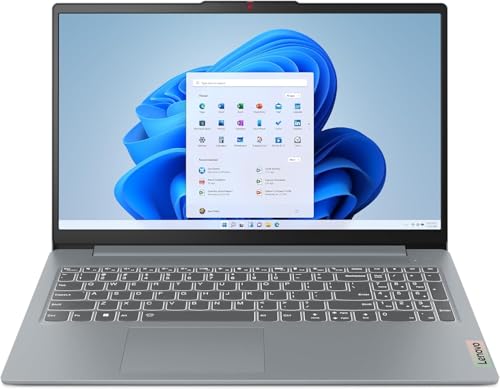
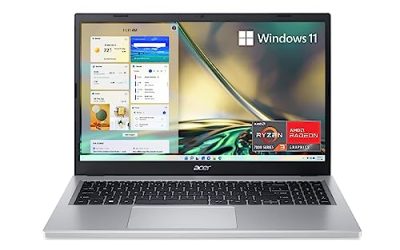
The IdeaPad is the honest vanilla option. Its Ryzen 7 5825U with integrated Radeon graphics, 16GB of memory and a 512GB SSD handles standard Minecraft and Bedrock smoothly at sensible settings, and the touchscreen and big screen make it a fine school laptop the rest of the day. It is not a shader machine, and this guide will not dress it up as one. For a younger player or a family buying one laptop for homework first and Minecraft second, it is the balanced spend.
Specs
- 15.6-inch Full HD touchscreen display
- AMD Ryzen 7 5825U eight-core processor
- AMD Radeon graphics
- 16GB DDR4 memory
- 512GB SSD storage
- Wi-Fi 6 and Bluetooth 5.2
- 720p HD camera
- Windows 11 Home
Best for: Vanilla and Bedrock players, and families prioritising school use.
Watch out for: Integrated graphics share system memory and limit shader ambitions; if modpacks are likely within a year, step up to the LOQ.
Which One Fits Your Situation
You play Java with modpacks
The LOQ is your pick: RTX 4050 graphics with dedicated memory, 16GB of RAM and a fast processor cover large packs, and the 144Hz screen keeps everything feeling responsive. It is the configuration here that will not need apologising for when the mod list grows.
You keep every world you have ever made
Choose the Victus for its 1TB SSD. Worlds, backups, screenshots and recordings accumulate silently, and storage is the limit hoarders actually hit. Its discrete Radeon graphics cover modded play and lighter shaders along the way.
Shaders are the whole point
The Nitro 5’s RTX 3060 and the LOQ’s RTX 4050 are your two candidates; the Nitro offers the stronger older card, the LOQ the newer platform. Either gives shaders dedicated graphics memory, which is the requirement that integrated graphics cannot meet.
It is a school laptop that also plays Minecraft
The IdeaPad balances both lives: 16GB of memory and a 512GB SSD for school, integrated graphics that handle vanilla and Bedrock play properly. It is the family-rational choice when gaming is the second job, not the first.
Common Mistakes
- Buying integrated graphics for a player whose real goal is shader packs, then discovering the setting that matters most will not run well.
- Dropping to 8GB of memory even though modpacks, voice chat and a browser run beside the game.
- Ignoring storage until worlds, packs and recordings fill a small SSD and deletions become arguments.
- Assuming every configuration under one model name has the same graphics card, when listings vary widely.
- Forgetting that Java Edition needs a full Windows installation, so check the operating system details on the listing.
Frequently Asked Questions
Can integrated graphics run Minecraft?
Yes, for vanilla Minecraft and Bedrock at sensible settings, as the IdeaPad here demonstrates with its integrated Radeon graphics and 16GB of memory. The limits appear with shader packs and very large modpacks, which is where the discrete RTX and Radeon cards in this guide take over.
How much RAM does Minecraft need on a laptop?
For vanilla play, the 16GB provided by every pick here is more than comfortable alongside the operating system and a browser. Modpacks are the hungry case: large Java packs can claim much of a machine’s memory, so 16GB is the sensible minimum for modded ambitions.
Java or Bedrock: does the edition change the laptop I need?
Bedrock is the lighter edition and runs well on modest hardware. Java is the modding edition, and its modpacks and shaders drive the need for discrete graphics and memory headroom. Decide which edition you will actually play before choosing between the IdeaPad and the discrete-graphics picks.
What should I verify on the listing before buying?
The graphics card and its dedicated memory, the system memory size, the SSD capacity and the Windows edition, all for the exact variant. Gaming laptop names cover many configurations, and Minecraft performance depends on those four lines more than on the brand or the keyboard lighting.
Related guides
- Best Laptops to Play Roblox: From Budget Integrated Graphics to Dedicated GPUs
- Best Laptops for Zoom Teaching: Clear Video, Reliable Audio and All-Day Class Power
- Best Laptops for Video Editing and Music Production: Power, Screen and Storage
- Best Laptops for Network Engineers: Ethernet, RAM for Labs and Ports That Matter
More from Amazon
Programs that pair well with the guide above. Offers and eligibility are set by Amazon and may change.
Free shipping on eligible items, Prime Video and more. Eligible new members can start with a free trial.
Start a Prime free trialAd-free music streaming. Eligible new subscribers can start with a free trial.
Try Music Unlimited freeA Prime membership for ages 18-24 with a trial period. Eligibility is set by Amazon.
See Prime for Young AdultsAudiobooks and podcasts to listen to on the go. Eligible new members can start with a free trial.
Try Audible freeAs an Amazon Associate we earn from qualifying purchases.
Write Your Review
No reviews yet. Be the first to share your experience!