
Key takeaways
- Laptops for biology students picked for lab-day portability, readable screens for papers and data, dependable memory and storage for images, datasets and coursework.
What's inside
As an Amazon Associate I earn from qualifying purchases. This post may contain affiliate links at no extra cost to you.
A biology degree asks a laptop to do two different jobs. In lectures and the library it is a reading and writing tool that must survive a full day away from a socket. In labs and field courses it becomes a data tool, holding microscope images, spreadsheets of results and statistics software. The real decision is balancing weight and screen quality against enough memory and storage for four years of accumulating files.
This guide is for incoming biology majors and current students replacing a machine mid-degree. It favours portable laptops with clear screens and at least 256GB of storage, with two 16GB options for students who keep reference managers, data tools and browsers open together. All specifications are taken from the Amazon listings for the exact models named, so you can verify each line on the product page. The four picks deliberately span two operating systems and three screen sizes, because a field ecologist and a molecular biologist will weigh these machines differently, and the situations section below separates those cases.
Quick Picks
As an Amazon Associate we earn from qualifying purchases
| Product | Best for | Key spec from title |
|---|---|---|
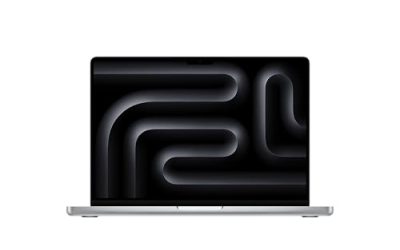
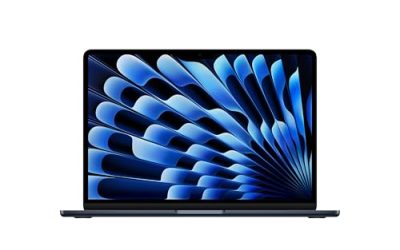
| Apple MacBook Air 13-inch (M3) | All-day carrying and a sharp screen for papers | Apple M3 chip, 16GB unified memory, 256GB SSD |
| Lenovo IdeaPad Slim 3 (Ryzen 7, Touch) | 16GB memory and touch for data-heavy coursework | Ryzen 7 5825U, 16GB RAM, 512GB SSD, touchscreen |
| ASUS Zenbook 14 OLED (Ryzen 5) | An OLED screen for long reading sessions | Ryzen 5 7530U, OLED touchscreen, 256GB SSD |
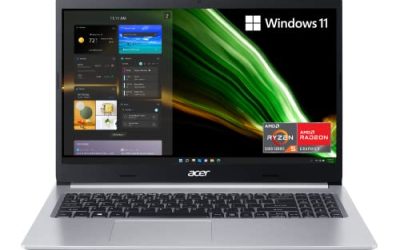
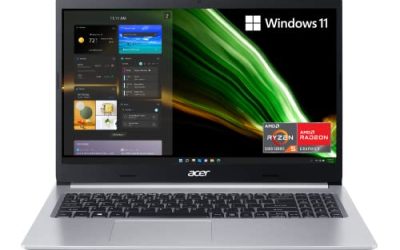
| Acer Aspire 5 A515-45-R3SU | A larger screen and 512GB for home-based study | Ryzen 7 5700U, 8GB RAM, 512GB SSD |
How to Choose
Weight decides whether you actually carry it
A biology timetable moves between lectures, labs and field sites, and a laptop left in a dorm room helps nobody. The MacBook Air in this guide is built around a thin 13.6-inch design, while the 15.6-inch Windows picks trade carry weight for screen space. Think honestly about your campus: if you walk between buildings all day, the smaller machines earn their keep; if the laptop lives on a desk, the bigger screens are kinder for data work.
Screens are for papers, plates and photographs
You will read hundreds of PDF papers and inspect photographs of specimens, gels and microscope slides. A high-quality panel with accurate colour makes that work less tiring and more reliable. The Zenbook’s OLED touchscreen and the MacBook’s Liquid Retina display are the standouts here. Whatever you choose, avoid settling for a dull, low-resolution screen, because four years of reading on it is a genuine quality-of-degree issue.
Memory and storage grow with your degree
First-year work is documents and slides; by third year you may add statistics packages, image analysis and a reference library of thousands of PDFs. Sixteen gigabytes of memory, as in the IdeaPad and MacBook picks, keeps those tools open together. Storage fills with images faster than students expect, so 512GB is comfortable, while 256GB models need a tidy cloud or external backup habit from the first semester.
Battery and ports shape lab practicality
Lab benches rarely offer spare sockets where you want them, so a laptop that lasts a teaching day matters more than raw speed. Check the battery claims on each listing and treat them as best-case figures. Ports matter too: USB for microscopes and drives, HDMI for presenting group work. The Windows picks here offer conventional port sets, while the MacBook’s minimalist design may need an adapter for older lab kit. A laptop that dies during a three-hour practical costs you data and concentration, so treat endurance as an academic feature rather than a convenience, and carry the charger only when the timetable truly demands it.
The 4 Best Options
Apple MacBook Air 13-inch (M3)

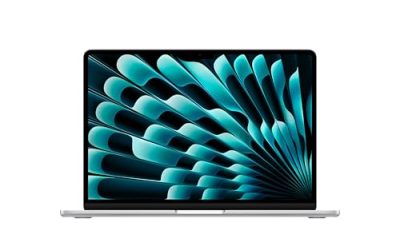
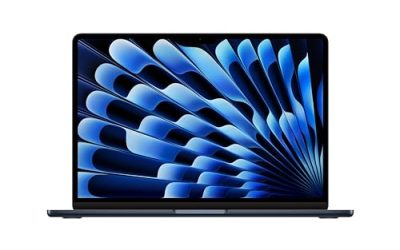
The MacBook Air suits the biology student who is always moving. The listing specifies the M3 chip with 16GB of unified memory and a 256GB SSD, plus a 13.6-inch Liquid Retina display that makes journal articles and specimen photographs crisp and readable. The backlit keyboard helps in dim lecture halls, and Touch ID speeds up the constant locking and unlocking of a shared campus life. It is the carry-everywhere option for students whose data work is mostly documents, spreadsheets and browser-based tools.
Specs
- Apple M3 chip
- 13.6-inch Liquid Retina display
- 16GB unified memory
- 256GB SSD storage
- Backlit keyboard and Touch ID
- Silver finish, model MC8H4LL/A as listed
Best for: Students walking between lectures, labs and library all day.
Watch out for: Storage is 256GB and not expandable internally, so set up cloud or external backup for photo-heavy coursework from the start.
Lenovo IdeaPad Slim 3 (Ryzen 7, Touch)

This IdeaPad is the data-handler of the group. Its eight-core Ryzen 7, 16GB of memory and 512GB SSD give statistics software, spreadsheets and a reference manager room to run together, and the touchscreen is handy for annotating diagrams and papers. The 15.6-inch screen shows wide data tables without endless scrolling. It suits biology students whose modules lean quantitative: ecology datasets, genetics exercises and lab reports with many embedded images. The 720p camera covers seminars and supervisor meetings.
Specs
- 15.6-inch Full HD touchscreen display
- AMD Ryzen 7 5825U eight-core processor
- AMD Radeon graphics
- 16GB DDR4 memory
- 512GB SSD storage
- Wi-Fi 6 and Bluetooth 5.2
- 720p HD camera
- Windows 11 Home
Best for: Students with data-heavy modules who multitask across several tools.
Watch out for: The larger body is less pleasant to carry across campus all day; a padded backpack is a sensible companion purchase.
ASUS Zenbook 14 OLED (Ryzen 5)

The Zenbook 14 OLED is built around its screen. The OLED touchscreen renders photographs of specimens and stained slides with deep contrast, which helps when you are comparing images for a practical write-up. The Ryzen 5 processor and 8GB of memory cover documents, browsing and light data work, and the slim design slips into a bag beside lab notebooks. It fits the student who reads and writes constantly and wants the display to be the best part of the machine.
Specs
- 14-inch OLED touchscreen display
- AMD Ryzen 5 7530U processor
- 8GB memory
- 256GB SSD storage
- Ultra-slim lightweight design as listed
- Windows 11 Home, model UM3402YA-WS51T
Best for: Reading-heavy students who value display quality and portability.
Watch out for: Memory is 8GB and storage 256GB, so heavy multitasking and large local image libraries will test its limits by the later years.
Acer Aspire 5 A515-45-R3SU

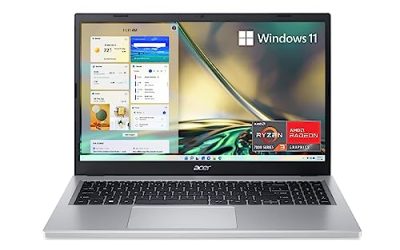
The Aspire 5 in this configuration offers an eight-core Ryzen 7 and a 512GB SSD behind a 15.6-inch Full HD IPS screen, which is a practical desk-based study setup. There is room for a growing library of papers and images, and the processor handles statistics coursework without fuss. The backlit keyboard suits late-night report writing. Choose it if your study happens mostly at home or in a hall of residence and the laptop only occasionally travels to campus.
Specs
- 15.6-inch Full HD IPS display
- AMD Ryzen 7 5700U octa-core mobile processor
- AMD Radeon graphics
- 8GB DDR4 memory
- 512GB NVMe SSD storage
- Wi-Fi 6 and backlit keyboard
- Windows 10 Home as listed
Best for: Desk-based students who want storage and screen space over portability.
Watch out for: The listing specifies Windows 10 Home on this configuration, so check the operating system line and upgrade path on the product page before ordering.
Which One Fits Your Situation
You are on your feet between labs and lectures
Take the MacBook Air. Its slim 13.6-inch design, 16GB of memory and sharp Liquid Retina screen are made for a bag that never gets unpacked for long, and it still handles documents, data tools and video calls without strain.
Your course is heavy on statistics and data
The IdeaPad Slim 3 with 16GB of memory and a 512GB SSD is your pick. Ecology and genetics datasets, reference managers and browsers stay open together, and the big touchscreen helps when you are marking up figures for lab reports.
You read papers for hours every day
Choose the Zenbook 14 OLED. The display is the point: long reading sessions and image inspection are easier on a high-contrast OLED panel, and the slim body keeps it portable between library and home.
You study mostly from your room
The Aspire 5 gives you the large screen and the joint-largest storage here for the least fuss. It is the home-base option for students whose field trips are occasional and whose desk is where the degree really happens.
Common Mistakes
- Buying the lightest laptop available, then discovering 256GB fills with microscope images and videos by second year.
- Choosing 8GB of memory for a degree that will add statistics and image tools on top of everyday apps.
- Ignoring screen quality even though the degree involves hours of reading papers and inspecting photographs.
- Forgetting to check what your university’s lab software requires, including whether key tools are Windows-only.
- Leaving backups until a lost or failed laptop takes a semester of lab data with it.
Frequently Asked Questions
Do biology majors need a powerful laptop?
Most biology coursework is documents, spreadsheets, statistics and image viewing rather than heavy computing, so a modern mid-range processor is plenty. The picks here prioritise memory, storage and screen quality. If your programme adds bioinformatics or programming modules, favour the 16GB models in this guide.
Mac or Windows for a biology degree?
Both work for the core tools: office apps, browsers, reference managers and common statistics packages exist for each. Some university lab software is Windows-only, so check your department’s guidance. The MacBook Air here suits macOS users; the three Windows picks cover everyone else.
How much storage does a biology student need?
Papers and documents are small, but photographs, videos and datasets accumulate quickly. A 512GB drive, as in the IdeaPad and Aspire picks, is comfortable for a full degree. On a 256GB model, pair the laptop with cloud storage or an external drive from the first term.
Is a touchscreen useful for biology coursework?
It helps for annotating diagrams, marking up papers and presenting group work, and two picks here include touchscreens. It is a convenience rather than a requirement. Prioritise memory, storage and screen quality first, then treat touch as a bonus if the configuration otherwise fits.
Related guides
- Best Laptops to Play Roblox: From Budget Integrated Graphics to Dedicated GPUs
- Best Laptops for Zoom Teaching: Clear Video, Reliable Audio and All-Day Class Power
- Best Laptops for Video Editing and Music Production: Power, Screen and Storage
- Best Laptops for Network Engineers: Ethernet, RAM for Labs and Ports That Matter
More from Amazon
Programs that pair well with the guide above. Offers and eligibility are set by Amazon and may change.
Free shipping on eligible items, Prime Video and more. Eligible new members can start with a free trial.
Start a Prime free trialAd-free music streaming. Eligible new subscribers can start with a free trial.
Try Music Unlimited freeA Prime membership for ages 18-24 with a trial period. Eligibility is set by Amazon.
See Prime for Young AdultsAudiobooks and podcasts to listen to on the go. Eligible new members can start with a free trial.
Try Audible freeAs an Amazon Associate we earn from qualifying purchases.
Write Your Review
No reviews yet. Be the first to share your experience!