
Key takeaways
- Compare laptops for authors on keyboard feel, battery life and screen comfort, with specs and ASINs taken from Amazon US listings.
What's inside
As an Amazon Associate I earn from qualifying purchases. This post may contain affiliate links at no extra cost to you.
Writing a book is mostly a keyboard decision. The processor matters far less than whether the keys stay comfortable at hour three, whether the battery survives a full drafting session away from an outlet, and whether the screen stays easy on the eyes through long revisions. Authors also live in documents, notes and browser tabs, so steady everyday performance beats headline speed.
This guide is for novelists, nonfiction writers, journalists and bloggers choosing a primary writing machine. Some need the lightest possible bag companion, others a larger screen for edits and research side by side. Every model below was picked from its Amazon product title and listing details, with the keyboard, memory, storage and display figures quoted exactly as the listing states them.
Quick Picks
As an Amazon Associate we earn from qualifying purchases.
| Product | Best for | Key spec from title |
|---|---|---|
| Apple MacBook Air 13 (M3) | Cafe drafting and travel writing days | M3 chip, 16GB unified memory, 256GB SSD, Touch ID |
| ASUS Zenbook 14 OLED (Ultra 5) | Writers who edit on a rich OLED screen | Core Ultra 5 125H, 14-inch OLED touch, 512GB SSD |
| Lenovo IdeaPad Slim 3 (Ryzen 7) | Long manuscripts plus research-heavy nonfiction | Ryzen 7 5825U 8-core, 16GB RAM, 512GB SSD, touchscreen |
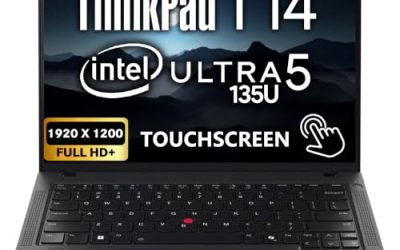
| Lenovo ThinkPad T14 Gen 6 | Professional writers who need a serviceable workhorse | Intel Ultra 5 225U, 16GB DDR5, 5MP webcam, 2x Thunderbolt 4 |
How to Choose
Start with the keyboard, not the chip
A writer touches the keyboard more than any other part, so key travel, backlighting and layout decide daily comfort. Backlit keys matter for evening drafting sessions, and a full-size layout with a sensible arrow-key cluster saves constant small annoyances during revision. Listings that name a backlit keyboard, such as the MacBook Air and the ThinkPad T14 Gen 6, are safer bets than models that stay silent on the subject. If you write in Scrivener or Word for six hours at a stretch, treat keyboard details as the first filter and the processor as the second.
Battery life is a writing feature
Drafts happen in libraries, trains, gardens and spare corners where outlets are taken. A machine that needs its charger by lunch changes where and how you work, so favour efficient processors and modest screen sizes when you write away from a desk. The MacBook Air pairs its M3 chip with a fanless 13.6-inch design, while larger 15.6-inch Windows models trade some endurance for screen space. Check the listing for the exact configuration, because battery expectations change with brighter, larger displays and stronger chips.
Pick a screen your eyes can live with
Manuscript pages are bright, text-dense and unforgiving of dim or low-resolution panels. A 1920-pixel-wide screen is the practical floor for editing, and higher-resolution OLED or Liquid Retina panels render text edges more cleanly during long proofreading passes. The Zenbook 14 OLED and the MacBook Air both push resolution well past basic Full HD. Also weigh anti-glare behaviour: a glossy panel looks rich in a dark study but can mirror windows in a bright kitchen, which is where many writers actually end up working.
Storage and memory for a book-sized life
Drafts themselves are tiny files, but a writing laptop accumulates research PDFs, audio interviews, photo references and years of backups. A 256GB SSD is workable when you archive to external drives, while 512GB removes that chore for most authors. For memory, 8GB handles documents and browsing, but 16GB keeps a manuscript, a browser full of research tabs and a video call open at once without slowdowns. The IdeaPad Slim 3 Ryzen 7 configuration in this guide lists 16GB with a 512GB SSD, which is the comfortable middle ground.
The 4 Best Options
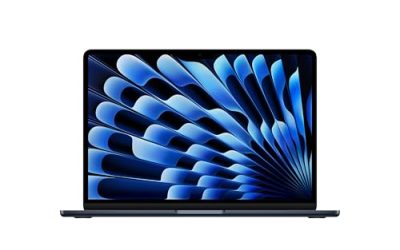
Apple MacBook Air 13-inch with M3 Chip

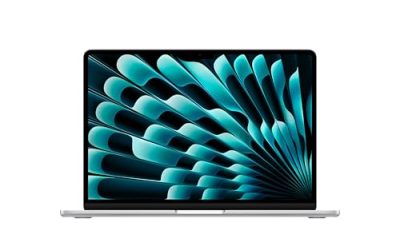
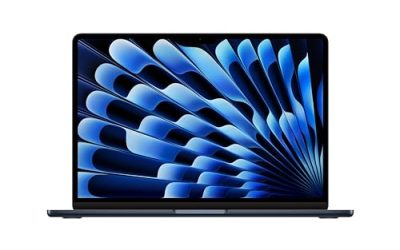
The M3 MacBook Air suits authors who write in many places. Its backlit keyboard and Touch ID are listed features, the 13.6-inch Liquid Retina screen keeps text sharp, and 16GB of unified memory with a 256GB SSD covers manuscripts, research and backups without fuss. The fanless design also means silent rooms stay silent during focused sessions. The aluminium body also shrugs off daily bag travel better than plastic rivals, and macOS suits writers using Scrivener, Ulysses or Word in their established workflows.
Specs
- Apple M3 chip
- 13.6-inch Liquid Retina display
- 16GB unified memory
- 256GB SSD storage
- Backlit keyboard with Touch ID
- Silver finish; model MC8H4LL/A
Best for: Writers who move between home, libraries and trips with one light machine.
Watch out for: Confirm the 256GB SSD is enough if you store large audio or photo archives locally.
ASUS Zenbook 14 OLED Q415 with Core Ultra 5

The Zenbook 14 OLED Q415 brings a 14-inch FHD+ OLED touchscreen to long editing days, driven by an Intel Core Ultra 5 125H with 512GB of SSD storage. The listed FHD webcam helps with author events and interviews, and the OLED panel gives proofreading a high-contrast page. Its 8GB of memory is the compromise to weigh against the screen quality. The touchscreen doubles as a comfortable scrolling surface for reading drafts aloud, which is how many authors catch the sentences their eyes skip on a desk monitor.
Specs
- Intel Core Ultra 5 125H processor
- 14-inch FHD+ OLED touchscreen
- 8GB DDR5 RAM
- 512GB SSD
- FHD webcam
- Windows 11 Home
Best for: Authors who prioritise display quality for revision and layout checks.
Watch out for: The listing states 8GB of DDR5 RAM, which is fixed, so heavy multitasking headroom is limited.
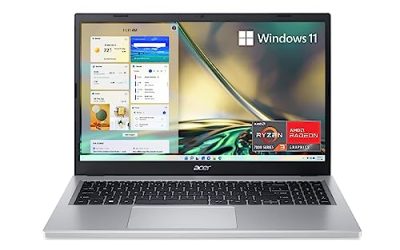
Lenovo IdeaPad Slim 3 with Ryzen 7 5825U
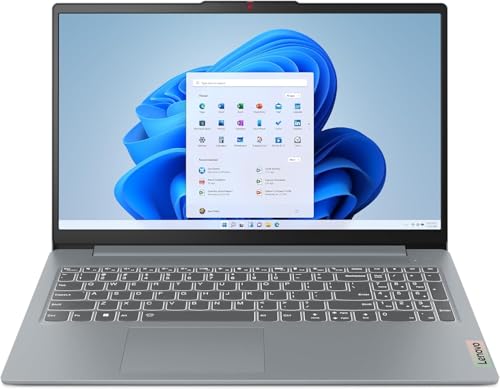
This IdeaPad Slim 3 configuration lists a Ryzen 7 5825U, 16GB of RAM and a 512GB SSD behind a 15.6-inch touchscreen, a roomy combination for a big manuscript next to source material. The larger display makes track-changes work less cramped, and the touchscreen helps when marking up pages. It is a desk-first writing machine rather than a travel one. The numeric keypad on the larger chassis helps writers who also track royalties, invoices and word-count spreadsheets beside the manuscript itself.
Specs
- AMD Ryzen 7 5825U 8-core processor with Radeon graphics
- 15.6-inch FHD touchscreen
- 16GB DDR4 RAM
- 512GB SSD
- Wi-Fi 6 and Bluetooth 5.2
- 720p HD camera; Windows 11 Home
Best for: Nonfiction writers juggling a manuscript and many open sources at a desk.
Watch out for: The listing lists a 720p camera, which is basic for recorded interviews or streamed readings.
Lenovo ThinkPad T14 Gen 6 Business Laptop

The ThinkPad T14 Gen 6 is the business-grade option here, with an Intel Ultra 5 225U, 16GB of DDR5 memory, a backlit keyboard and two Thunderbolt 4 ports for a desk dock. Its 5MP webcam is unusually strong for readings and remote interviews. ThinkPad keyboards are the reason many career writers choose the line, and this listing keeps that formula with modern ports. The chassis is built for daily opening, closing and carrying between home and writing spaces, which suits authors who treat the laptop as their only office.
Specs
- Intel Core Ultra 5 225U processor
- 14-inch FHD+ display
- 16GB DDR5 RAM
- 512GB SSD
- 5MP FHD webcam and fingerprint reader
- Backlit keyboard, Wi-Fi 6E, 2x Thunderbolt 4 ports
Best for: Full-time writers who want a durable desk setup with strong video calls.
Watch out for: Check the exact display option on the listing before ordering, as T14 configurations vary.
Which One Fits Your Situation
You draft in cafes and on trains
Take the MacBook Air 13. The 13.6-inch body, backlit keyboard and Touch ID fit small tables and quick starts, and 16GB of memory keeps a manuscript and research tabs open through a whole session away from your desk. Its battery-friendly design suits full drafting days, and the backlit keys keep evening sessions comfortable when the house goes quiet.
You revise long documents at a desk
Choose the IdeaPad Slim 3 Ryzen 7. Its 15.6-inch touchscreen gives revisions physical room, and the listed 16GB of RAM and 512GB SSD hold a large manuscript library without external drives cluttering the desk. The touchscreen also helps when annotating proofs, and Windows 11 keeps school, publisher and personal software in one familiar place.
You record interviews and do video events
Look at the ThinkPad T14 Gen 6. The listed 5MP FHD webcam is the strongest camera in this group, and the backlit keyboard plus Thunderbolt 4 ports make a tidy permanent desk setup for calls and drafting. Thunderbolt docking means one cable turns any desk into the same writing station, with monitor and backup drive waiting.
You want the best page-like screen
Pick the Zenbook 14 OLED. The FHD+ OLED touchscreen renders text with deep contrast for proofreading, and the 512GB SSD covers years of drafts, though you should accept the 8GB memory ceiling. Just keep the memory ceiling in mind if your editing style keeps many applications open beside the manuscript.
Common Mistakes
- Buying on processor speed while ignoring keyboard layout, then fighting the machine through every draft.
- Choosing a dim 15.6-inch budget panel for editing, which makes long proofreading sessions tiring.
- Running out of storage mid-book because research files and backups grew past a small SSD.
- Skipping backlit keys and then struggling through evening writing sessions in low light.
- Forgetting that memory is soldered on many thin laptops, so the listed RAM is the RAM forever.
Frequently Asked Questions
How much RAM does a writing laptop need?
Eight gigabytes covers documents, email and light browsing, but 16GB is the safer choice for a long writing career. It keeps a manuscript, reference material, music and a video call open together. Three of the four models here list 16GB, and that headroom is worth prioritising over a faster chip.
Is a touchscreen useful for authors?
It helps some writers and not others. Marking up pages, scrolling proofs and signing documents feel natural on the touchscreen IdeaPad and Zenbook in this guide. Pure drafters who live on the keyboard can skip it and put the money toward memory or storage instead.
Mac or Windows for writing software?
Scrivener, Word and Google Docs run on both, so the operating system rarely decides a book. Choose based on keyboard, screen and battery instead. The MacBook Air is the macOS option here; the other three run Windows 11 and suit writers already invested in that ecosystem.
What screen size suits book writing?
A 13- to 14-inch screen travels best and suits focused drafting, while 15.6 inches helps when a manuscript and research sit side by side. Resolution matters as much as size: every model here is at least Full HD, and the OLED and Liquid Retina panels render the crispest text.
Related guides
- Best Laptops to Play Roblox: From Budget Integrated Graphics to Dedicated GPUs
- Best Laptops for Zoom Teaching: Clear Video, Reliable Audio and All-Day Class Power
- Best Laptops for Video Editing and Music Production: Power, Screen and Storage
- Best Laptops for Network Engineers: Ethernet, RAM for Labs and Ports That Matter
More from Amazon
Programs that pair well with the guide above. Offers and eligibility are set by Amazon and may change.
Free shipping on eligible items, Prime Video and more. Eligible new members can start with a free trial.
Start a Prime free trialAd-free music streaming. Eligible new subscribers can start with a free trial.
Try Music Unlimited freeA Prime membership for ages 18-24 with a trial period. Eligibility is set by Amazon.
See Prime for Young AdultsAudiobooks and podcasts to listen to on the go. Eligible new members can start with a free trial.
Try Audible freeAs an Amazon Associate we earn from qualifying purchases.

Write Your Review
No reviews yet. Be the first to share your experience!