
Key takeaways
- Find work women's best sneakers for plantar fasciitis that support long shifts, cushion heel pain, and keep you comfortable on hard floors all day.
What's inside
As an Amazon Associate I earn from qualifying purchases. This post may contain affiliate links at no extra cost to you.
If you spend your whole shift on your feet and your heels ache by midday, the right pair of work women’s best sneakers for plantar fasciitis can change how the day feels. Plantar fasciitis is irritation of the thick band of tissue along the bottom of the foot, often worst with the first steps in the morning or after long hours on hard floors. A work sneaker cannot diagnose or treat a foot condition, but the right structure can reduce strain on that tissue through a shift.


Work is different from a short walk. Nurses, teachers, retail staff, warehouse workers, and servers who walk concrete, tile, or polished floors for eight hours or more need a shoe that holds its shape hour after hour. A soft slipper-style shoe may feel pleasant for ten minutes and then flatten out, leaving the arch unsupported. The best work sneakers sit in the middle: firm enough to guide the foot, cushioned enough to absorb impact, and stable enough to stay comfortable at the end of a shift.
This guide focuses only on women’s sneakers made for work, not on racing shoes or fashion trainers with thin soles. Every pick below is a women’s sneaker with a structured midsole, a supportive heel, and an upper that can handle a full working day. We explain what to look for, how each model is built, and who each one suits best, so you can match the shoe to your job, your foot shape, and the surfaces you stand on.
How to Choose
1. Heel cushioning that stays firm
Plantar fasciitis pain often centres on the heel, so heel cushioning matters more at work than it does for a short errand. Look for a midsole that compresses a little on landing and then springs back, rather than foam that collapses after a few hours. A rear crash pad, a gel unit under the heel, or a dense foam wedge can all help, but the key is that the cushioning still feels supportive late in the shift.
2. Arch support that matches your foot
Arch support is not one-size-fits-all. A low arch or a foot that rolls inward needs a shoe that guides the foot and resists that inward roll. A high arch needs cushioning and a shape that fills the space under the arch without pressing into it. A neutral arch needs a balanced shoe that does not push the foot in either direction. Before you buy, think about how your feet behave when you stand: do your ankles lean inward, do your arches feel high and rigid, or do your feet feel fairly even? If you use a custom orthotic, check that the insole is removable and that the shoe has enough depth to hold it.
3. A stable heel counter and a wide base
A work sneaker should hold the heel upright. A structured heel counter, the firm cup around the back of the shoe, keeps the heel from wobbling side to side when you turn, pivot, or carry something. A wide base under the heel and midfoot adds the same kind of steadiness, especially on smooth floors. Shoes with a narrow, rounded sole can feel lively for running, but they can feel less secure when you are standing still for long periods.
4. Fit, width, and toe room for long shifts
Feet swell during a long shift, especially in warm workplaces. A work sneaker should fit snugly around the heel and midfoot but leave room for your toes to spread. If your toes feel pinched in the morning, they will feel worse by the afternoon. Many of the models in this guide come in wide widths. Try work sneakers on later in the day, wear the socks you will wear at work, and walk on a hard surface rather than carpet.
5. Breathability and a work-ready upper
A full shift in a hot kitchen, a busy ward, or a sunlit shop floor can leave feet damp and uncomfortable. An engineered mesh upper lets air move through the shoe and helps moisture escape, while a structured overlay around the midfoot keeps the fit secure. Very open mesh can feel cool but may wear faster, while a denser upper may feel warmer but last longer. A removable insole also helps, because it lets you air the shoe out and swap in an orthotic when needed.
6. Outsole grip and durability on hard floors
Work floors are often smooth, and spills happen. A rubber outsole with a clear tread pattern gives you grip when you turn quickly or walk across a polished surface. Look for rubber under the heel and forefoot rather than exposed foam, because exposed foam wears down faster on concrete. Rotate two pairs if your job allows it, so each pair has a day to dry and recover its shape between shifts.
7. Weight and heel-to-toe drop
A heavy shoe adds up over thousands of steps. Most of the work sneakers in this guide weigh around nine ounces in a women’s size, a useful balance between cushioning and lightness. Heel-to-toe drop, the difference in height between the heel and the forefoot, also affects how the shoe feels. A higher drop, around ten to twelve millimetres, can take pressure off the Achilles tendon and the plantar fascia for some wearers, while a lower drop feels flatter and more grounded.
Top Picks
Brooks Adrenaline GTS 24
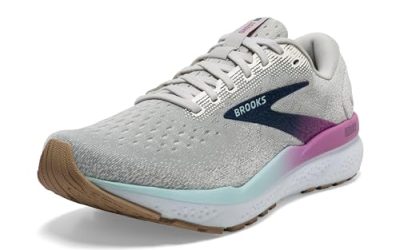
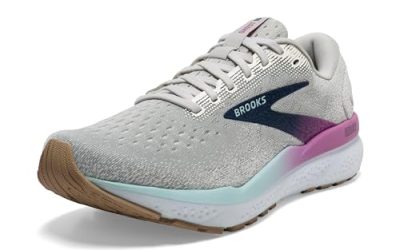
The Brooks Adrenaline GTS 24 is a stability sneaker built for women who need guidance as well as cushioning through a long working day. Its GuideRails support system is designed to keep excess movement in check, guiding the foot toward a more balanced stride rather than forcing it into a rigid position. That approach suits many workers with plantar fasciitis, because the fascia is strained when the foot rolls too far inward on every step, and a guided shoe can reduce that repeated pull.
The midsole uses nitrogen-infused DNA Loft v3 foam, which Brooks describes as lightweight and plush, and the heel-to-toe drop is 12 mm. The women’s version weighs about 9.4 ounces, so it feels substantial without feeling heavy on the leg. The engineered air mesh upper is breathable, the lace-up closure lets you adjust the fit across the midfoot, and the shoe is available in wide widths for feet that need extra room. It has also been granted the APMA Seal of Acceptance and is listed as a certified PDAC A5500 diabetic shoe, which reflects the structured, foot-friendly design rather than a fashion-first approach.
This pick is a strong match for retail, teaching, healthcare, and other jobs where you walk and stand all day and your feet tend to roll inward. It is less suited to someone who wants a very flat, minimal shoe or who prefers a soft, unstructured feel. If you have a high, rigid arch and your foot barely moves at all, a neutral cushioned model may feel more comfortable than this guided stability design. Check the fit carefully around the arch, because the support is meant to be felt, and it should feel like a gentle guide, not a hard ridge pressing into the sole.
HOKA Bondi 8
The HOKA Bondi 8 is the maximum-cushion option in this group, and it is built for women who want the thickest layer between their heels and a hard floor. Its foam midsole is deep and soft underfoot, with a rear crash pad that is designed to give a smooth, balanced ride from heel strike to forefoot transition. The upper is breathable mesh, the outsole is rubber, and the shoe weighs about 8.9 ounces in a women’s size. Sizes run from 5 to 12, and wide options are available.
What makes the Bondi 8 useful for work with plantar fasciitis is the way that thick midsole spreads impact. Each step lands on a broad, cushioned platform instead of a thin sole, so the heel takes less of a jolt on concrete or tile. The rocker shape of the sole also helps the foot roll forward, which can reduce the effort needed to push off with each step. The Bondi 8 has earned the APMA Seal of Acceptance, which means podiatrists at the American Podiatric Medical Association have assessed it as a shoe that helps promote good foot health.
This is a good choice for women who stand on hard floors for most of a shift and want maximum cushioning above all else, especially if they have a high arch or a rigid foot that needs shock absorption. It is a bulkier-looking shoe than the others here, and the thick sole makes it feel taller underfoot, so it may not suit a workplace with a strict, slim footwear dress code. It is also a neutral shoe, so if your foot rolls inward a lot, you may need the extra guidance of a stability model instead. Try it on a hard floor and walk for several minutes to see whether the rocker feel suits your stride.
ASICS Gel-Kayano 31
The ASICS Gel-Kayano 31 is a stability sneaker with a more technical approach to support. Its 4D Guidance System is designed to provide adaptive stability, using a resilient foam block on the medial side that compresses to absorb force and rebounds to guide the foot. The midsole combines FF BLAST PLUS ECO cushioning with Rearfoot PureGEL technology, which ASICS describes as providing lightweight cushioning and softer landings. The heel-to-toe drop is 10 mm, and the women’s version weighs about 9.3 ounces, or 266 grams.
The engineered mesh upper improves breathability, the OrthoLite X-55 sockliner adds comfort underfoot, and the external heel counter helps hold the heel in place. The shoe is listed as a maximum-cushion, stability model, and the product description notes that it is designed for a stable ride with controlled impact and smooth transitions. Wide widths are available, which matters for work, because a stability shoe that is too narrow can press on the sides of the foot and undo the benefit of the support.
This pick suits women whose feet overpronate, meaning the arch collapses inward more than it should, and who want a structured shoe that still feels cushioned rather than stiff. It is a strong option for long shifts that mix walking, standing, and turning, because the guidance system is designed to respond to how the foot moves rather than holding it in one fixed position. It may feel firmer than the Bondi 8 at first, and some wearers need a short break-in period while the foam settles to the shape of the foot. If you prefer a very soft, plush heel, this firmer, more controlled feel may take some getting used to.
New Balance Fresh Foam X 860v14

The New Balance Fresh Foam X 860v14 is a stability sneaker that pairs a soft Fresh Foam X midsole with a medial post, a firmer section of foam on the inner side that resists inward rolling. That combination is useful at work, because the soft foam cushions each step while the firmer post keeps the arch from collapsing under the weight of a long shift. The upper is engineered mesh, the outsole is rubber, and the shoe comes in a wide range of widths, including narrow, medium, wide, and extra-wide options in many colourways.
New Balance is known for offering more width choices than most brands, and that matters for plantar fasciitis at work. A shoe that fits the width of your foot properly does not squeeze the midfoot or force the toes together, and it lets the support sit in the right place under the arch. The 860v14 is designed as a daily trainer with a stable, supportive feel, and its Fresh Foam X cushioning is meant to feel soft without losing its shape quickly. The lace-up closure and padded collar help lock the heel in place, which is important when you are on your feet for hours.
This model is a good fit for women who need stability and cushioning in equal measure, and who have struggled to find a supportive shoe in their true width. It suits hospital, school, warehouse, and retail work where you are moving most of the day. It is heavier and more structured than a neutral cushioned shoe, so if you have a neutral gait and no inward roll, you may find the medial post unnecessary. Check that the support sits comfortably under your arch and does not feel like a lump, and give yourself a few shifts to judge it, because stability shoes often feel different after the foam has settled.
Comparison Table
| Sneaker | Support type | Cushioning | Heel-to-toe drop | Upper | Wide widths |
|---|---|---|---|---|---|
| Brooks Adrenaline GTS 24 | Guided stability, GuideRails | DNA Loft v3 foam | 12 mm | Engineered air mesh | Yes |
| HOKA Bondi 8 | Neutral, maximum cushion | Thick foam midsole, rear crash pad | 5 mm | Breathable mesh | Yes |
| ASICS Gel-Kayano 31 | Adaptive stability, 4D Guidance System | FF BLAST PLUS ECO, Rearfoot PureGEL | 10 mm | Engineered mesh | Yes |
| New Balance Fresh Foam X 860v14 | Stability, medial post | Fresh Foam X | 8 mm | Engineered mesh | Yes, including extra-wide |
Which One Is Right for You?
Start with how your foot moves. If your ankles roll inward and your arches feel low or tired by the end of a shift, choose a stability model first: the Brooks Adrenaline GTS 24 for gentle, guided support, the ASICS Gel-Kayano 31 for a firmer, more technical form of stability, or the New Balance Fresh Foam X 860v14 if width is your main problem and you need a medial post in your true size. If your foot is neutral or high-arched and your main problem is heel impact on hard floors, the HOKA Bondi 8 is the most cushioned option here, and its thick midsole and rocker shape are designed to soften each landing.
Then think about your workplace. A warm, busy floor favours a breathable mesh upper, which all four models offer, while a job that takes you outdoors in wet weather may favour a weatherized version of the Adrenaline GTS 24. If your employer has a dress code, consider colour: all four come in darker, plainer colourways that look more like work shoes than bright running shoes. Finally, think about fit: try the shoe on later in the day, in your work socks, and walk on a hard surface. The right work sneaker should feel supportive from the first wear, not painful, and it should still feel supportive in the last hour of a long shift. If you use an orthotic, bring it with you and check that the insole comes out cleanly and the shoe still fits with the orthotic inside.
Frequently Asked Questions
Can sneakers help with plantar fasciitis at work?
A well-structured sneaker can reduce strain on the plantar fascia by cushioning the heel, supporting the arch, and guiding the foot so it does not roll too far inward on each step. That support can make a long shift more comfortable, but a shoe alone does not treat the condition. If pain is severe, persistent, or getting worse, speak to a doctor or podiatrist, and follow their advice on stretching, rest, and treatment alongside your choice of footwear.
How often should I replace work sneakers for plantar fasciitis?
Replace them when the cushioning feels flat, the heel counter leans to one side, or the outsole is worn smooth under the heel. For a full-time job on hard floors, that can be sooner than you expect, because the foam is compressed for many hours every day. Rotating two pairs can extend the life of each pair, and it gives the foam time to recover its shape between shifts.
Should I choose a stability shoe or a neutral cushioned shoe?
Choose stability if your foot rolls inward, your arch collapses when you stand, or a podiatrist has suggested a supportive shoe. Choose neutral cushioning if your foot is fairly even or high-arched and your main need is shock absorption. If you are unsure, a shoe shop that watches you walk can help you see how your foot moves, and trying both types on a hard floor will show you which feel more natural.
Do I need a wide width for work?
Many women do, especially after a long shift when feet swell. A wide width is not about having wide feet in general; it is about giving your toes room to spread and letting the arch support sit in the right place. If the standard width pinches the sides of your feet or squeezes your little toe, try the wide version of the same model before you decide the model itself does not suit you.
Disclosure: As an Amazon Associate, we may earn from qualifying purchases.
Related guides
- Best Women’s Sneakers for Walking on Concrete: Cushioned Picks for Hard Pavement
- Best Women’s Sneakers for Walking Long Distances: Comfort That Lasts for Miles
- Best Women’s Sneakers for Walking in Italy: Comfort for Cobblestones and Hills
- Best Women’s Sneakers for Walking Around Europe: Comfort for Cobblestones and City Days
More from Amazon
Programs that pair well with the guide above. Offers and eligibility are set by Amazon and may change.
Free shipping on eligible items, Prime Video and more. Eligible new members can start with a free trial.
Start a Prime free trialAd-free music streaming. Eligible new subscribers can start with a free trial.
Try Music Unlimited freeA Prime membership for ages 18-24 with a trial period. Eligibility is set by Amazon.
See Prime for Young AdultsAudiobooks and podcasts to listen to on the go. Eligible new members can start with a free trial.
Try Audible freeAs an Amazon Associate we earn from qualifying purchases.
Write Your Review
No reviews yet. Be the first to share your experience!