
Key takeaways
- Find the best women's sneakers for walking on concrete, with deep cushioning, shock absorption and durable outsoles for hard city pavement.
What's inside
As an Amazon Associate I earn from qualifying purchases. This post may contain affiliate links at no extra cost to you.
The best women’s sneakers for walking on concrete need to do one job above all else: soften every step on a surface that gives back nothing. Concrete is far harder than asphalt, packed dirt, or a treadmill belt, and it does not absorb impact for you. After an hour on sidewalks, plaza paving, and station floors, a thin or flat shoe can leave your heels, knees, and lower back feeling every footstrike. The right pair spreads that impact out, keeps your stride smooth, and still feels comfortable when you stop for a coffee or stand in a queue.


This guide focuses on city walking on hard surfaces. That means long stretches of pavement, curbs, crosswalks, polished indoor floors, and the occasional stretch of tarmac. It does not mean trail walking or muddy paths, so grip on loose ground matters less here than cushioning depth, heel protection, and an outsole that does not wear smooth after a few months of daily pavement use. The picks below are all women’s sneakers built around road cushioning, and each one is suited to a slightly different foot and walking style.
Before you choose, think about how you actually walk on concrete. A commuter who walks two miles to work each morning needs a different balance from someone who spends a whole day sightseeing, or a worker who is on hard floors for a full shift. Distance, pace, foot shape, and any tendency toward heel pain or aching arches all change which shoe makes sense.
How to Choose
1. Deep, resilient cushioning under the heel
Concrete punishes the heel first. Look for a thick midsole with a soft heel crash pad or a gel-style insert under the heel, and foam that springs back rather than packing down flat after a few weeks. A shoe that feels plush in the shop but bottoms out quickly will not protect you on a long pavement day. Press the heel of the midsole with your thumb: it should compress and then recover its shape. Cushioning depth matters more than softness alone, because a very soft, thin layer can feel lovely for ten minutes and offer little protection by mile three.
2. A stable heel-to-toe transition
On flat, hard ground, a smooth roll from heel strike to toe-off reduces jarring. Look for a gently rockered sole or a beveled heel edge, which helps the foot move forward without a hard slap at contact. A very flat, stiff sole can feel clunky on concrete, while a pronounced rocker can feel odd when you stand still. The middle ground works best for most city walkers: a mild rocker, a flexible forefoot, and a heel that does not wobble. Walk a few laps in the shop and notice whether the shoe guides your foot forward or fights it.
3. Outsole durability on abrasive pavement
Concrete is abrasive, and it wears rubber down faster than a treadmill or a wooden floor. Check that the outsole has full rubber coverage under the heel and forefoot, rather than large areas of exposed foam. Exposed foam is lighter, but it scuffs and wears quickly on rough pavement. A segmented rubber outsole with grooves also helps with grip on smooth indoor floors and wet paving. If you walk the same route every day, inspect the heel edge after a month: even wear is normal, but a shoe that has worn through to foam at the heel is telling you its outsole was too thin for your mileage.
4. Fit that allows for swelling
Feet swell on hard surfaces, especially in warm weather and after several hours upright. A shoe that fits snugly in the morning can pinch by the afternoon. Leave about a thumb’s width between your longest toe and the end of the shoe, and make sure the toe box is wide enough that your toes can spread when you push off. If you wear thicker socks in winter, try the shoes on with those socks. Lacing matters too: a shoe with enough eyelets to adjust the fit across the midfoot lets you loosen the forefoot and tighten the heel separately, which helps when one part of your foot swells more than another.
5. Arch support that matches your foot
Concrete walking exposes weak arch support quickly, because there is no soft ground to forgive a collapsing arch. If you have high arches, you need cushioning that fills the gap under the arch and a shoe that does not force your foot flat. If you have low arches or your feet roll inward, you need a shoe with a firmer medial post or a wider base that keeps the foot aligned. Neutral cushioned shoes suit many walkers, but they are not a universal answer. Stand on one foot in the shoe and notice whether your ankle stays upright or tips inward. If it tips, look for a model with more structure.
6. Weight and breathability for all-day wear
A heavy shoe adds up over thousands of steps on concrete. Look for a light mesh upper and a midsole that does not feel like a brick in the hand. At the same time, a very light shoe can sacrifice cushioning, so balance matters: aim for a shoe that feels light when you lift it but still has a substantial midsole. Breathability matters too, because concrete radiates heat in summer. A breathable engineered mesh upper lets heat escape, while a dense, plastic-feeling upper traps it and can lead to blisters.
7. Break-in time and standing comfort
The best concrete walking shoe should feel comfortable on the first wear, not after a painful break-in period. Modern cushioned sneakers are designed to be worn straight away, and a shoe that rubs your heel or pinches your little toe on day one is unlikely to improve much. Also consider standing comfort, not just walking comfort. City days involve a lot of standing: waiting for a bus, queuing, or chatting on a corner. A shoe with a stable, flat-feeling base and a cushioned insole will feel better during those still moments than a shoe built only for forward motion.
Top Picks
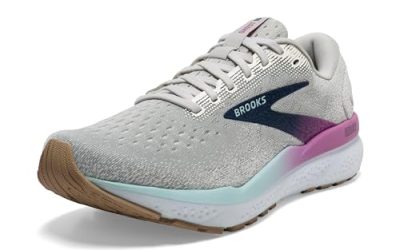
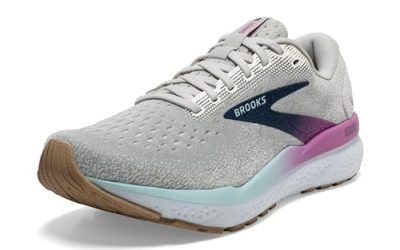
Brooks Ghost 16
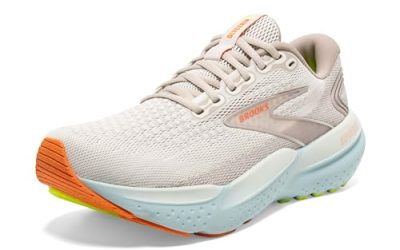
The Brooks Ghost 16 is a neutral cushioned road shoe that has become a go-to for pavement walkers who want soft, even cushioning without a wobbly or unstable feel. Its DNA Loft v3 foam midsole is nitrogen-infused, which gives it a soft landing at the heel and a smooth roll forward, and the 10 mm heel-to-toe drop suits walkers who land heel first on concrete. The engineered mesh upper is breathable and flexible, and the shoe comes in a wide range of widths, which is a genuine advantage if your feet swell or you need extra room across the forefoot.
Key specs include a neutral support type, a breathable mesh upper, a segmented rubber outsole for grip on pavement and indoor floors, and a roomy toe box in the standard width. It suits commuters and city walkers who cover several miles a day on sidewalks and want a shoe that feels the same at mile one and mile five. It also suits walkers with high arches who need cushioning rather than correction, and anyone who wants a shoe that works equally well for a brisk walk and a full day on their feet.
Points to note: the Ghost 16 is a road shoe first, so its grip on loose or wet natural surfaces is limited, and it is not built for rough trails. The cushioning is soft rather than firm, so walkers who prefer a very firm feel may find it a little plush. Check the width carefully if you are between sizes. For pure concrete walking, though, its combination of heel cushioning, smooth transition, and durable rubber outsole is hard to fault.
Hoka Clifton 9
The Hoka Clifton 9 is a light, highly cushioned shoe with a distinctive rocker shape that helps the foot roll forward on flat pavement. Its thick CMEVA foam midsole spreads impact over a wide area, which is exactly what concrete walking demands, and the low 5 mm drop gives it a flatter, more natural feel than many heavily cushioned shoes. Despite the thick sole, it is noticeably light in the hand, so it does not feel like a burden by the end of a long day.
Key specs include a lightweight cushioned midsole, a breathable mesh upper, a durable rubber outsole with good coverage under the heel, and a rockered geometry that encourages a smooth heel-to-toe motion. It suits walkers who want maximum cushioning without maximum weight, and those who find traditional thick-soled shoes too heavy. It is a strong choice for sightseeing days, airport walking, and long urban strolls where you will be moving for hours with few breaks.
Points to note: the rocker shape takes a little getting used to if you are coming from a flat shoe, and it can feel less stable when you are standing still for a long time. The midsole is soft, so walkers who need firm arch support should try it with their usual insoles. The Clifton 9 is also a road shoe, so it is not the pick for uneven or muddy ground. On concrete, however, its light weight and deep cushioning make it one of the most forgiving options in this guide.
ASICS Gel-Nimbus 26

The ASICS Gel-Nimbus 26 is the softest, most cushioned shoe in the ASICS road range, and it is built for walkers and runners who want a plush landing on hard surfaces. Its FF Blast Plus Eco foam midsole is paired with a PureGEL unit under the heel, which is designed to absorb shock at the exact point where concrete hits hardest. The knit upper hugs the foot without squeezing it, and the 8 mm drop gives a balanced feel that works for both heel strikers and midfoot walkers.
Key specs include a PureGEL heel unit, FF Blast Plus Eco cushioning, a soft engineered knit upper, and a durable AHAR rubber outsole. It suits walkers with sensitive heels or sore knees who need the softest possible landing on concrete, and those who walk long distances on pavements and want a shoe that stays comfortable hour after hour. It is also a good choice if you walk in the early morning or late evening when your joints feel stiffer, because the cushioning does most of the work for you.
Points to note: the Nimbus 26 is a premium cushioned shoe, and its softness means it is not the firmest option for walkers who need strong arch control. The knit upper is comfortable but can feel warm in very hot weather, so consider a lighter sock in summer. For heel protection on concrete, though, the Nimbus 26 is one of the strongest picks here.
New Balance Fresh Foam X 1080v14
The New Balance Fresh Foam X 1080v14 is a plush neutral trainer with a thick Fresh Foam X midsole that offers a soft, smooth ride on hard ground. Its 6 mm drop is lower than many cushioned shoes, which gives it a balanced, natural feel, and the breathable mesh upper has a comfortable, sock-like fit that works well for feet that swell during the day. It is available in multiple widths, including wide and extra-wide, which is a real benefit for walkers who struggle to find a roomy toe box.
Key specs include a Fresh Foam X midsole, a breathable engineered mesh upper, a durable rubber outsole, and a wide range of width options. It suits walkers who want a soft, even cushioning feel with a little more ground contact than a very high-stacked shoe, and those who need a wide fit. It is a strong all-day shoe for city walking, commuting, and long shopping or sightseeing days on concrete.
Points to note: the 1080v14 is soft and flexible, so it does not offer the firm support that a walker with very low arches might need. The outsole is durable for road use, but the shoe is not intended for rough trails. If you are between sizes, consider the wide version rather than sizing up in length, because extra length can cause the foot to slide forward on downhill pavements.
Comparison Table
| Shoe | Cushioning | Heel-to-Toe Drop | Upper | Best For |
|---|---|---|---|---|
| Brooks Ghost 16 | Soft, even DNA Loft v3 foam | Around 10 mm | Breathable engineered mesh | Daily commuting and mixed city walking |
| Hoka Clifton 9 | Deep, light CMEVA foam | Around 5 mm | Breathable mesh | Long sightseeing days and light feel |
| ASICS Gel-Nimbus 26 | Plush FF Blast Plus Eco with PureGEL heel | Around 8 mm | Soft engineered knit | Sensitive heels and maximum softness |
| New Balance Fresh Foam X 1080v14 | Plush Fresh Foam X | Around 6 mm | Breathable mesh, wide options | Roomy fit and all-day comfort |
Which One Is Right for You?
If you walk to work every day on concrete and want a dependable, balanced shoe that you can wear without thinking about it, start with the Brooks Ghost 16. Its even cushioning, smooth transition, and wide range of widths make it the safest all-rounder in this group, and it holds up well to daily pavement mileage.
If you want the lightest possible feel and a shoe that encourages a smooth roll forward, choose the Hoka Clifton 9. It is the pick for long days on your feet when every gram matters, and for walkers who like a rocker shape. Try it first if you have not worn a rockered shoe before, and give yourself a short walk to get used to the feel.
If your heels or knees are the limiting factor, and you want the softest landing you can get, choose the ASICS Gel-Nimbus 26. Its PureGEL heel unit and deep foam are designed for exactly the kind of repeated impact that concrete delivers, and it stays comfortable when other shoes start to feel hard.
If fit is your biggest challenge, especially a wide forefoot or feet that swell, choose the New Balance Fresh Foam X 1080v14. Its width options and sock-like upper make it easier to get a comfortable fit, and its soft midsole is forgiving on hard ground. Whichever you choose, try the shoes on late in the day, when your feet are at their largest, and walk on a hard floor in the shop before you decide.
Frequently Asked Questions
Are running shoes good for walking on concrete?
Yes, many road running shoes work very well for walking on concrete, because they are designed to absorb repeated impact on hard surfaces. The key is to choose a cushioned neutral road shoe with a durable rubber outsole, rather than a racing shoe with a thin sole or a trail shoe with deep lugs. A walking-specific shoe can also work, but a well-cushioned road shoe often offers better shock absorption and a smoother heel-to-toe transition, which matters more on concrete than on softer ground.
How often should I replace sneakers used for walking on concrete?
Concrete wears shoes faster than softer surfaces, so check the outsole and midsole regularly. A common guide is to replace a daily walking shoe after several hundred miles of use, but the real signs matter more than a number: a midsole that no longer springs back, an outsole worn smooth at the heel, or new aches in your heels and knees after walks that used to feel fine. If you walk every day, rotate two pairs if you can, because foam recovers better when it has a day to rest between wears.
Should I choose a soft or firm shoe for concrete?
Most walkers do better with a soft to medium-soft shoe on concrete, because the surface itself is already firm and unforgiving. A very firm shoe can feel jarring, while a very soft shoe can feel unstable if it lacks structure. Look for a shoe that compresses under your heel and then recovers, with a stable base that does not wobble. If you have low arches or your feet roll inward, choose a shoe with a firmer base or add a supportive insole rather than choosing a firmer shoe alone.
Can I use insoles in these sneakers for extra cushioning on concrete?
Yes, in most cases you can swap the factory insole for a cushioned or supportive insole, as long as the shoe has enough depth and the insole does not make the fit too tight. Remove the original insole first rather than stacking a new one on top, and try the combination with the socks you will actually wear. A good insole can help with arch support and heel cushioning, but it cannot fix a shoe that is the wrong size or shape for your foot, so get the fit right first.
Disclosure: As an Amazon Associate, we may earn from qualifying purchases.
Related guides
- Best Women’s Sneakers for Walking Long Distances: Comfort That Lasts for Miles
- Best Women’s Sneakers for Walking in Italy: Comfort for Cobblestones and Hills
- Best Women’s Sneakers for Walking Around Europe: Comfort for Cobblestones and City Days
- Best Women’s Sneakers for Walking and Standing: All-Day Comfort for Long Shifts
More from Amazon
Programs that pair well with the guide above. Offers and eligibility are set by Amazon and may change.
Free shipping on eligible items, Prime Video and more. Eligible new members can start with a free trial.
Start a Prime free trialAd-free music streaming. Eligible new subscribers can start with a free trial.
Try Music Unlimited freeA Prime membership for ages 18-24 with a trial period. Eligibility is set by Amazon.
See Prime for Young AdultsAudiobooks and podcasts to listen to on the go. Eligible new members can start with a free trial.
Try Audible freeAs an Amazon Associate we earn from qualifying purchases.
Write Your Review
No reviews yet. Be the first to share your experience!