
Key takeaways
- Discover the best Brooks women's sneakers for plantar fasciitis, from neutral cushion to guided support for sore heels and long walks.
What's inside
As an Amazon Associate I earn from qualifying purchases. This post may contain affiliate links at no extra cost to you.
Brooks has spent decades building shoes around one idea: cushion the foot well and guide it gently, without forcing it. The best Brooks women’s sneakers for plantar fasciitis follow that idea closely. The brand’s nitrogen-infused DNA LOFT v3 foam softens heel landings, its GuideRails system supports feet that roll inward, and its wide range of widths means a sore foot is not squeezed into a narrow last. For women whose heel pain flares with every step, that combination is a practical place to start.
What sets Brooks apart in this category is the range of support on offer. The Ghost line is the neutral everyday trainer that suits most feet. The Glycerin line is the plushest neutral shoe in the family. The Adrenaline GTS line adds guided support for overpronation. The Ghost Max line stacks the cushion higher for walkers who want maximum foam under the heel. Each line serves a different foot, so the right Brooks shoe depends on your stride, your arch, and how your heel feels in the morning.
This guide covers four women’s Brooks sneakers sold on Amazon US, each with its real construction, its fit, and who it suits best. Every pick is a women’s Brooks sneaker, and each one is described honestly, including where it feels firm, heavy, or narrow, so you can choose the shoe that matches your foot rather than the most popular name on the list.
How to Choose
1. Neutral cushion or guided support
Brooks splits its lineup into neutral shoes and support shoes, and this is the most important choice in the guide. Neutral models like the Ghost 16, Glycerin 21, and Ghost Max 2 cushion the foot without steering it, which suits a neutral stride. Support models like the Adrenaline GTS 24 use the GuideRails system, a set of firmer foam guides on the inner and outer sides of the heel, to slow excess inward rolling. If your arches collapse when you stand or your old shoes wear heavily on the inner heel, a support model is usually the safer start. If your stride is neutral, GuideRails can feel unnecessary, so stay neutral.
2. DNA LOFT v3 cushion depth
All four picks in this guide use DNA LOFT v3, a nitrogen-infused foam that Brooks tunes differently across models. The Glycerin 21 and Ghost Max 2 carry the deepest, softest version, while the Ghost 16 uses a balanced tune and the Adrenaline GTS 24 pairs the foam with its support guides. If your heel pain is severe, the deepest cushion feels kindest. If you like a shoe that responds a little more at push-off, the Ghost 16 gives cushion without feeling overly soft.
3. Heel-to-toe drop
Drop is the height difference between heel and forefoot, and it changes how much the calf and the fascia stretch. The Ghost 16, Glycerin 21, and Adrenaline GTS 24 all use a 10 mm drop, which keeps the heel a little higher and can feel kinder when calves are tight. The Ghost Max 2 uses a lower 6 mm drop, which keeps the foot closer to level under a taller stack of foam. If your current shoes have a higher heel and feel comfortable, the 10 mm models will feel familiar. If you prefer a flatter feel, the Ghost Max 2 is the match.
4. Stack height and stability
A taller stack of foam cushions more, but it also raises the foot further from the ground, so the shoe needs a broad base to stay stable. The Ghost Max 2 has the tallest stack here and pairs it with a wide platform and a broad heel. The Glycerin 21 is also tall and plush, while the Ghost 16 sits lower and feels more agile. If you stand on hard floors all day, a taller stack with a wide base is worth it. If you want a shoe that feels nimble for errands and light workouts, a lower stack is the better trade.
5. Fit, width, and orthotic room
Brooks women’s shoes run true to size and are known for generous width options, with narrow, medium, wide, and extra-wide available across much of the range. That matters for plantar fasciitis, because sore feet often need orthotics, heel cups, or thicker socks. All four picks here have removable sockliners, so a custom insole can replace the factory insole without crowding the toes. Try the shoe with the insole you plan to wear, and check that the heel sits snugly while the forefoot has room to spread.
6. Outsole durability and grip
A shoe for sore heels gets worn daily, so the outsole has to last. Brooks uses durable rubber in the high-wear zones, with the Ghost 16 adding a Segmented Crash Pad that smooths the transition from landing to toe-off. Check that the rubber covers the heel and the forefoot where your foot strikes and pushes off, and that the tread grips on smooth indoor floors as well as pavement. A shoe that slips on tile is a fall risk as well as a comfort problem.
7. Walking or running use
Brooks designs these shoes as road running trainers, but most women with plantar fasciitis wear them for walking, standing, and everyday life. That is fine: the cushion and support work the same way at walking pace. The Ghost 16 and Adrenaline GTS 24 are the most versatile for mixed walking and easy running, the Glycerin 21 suits long walks and standing days, and the Ghost Max 2 is built for walking and standing first, with its tall stack and rocker shape easing each step. Match the shoe to the activity you do most, not the one on the box.
Top Picks
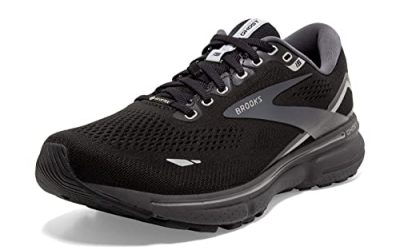
1. Brooks Women’s Ghost 16

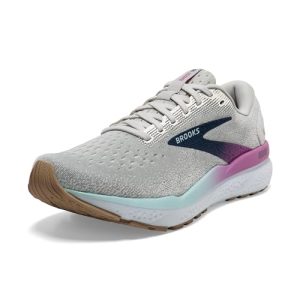
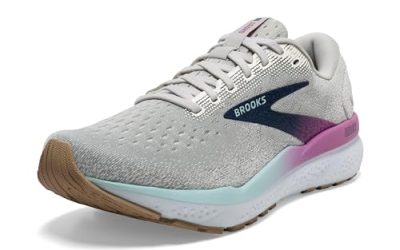
The Ghost 16 is Brooks’ best-known neutral trainer and the most balanced pick in this guide. Its nitrogen-infused DNA LOFT v3 midsole gives a soft, smooth ride without feeling mushy, and the Segmented Crash Pad under the heel helps the foot roll from landing to toe-off. An engineered air mesh upper breathes well and holds its shape, while the soft heel collar grips the back of the foot without rubbing.
The Ghost 16 uses a 10 mm heel-to-toe drop and weighs around 8.8 ounces in a women’s size 7. The fit runs true to size with a roomy toe box, and narrow, medium, wide, and extra-wide widths are available across the range, so most feet find a match. The sockliner is removable, leaving room for a custom insole or heel cup.
This is the pick for women with a neutral stride who want one shoe for daily walking, standing work, and easy runs. It suits mild to moderate heel pain, and its balanced cushion works for both short errands and long days. One thing to note is that the Ghost 16 is a middle-ground shoe: it is not the softest Brooks here, and it is not a stability shoe. If your heel pain is severe, the Glycerin 21 or Ghost Max 2 feels softer. If your feet roll inward, the Adrenaline GTS 24 gives the guidance the Ghost 16 does not.
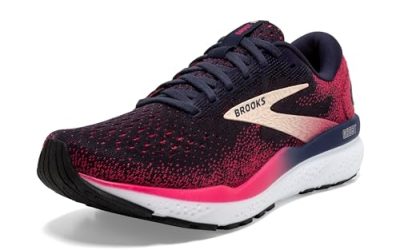
2. Brooks Women’s Glycerin 21

The Glycerin 21 is the plushest neutral shoe in the Brooks road lineup, and it is the pick for women who want the softest ride Brooks makes in a standard trainer shape. Its nitrogen-infused DNA LOFT v3 midsole is tuned for maximum softness, and the roomy fit gives the toes space to spread. A breathable engineered mesh upper, a padded collar, and a broad platform under the heel make it comfortable from the first wear, with little break-in needed.
The Glycerin 21 uses a 10 mm heel-to-toe drop and weighs around 9.1 ounces in a women’s size 7. The fit runs true to size and slightly roomy, and wide widths are available, so orthotics and wider feet are accommodated. The removable sockliner leaves space for a custom insole, and the wide base keeps the tall foam stable on hard floors.
This is the pick for women with moderate to severe heel pain who want a soft landing for long walks, travel days, and standing work. It suits a neutral stride and a foot that appreciates a plush, forgiving feel. One thing to note is the weight and the softness: at around 9.1 ounces it is heavier than the Ghost 16, and the foam feels less firm at push-off. Walkers who like a snappy, responsive shoe may find it too plush, and runners who want a light trainer should look at the Ghost 16 instead.
3. Brooks Women’s Adrenaline GTS 24

The Adrenaline GTS 24 is Brooks’ guided support trainer, and it is the pick for plantar fasciitis paired with feet that roll inward. Its GuideRails system places firmer foam on the inner and outer sides of the heel to slow excess motion, while the nitrogen-infused DNA LOFT v3 midsole cushions the landing. An engineered air mesh upper breathes well, and the structured heel counter holds the back of the foot steady so the fascia is not tugged sideways.
The Adrenaline GTS 24 uses a 10 mm heel-to-toe drop and weighs around 9.0 ounces in a women’s size 7. The fit runs true to size, and narrow, medium, wide, and extra-wide widths are available, which is the broadest width range in this guide. The sockliner is removable, so a custom insole fits without crowding, and the heel cup works well with a heel lift or a full-length orthotic.
This is the pick for women who overpronate, whose arches flatten under load, or whose old shoes wear down on the inner heel. It suits daily walking, standing work, and easy runs where guidance matters as much as cushion. One thing to note is the feel: the GuideRails add firmness around the heel, so a neutral strider may find the shoe intrusive or stiff at first. It also weighs a little more than the Ghost 16. If your stride is neutral, the Ghost 16 or Glycerin 21 will feel more natural.
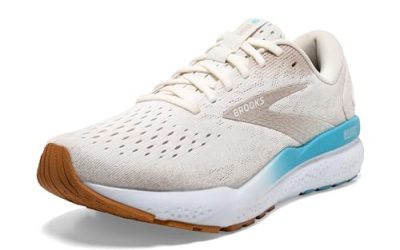
4. Brooks Women’s Ghost Max 2

The Ghost Max 2 stacks the most cushion in the Brooks neutral lineup, and it is the pick for women who want maximum foam under a sore heel. Its high stack of nitrogen-infused DNA LOFT v3 foam sits on a broad, stable base, and the rocker-shaped sole rolls the foot forward so the toes bend less at push-off. A breathable engineered mesh upper and a roomy fit make it comfortable for long days, and the roomy toe box suits feet that swell by afternoon.
The Ghost Max 2 uses a 6 mm heel-to-toe drop and weighs around 9.0 ounces in a women’s size 7. The lower drop keeps the foot closer to level despite the tall stack, which suits walkers who prefer a flatter feel. The fit runs true to size with a generous forefoot, and wide widths are available. The removable sockliner leaves room for a custom insole, and the wide platform keeps the tall shoe stable while standing.
This is the pick for women with severe heel pain who want the deepest Brooks cushion for walking and standing, especially on hard floors. It suits all-day wear, travel, and jobs that keep you on your feet, and the rocker shape helps when toe-off hurts. One thing to note is the height: the tall stack looks and feels substantial, and the shoe is heavier than the Ghost 16. It is built for walking and standing first, so runners who want a light, agile trainer should choose the Ghost 16 instead.
Comparison Table
| Sneaker | Support type | Drop | Weight (women’s 7) | Best for |
|---|---|---|---|---|
| Ghost 16 | Neutral, balanced cushion | 10 mm | Around 8.8 oz | Everyday walking and easy runs, neutral stride |
| Glycerin 21 | Neutral, plush cushion | 10 mm | Around 9.1 oz | Softest standard ride, long walks, standing work |
| Adrenaline GTS 24 | Support, GuideRails | 10 mm | Around 9.0 oz | Overpronation, guided support, daily walking |
| Ghost Max 2 | Neutral, maximum cushion | 6 mm | Around 9.0 oz | Deepest cushion, walking and standing, sore heels |
Which One Is Right for You?
Start with your stride. If your feet roll inward or your arches collapse when you stand, the Adrenaline GTS 24 is the clear choice, because its GuideRails system addresses the motion that strains the fascia. If your stride is neutral, choose among the three neutral models by how your heel feels and how you move. Mild to moderate heel pain with mixed walking and easy running points to the Ghost 16. A softer landing for long walks and standing days points to the Glycerin 21. The deepest cushion for severe heel pain, with a flatter 6 mm drop, points to the Ghost Max 2.
Think about width and orthotics next. Brooks offers the broadest width range in this guide, and all four picks take a custom insole once the sockliner is removed, so fit is rarely the deciding factor. Instead, weigh cushion against weight: the Ghost 16 is the lightest and most agile, while the Glycerin 21 and Ghost Max 2 trade a little weight for a softer landing. Whichever you choose, break the shoes in gradually over a few days, wear them with the insole you plan to use long term, and watch whether the first steps in the morning get easier over the first two weeks, since that is the most useful signal that the cushion and support are working.
Frequently Asked Questions
Are Brooks sneakers good for plantar fasciitis?
Brooks sneakers suit many women with plantar fasciitis because the DNA LOFT v3 foam softens heel impact, the heel counters hold the foot steady, and the wide width options leave room for orthotics. Neutral models suit a neutral stride, while the Adrenaline GTS 24 adds guided support for feet that roll inward. The right model depends on your stride and how severe the heel pain is.
Which Brooks is best for heel pain, Ghost 16 or Glycerin 21?
The Glycerin 21 is the better choice when heel pain is moderate to severe or you stand for long hours, because its foam is tuned softer and the fit is roomier. The Ghost 16 is the better choice when you want a lighter, more versatile shoe for daily walking and easy runs with mild to moderate heel pain. Both use a 10 mm drop and the same foam family, so the difference is cushion depth against weight.
What is the difference between the Ghost 16 and the Adrenaline GTS 24?
The Ghost 16 is a neutral trainer that cushions without steering the foot, while the Adrenaline GTS 24 adds the GuideRails system to slow inward rolling. The two shoes share the same foam and the same 10 mm drop, so the choice comes down to stride. Overpronation points to the Adrenaline GTS 24, and a neutral stride points to the Ghost 16.
Can I wear custom orthotics in Brooks women’s sneakers?
Yes, all four Brooks picks in this guide have removable sockliners, so a custom insole or heel cup can replace the factory insole. Brooks also offers narrow, medium, wide, and extra-wide widths across much of the range, which helps when an orthotic adds volume. Try the shoe with your insole before committing, and check that the heel stays seated and the toes are not crowded.
Disclosure: As an Amazon Associate, we may earn from qualifying purchases.
Related guides
More from Amazon
Programs that pair well with the guide above. Offers and eligibility are set by Amazon and may change.
Free shipping on eligible items, Prime Video and more. Eligible new members can start with a free trial.
Start a Prime free trialAd-free music streaming. Eligible new subscribers can start with a free trial.
Try Music Unlimited freeA Prime membership for ages 18-24 with a trial period. Eligibility is set by Amazon.
See Prime for Young AdultsAudiobooks and podcasts to listen to on the go. Eligible new members can start with a free trial.
Try Audible freeAs an Amazon Associate we earn from qualifying purchases.
Write Your Review
No reviews yet. Be the first to share your experience!