
Our Short List of 3

- Best for: Baseline players who want a confirmed Wide option with durable court grip.
- GEL technology for impact absorption
- AHARPLUS rubber outsole
- Baseline stability
- Width available: Medium, Wide
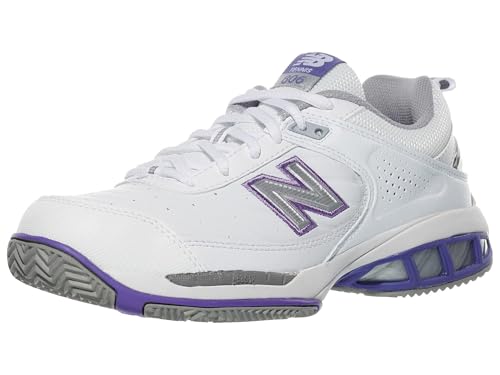
- Best for: Players who want a proven stability shoe with a clearly listed Wide width.
- C-CAP, ABZORB and ROLLBAR technologies
- Mesh and leather upper
- Rubber sole
- Heritage stability shoe

- Best for: Players who want the lightest, most breathable court shoe in this guide.
- Mesh upper
- Rubber outsole
- Surgelite insole
- Light, breathable design with generous fit
All 3 Picks at a Glance
| Product | Specs | Action |
|---|---|---|
| 1. ASICS Gel-Resolution X |
| Check price on Amazon |
| 2. New Balance 806 V1 |
| Check price on Amazon |
| 3. K-Swiss Hypercourt Express 2 |
| Check price on Amazon |
Key takeaways
- Wide feet need a wider last, not a bigger size. Compare 4 women's tennis sneakers with confirmed Wide options, honest fit notes and durable court grip.
What's inside
As an Amazon Associate I earn from qualifying purchases. This post may contain affiliate links at no extra cost to you.
A tennis shoe that pinches across the forefoot changes how you move. You shorten your steps, hesitate on lateral cuts, and by the third set your feet hurt more than your legs do. For wide feet, the answer is not simply a larger size, because sizing up adds length without adding room where your foot actually spreads. What works is a court shoe built on a wider last, with a roomy toe box and an outsole that grips without squeezing your foot into a narrow shape.
This guide covers women’s tennis sneakers chosen from the product names and specifications shown on their Amazon listings. Two picks have a Wide width confirmed in the listing data, and two K-Swiss models are included for their light, generous fit, with an honest note that their Wide variant was not confirmed in the listing information we reviewed. Check the width selector on the product page before ordering any of them.
Quick Picks
As an Amazon Associate we earn from qualifying purchases
| Product | Best for | Key spec from title |
|---|---|---|
| ASICS Gel-Resolution X | Baseline players who want stability and a confirmed Wide option | GEL technology; AHARPLUS rubber outsole |
| New Balance 806 V1 | Players who want a long-running stability shoe in Wide | C-CAP, ABZORB and ROLLBAR technologies |
| K-Swiss Hypercourt Express 2 | Long rallies in a light, breathable shoe | Mesh upper; Surgelite insole |
| K-Swiss Court Express 2 | All-court play with strong grip and durability | K-EVA midsole; Aosta 7.0 herringbone outsole |
How to Choose
Start with the width, not the size
The most common mistake wide-footed players make is buying a longer shoe instead of a wider one. Extra length leaves your heel slipping while the forefoot still feels cramped, which is the worst of both worlds on court. Look for a listing that names a Wide width option in its size selector or comparison chart, as the ASICS Gel-Resolution X does with Medium and Wide listed side by side. If the page only shows regular sizes, treat the fit as unconfirmed, even when the shoe is described as roomy. A roomy regular width is not the same as a Wide last, and the difference shows up after an hour of lateral movement.
Match the outsole to your court
Tennis outsoles are built for specific surfaces, and the wrong one wears fast or slides at the wrong moment. A herringbone pattern, like the one on the K-Swiss Court Express 2, is the standard choice for hard courts because it grips during side-to-side stops and holds up to dragging. Clay-court shoes usually have a fuller, tighter tread that sheds loose material instead of clogging. If you play on both surfaces, pick a durable all-court outsole rather than a surface-specific one, and check whether the listing mentions non-marking rubber before taking a new pair onto an indoor court.
Stability matters more on lateral moves
Running shoes cushion forward motion, but tennis is a sideways sport, and that changes what your shoe must do. Every point involves planting, pushing off, and stopping hard, so a tennis shoe needs lateral support that keeps your foot centered over the sole instead of rolling over its edge. Look for stability features in the listing, such as the ROLLBAR technology in the New Balance 806 V1 or the baseline stability called out for the ASICS Gel-Resolution X. A shoe that feels soft and comfortable standing still can still feel wobbly on a hard change of direction.
Plan for break-in and socks
Even a correctly wide tennis shoe can feel stiff on the first outing, because court shoes use firmer materials than running shoes to survive dragging and sudden stops. Give a new pair two or three short practice sessions before a match, and wear the same socks you plan to play in, since a thick tennis sock changes the fit noticeably. Pay attention to the little toe and the outside of the forefoot during those first sessions; pressure there usually means the width is wrong, not that the shoe needs more breaking in. If the pressure does not ease by the third session, the last is probably too narrow for you.
The 4 Best Options
1. ASICS Gel-Resolution X
- Best for: Baseline players who want a confirmed Wide option with durable court grip.
- GEL technology for impact absorption
- AHARPLUS rubber outsole
- Baseline stability
- Width available: Medium, Wide
Baseline players who want a confirmed Wide option with durable court grip.
The fit is stability-oriented and structured, so players who prefer a soft, flexible feel may find it firm at first.
The Gel-Resolution X is the strongest pick here for players who spend most of their time on the baseline and want a Wide width they can verify before buying. Its listing comparison chart states that Medium and Wide widths are available, which removes the guesswork that surrounds so many wide-foot searches. GEL technology absorbs impact on hard landings, the AHARPLUS rubber outsole is built for durability on court surfaces, and the baseline stability suits players who grind through long rallies. It is a serious court shoe first and a wide shoe second, which is exactly the right order of priorities.
Watch out for: The fit is stability-oriented and structured, so players who prefer a soft, flexible feel may find it firm at first.
2. New Balance 806 V1
- Best for: Players who want a proven stability shoe with a clearly listed Wide width.
- C-CAP, ABZORB and ROLLBAR technologies
- Mesh and leather upper
- Rubber sole
- Heritage stability shoe
Players who want a proven stability shoe with a clearly listed Wide width.
This is an older model with a traditional, structured build, so it looks and feels more old-school than newer lightweight court shoes.
The 806 V1 is a heritage stability shoe that has been around for years, and its staying power is part of the appeal. The listing shows a Wide option in the product title itself, so there is no ambiguity about whether a wide version exists. C-CAP, ABZORB and ROLLBAR technologies work together to cushion impact and steady the foot through lateral movement, while the mesh and leather upper balances breathability with structure. For players who have worn this model before and simply need a fresh pair in Wide, it is the most predictable choice in this guide.
Watch out for: This is an older model with a traditional, structured build, so it looks and feels more old-school than newer lightweight court shoes.
3. K-Swiss Hypercourt Express 2
- Best for: Players who want the lightest, most breathable court shoe in this guide.
- Mesh upper
- Rubber outsole
- Surgelite insole
- Light, breathable design with generous fit
Players who want the lightest, most breathable court shoe in this guide.
The Wide variant was not confirmed in the listing data we reviewed, so verify the width selector on the product page before ordering.
The Hypercourt Express 2 earns its place for players who value a light, breathable shoe above all else. K-Swiss describes this model as light and breathable with a generous fit, and the mesh upper and Surgelite insole support that description. It is the airiest pick in this guide, which matters on hot days and during long sessions when heavy shoes start to feel like an anchor. One important caveat: the listing information we reviewed did not show a Wide width variant, so treat the fit as generous rather than confirmed Wide, and check the size selector on the product page before ordering.
Watch out for: The Wide variant was not confirmed in the listing data we reviewed, so verify the width selector on the product page before ordering.
4. K-Swiss Court Express 2
The Court Express 2 is the workhorse of this group, built for players who want durability and grip across different court surfaces. Its K-EVA midsole cushions the foot, while the Aosta 7.0 non-marking rubber outsole uses a herringbone pattern with a drag guard, which is exactly the kind of tread that survives hard stops and toe dragging on hard courts. The breathable mesh quarter keeps air moving without giving up structure. As with the Hypercourt Express 2, the listing information we reviewed showed regular sizes only and did not confirm a Wide variant, so check the width selector carefully before ordering.
Specs
- K-EVA midsole
- Aosta 7.0 non-marking rubber outsole with herringbone pattern and drag guard
- Breathable mesh quarter
- Sold by K-Swiss
Best for: All-court players who want a durable outsole with strong lateral grip.
Watch out for: The Wide variant was not confirmed in the listing data we reviewed, so verify the width selector on the product page before ordering.
Which One Fits Your Situation
You play mostly from the baseline
Choose the ASICS Gel-Resolution X. Its baseline stability and GEL cushioning are built for long rallies, and its confirmed Wide width means you can order the right fit without guessing. The AHARPLUS outsole also holds up well to the repeated hard stops that baseline play demands. That stability also helps you stay balanced when you push off hard for a wide ball.
You want a shoe with a long track record
Choose the New Balance 806 V1. It is a heritage stability model with a Wide option stated right in the listing title, so the fit is the least ambiguous here. Its structured build suits players who value steady support over a lightweight feel. Its long-running design means replacement pairs are easy to find, and other players have already worked out which sizes fit best.
You want the lightest feel possible
Choose the K-Swiss Hypercourt Express 2. Its mesh upper and light build make it the airiest option in this guide, ideal for hot weather and long sessions. The airy build also means less fatigue in long matches, since the shoe adds little weight to each step you take. Just confirm the width selector first, since a Wide variant was not confirmed in the listing data.
You play on different court surfaces
Choose the K-Swiss Court Express 2. Its herringbone outsole with a drag guard is made for hard courts, and its non-marking rubber works indoors too. That flexibility makes it the easiest pick if you split your week between indoor sessions and outdoor hard courts. Again, check the width selector before ordering, since a Wide variant was not confirmed in the listing data.
Common Mistakes
- Sizing up in length instead of choosing a Wide width, which leaves the heel loose while the forefoot stays cramped.
- Treating a “roomy” or “generous fit” description as proof of a Wide option when the listing shows no Wide size.
- Buying a running shoe for tennis, since running shoes lack the lateral support and durable outsole that court play demands.
- Choosing a surface-specific outsole for a court you rarely play on, which wears the tread out far faster than an all-court option would.
- Judging the fit from the first wear alone, before the shoe has had two or three short sessions to settle.
Frequently Asked Questions
Should I size up instead of buying a Wide tennis shoe?
Sizing up adds length, not width, so it usually makes the problem worse. Your heel slips, your toes still press against the sides, and your foot slides during lateral moves. A true Wide width widens the last across the forefoot while keeping the length and heel fit correct. If a shoe you like has no Wide option, pick a different model with a confirmed Wide width instead.
Are these tennis sneakers only for hard courts?
Most of the shoes here are built for hard courts, which is where the majority of players spend their time. The K-Swiss Court Express 2 uses a herringbone outsole with a drag guard, a pattern designed for hard-court grip and durability. Clay courts usually call for a fuller tread that sheds loose material, so check the outsole description on the listing if clay is your main surface.
How do I know the Wide option is really available?
Open the product page and look at the size selector or the comparison chart on the listing. The ASICS Gel-Resolution X lists Medium and Wide in its comparison chart, and the New Balance 806 V1 shows Wide in its listing title. If the page shows regular sizes only, the Wide variant is not confirmed, no matter how the fit is described elsewhere.
Can I wear these tennis shoes for running or walking?
You can walk in them, but they are not a good substitute for running shoes. Tennis shoes are built for lateral support and durable court outsoles, with firmer cushioning tuned for short bursts and hard stops. Running shoes are built for forward motion and repetitive heel strikes. Using court shoes for regular runs wears the outsole unevenly and gives your feet less of the cushioning they need.
Related guides
More from Amazon
Programs that pair well with the guide above. Offers and eligibility are set by Amazon and may change.
Free shipping on eligible items, Prime Video and more. Eligible new members can start with a free trial.
Start a Prime free trialAd-free music streaming. Eligible new subscribers can start with a free trial.
Try Music Unlimited freeA Prime membership for ages 18-24 with a trial period. Eligibility is set by Amazon.
See Prime for Young AdultsAudiobooks and podcasts to listen to on the go. Eligible new members can start with a free trial.
Try Audible freeAs an Amazon Associate we earn from qualifying purchases.










Write Your Review
No reviews yet. Be the first to share your experience!