
Key takeaways
- The 5 best play food sets for kids kitchens, from a 115-piece pantry collection to sliceable wooden fruit — compared by material, size, and play value.
What's inside
As an Amazon Associate I earn from qualifying purchases. This post may contain affiliate links at no extra cost to you.
A toy kitchen without food is a stage with no actors. A child can stir an empty pot for a minute, but the moment a plastic apple lands on the plate, the stove, the table, and the game all come alive for an afternoon. That is why the food matters more than most parents expect when they first set up a play kitchen, and why choosing it deserves the same care as choosing the kitchen itself.
This guide is for parents and grandparents stocking a first kitchen for a toddler or preschooler, and for anyone replacing a box of mismatched pieces with sets that actually belong together. Every set below comes from the product name and listed specifications on its Amazon page, with piece counts and materials stated exactly as the listing gives them. The five picks cover pantry staples, fresh produce, sliceable fruit, and full pretend dinners, so there is a fit for small kitchens, big imaginations, and every size of storage bin.
Quick Picks
As an Amazon Associate we earn from qualifying purchases
| Product | Best for | Key spec from title |
|---|---|---|
| KidKraft 115-Piece Deluxe Tasty Treats Pretend Play Food Set | Filling a whole play kitchen in one purchase | 115-piece set |
| Melissa & Doug Play-Time Produce Fruit with Crate | Realistic plastic fruit for a market stall | 9-piece set with wooden crate |
| Learning Resources New Sprouts Munch It! Food Set | Everyday meals for younger players | 20-piece play food and utensils |
| Melissa & Doug Food Fun Combine & Dine Dinners | Serving complete pretend dinners | 17-piece solid plastic food set |
| Melissa & Doug Wooden Cutting Fruit Set | Slice-and-serve play with a wooden knife | 17-piece wooden cutting fruit set |
How to Choose
Start with the material your child actually plays with
Plastic and wood behave differently in small hands. Molded plastic food survives drops onto tile, washes under a tap after a sticky play session, and comes in bright colors that read clearly across a room. Wooden food feels heavier and steadier on a plate, holds up to years of use, and suits children who like to stack, sort, and line pieces up in neat rows. Neither material is wrong. If the kitchen sits on a hard floor and the food will travel to the garden, plastic earns its place. If the set will stay in one room and get daily use for years, wood pays off.
Match the piece count to the kitchen, not the shelf
A 115-piece set sounds generous until the pieces end up in a heap on the floor and nobody can find the milk carton. Big collections suit a kitchen with shelves, a pantry cupboard, or a dedicated storage basket, because the food needs a home between games. A 9-piece or 17-piece set fits a compact kitchen or a small apartment, and it teaches a child to use the same pieces in different meals. Count the storage you actually have before counting the pieces in the box. A set that packs away in five minutes gets played with far more than one that takes twenty.
Look for food that invites a sequence of play
The best sets do more than sit on a plate. Sliceable fruit with a wooden knife turns one piece into two, which means a child can chop, serve, and start over. A dinner set with a main, sides, and dessert lets a child set a table properly and serve courses in order. Pantry food with cans, bottles, and boxes supports a shopping game before the cooking even starts. When food supports shopping, preparing, serving, and tidying, the kitchen becomes a whole world rather than a single prop. Single-step pieces get boring faster than pieces that connect into a story.
Check the size against your child’s hands and your kitchen
Play food that is too small disappears under the sofa and too large will not fit the oven or the fridge door. Sets built for toddlers tend toward chunky pieces that are easy to grip and hard to lose, while sets for preschoolers can include smaller cans and bottles that fit neatly on a shelf. Measure the kitchen’s oven, sink, and storage compartments, then compare them with the food. A banana that fits the fruit bowl, a pot that holds the pasta, and a plate that slides onto the table make the kitchen feel real, and that feeling is what keeps a child coming back.
The 5 Best Options
KidKraft 115-Piece Deluxe Tasty Treats Pretend Play Food Set
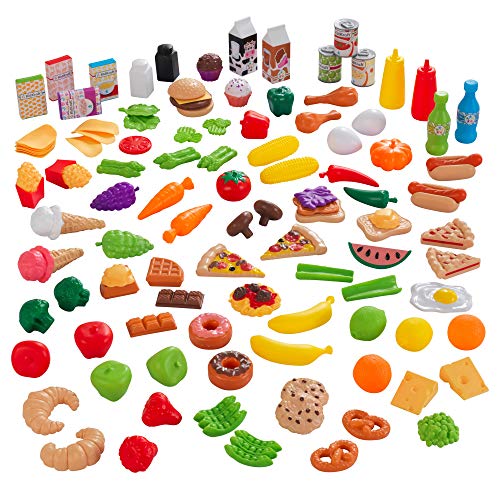
This is the one-box answer for a family that wants a play kitchen stocked from day one. The 115 pieces cover pantry shelves, the fridge, and the table in a single purchase, so a child can shop, cook, and serve without waiting for a second set. The collection mixes cans, bottles, and sweets into a grocery-style assortment that works for market games as well as kitchen games. Its size suits a full kitchen setup with cupboards and shelves, and it gives siblings enough pieces to play side by side without arguing over the same carton.
Specs
- 115 pieces
- Plastic grocery and pantry food
- Includes cans, bottles, and sweets
- Ages 3+
Best for: Families who want one large set that fills a whole play kitchen at once.
Watch out for: 115 pieces need a storage plan — without a basket or shelf space, the set spreads across the room.
Melissa & Doug Play-Time Produce Fruit with Crate

Few sets look as convincing on a play kitchen counter as this one. The molded plastic fruit arrives in a sturdy wooden crate, so the set doubles as a market stall display and a tidy storage box in one. Apples, pears, bananas, and strawberries in realistic colors invite a child to sort by color, count pieces into the crate, and carry the whole basket to the kitchen table. It is a small set, which makes it an easy first addition to a kitchen that already has pots and pans but nothing fresh to cook with.
Specs
- 9 pieces
- Molded plastic fruit
- Sturdy wooden crate included
- Ages 3-6
Best for: Adding realistic fruit and a market-stall feel to a kitchen that already has cookware.
Watch out for: With only 9 pieces, it covers produce only — it will not stock a pantry or serve a full dinner on its own.
Learning Resources New Sprouts Munch It! Food Set
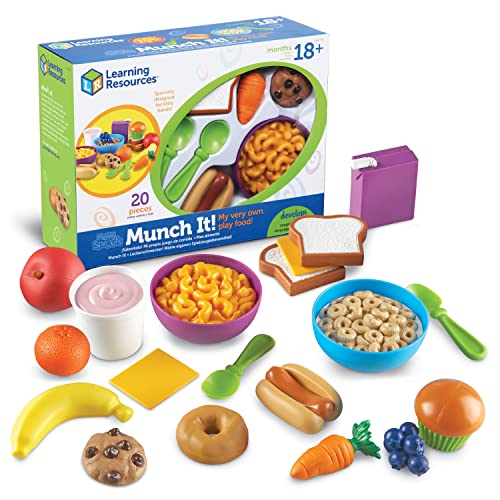
This set covers breakfast, lunch, and snack time, the meals children pretend to eat most often. Mac and cheese, cereal with spoons, bread, cheese slices, fruit, snacks, a yogurt cup, and a juice box cover a full day of pretend eating, and the included utensils mean the food can be served rather than just displayed. The pieces are sized for younger players, with soft plastic that is easy to hold and simple to wipe clean. It works well as a first food set for a toddler kitchen, pairing with any kitchen that needs everyday food rather than a themed collection.
Specs
- 20 pieces
- Plastic play food and utensils
- Includes mac and cheese, cereal with spoons, bread, cheese slices, fruits, snacks, yogurt cup, and juice box
- For toddlers
Best for: Everyday pretend meals for younger children just starting with a play kitchen.
Watch out for: The listing gives conflicting age guidance, so treat it as a toddler set and check the listing before buying for a specific child.
Melissa & Doug Food Fun Combine & Dine Dinners

Some children want to serve a meal, not just a snack, and this set is built for that. Ribs, a drumstick, lamb chops, salmon, baked beans, cauliflower, green beans, carrots, mac and cheese, mashed potatoes, and rice let a child plate a proper dinner, and the cupcake, orange, brownie, and apple pie finish it with dessert. A reusable menu card adds a restaurant twist, so the game can move from cooking to taking orders and serving guests. The solid plastic pieces are sturdy enough for daily use, and the variety serves a different menu every time.
Specs
- 17 pieces
- Solid plastic food
- Includes ribs, drumstick, lamb chops, salmon, baked beans, cauliflower, green beans, carrots, mac and cheese, mashed potatoes, rice, cupcake, orange, brownie, and apple pie
- Reusable menu card included
- Ages 3+
Best for: Children who love serving complete pretend dinners with mains, sides, and dessert.
Watch out for: It is a dinner-focused set, so it does not cover breakfast foods or pantry staples.
Melissa & Doug Wooden Cutting Fruit Set

Cutting food is the closest a play kitchen gets to real cooking, and this set makes that moment safe and satisfying. Seven sliceable wooden fruits come apart with self-stick tabs when a child runs the wooden knife through them, then press back together for the next round. The wooden storage crate keeps the set together between games, and the wood construction gives each piece a satisfying weight on the chopping board. It is the set to choose when a child is fascinated by the act of preparing food rather than just serving it.
Specs
- 17 pieces total
- 7 sliceable wooden fruits with self-stick tabs
- Wooden knife included
- Wooden storage crate included
- Wood construction
- Ages 3+
Best for: Children who love the chopping and preparing step of kitchen play.
Watch out for: The self-stick tabs need the pieces lined up correctly to rejoin, which can frustrate very young players at first.
Which One Fits Your Situation
You are stocking a first kitchen from scratch
Start with the KidKraft 115-piece set. One purchase fills the pantry, the fridge, and the table, so the kitchen feels complete on the first day and a child can invent any meal. Add the wooden cutting fruit later, once the basic kitchen play is established, to introduce the chopping step without overwhelming a new player with too many kinds of food at once.
Your kitchen already has pots, pans, and plates
The Melissa & Doug produce fruit set is the missing piece. Nine realistic fruits in a wooden crate give the kitchen something fresh to cook with, and the crate itself becomes a market display. If the child also wants to serve full meals, the Combine & Dine dinners set adds mains, sides, and dessert in one box.
You are buying for a toddler
The Learning Resources Munch It! set is built around the foods toddlers know best — cereal, bread, cheese, fruit, yogurt, and juice — with utensils included so the meal can be served. Its pieces are easy to grip and easy to clean. Keep the larger pantry collection for later, when the child is ready to sort and store more pieces.
You want food that teaches as well as entertains
Choose the wooden cutting fruit set, and pair it with the produce fruit crate. Slicing teaches halves and counting, the crate teaches sorting and tidying, and the two sets together cover fresh food from market stall to chopping board to plate. The wood pieces also hold up to daily use across years and siblings.
Common Mistakes
- Buying a 115-piece set for a kitchen with no shelf or basket to store it in, so the pieces end up scattered and half of them get lost within a week.
- Mixing food from many small sets with no theme, leaving a child with five bananas and no vegetables, rather than one coherent collection that covers a full meal.
- Choosing tiny, detailed pieces for a toddler who still mouths toys, instead of chunky food sized for small hands.
- Forgetting to check whether the food fits the kitchen — oversized pieces that will not go in the oven or fridge make the kitchen feel broken rather than fun.
- Picking a set for its looks alone and ignoring the play sequence, so the food sits on a shelf instead of supporting shopping, chopping, cooking, and serving.
Frequently Asked Questions
How many pieces of play food does a kids kitchen need?
Fifteen to 20 pieces cover a meal comfortably and fit a small kitchen and storage bin. Larger collections of 60 or more suit a full kitchen with shelves, because food needs a home between games. Start small if storage is tight, and add a second set once the first is played with daily.
Is wooden or plastic play food better for a kids kitchen?
Plastic food washes easily, survives drops on hard floors, and comes in bright realistic colors, which suits kitchens that travel outdoors. Wooden food feels heavier, lasts longer, and supports slicing and stacking games. Many families keep both: plastic for pantry items and messy play, wood for fruit and cutting sets that stay in one room.
Can play food go in a real oven or microwave?
No. Play food is made for pretend cooking only, and heat can warp plastic, scorch wood, or melt sliceable tabs. Keep all play food in the toy kitchen, and use the toy oven, stove, and microwave from the play set. If a piece gets sticky, wash plastic with warm soapy water and wipe wood with a damp cloth.
What age is play food for a kids kitchen suitable for?
Most sets in this guide are listed for ages 3 and up, with toddler sets for younger players. Check the age guidance on each listing, because piece sizes and small parts differ between sets. For children under three, choose chunky pieces with no detachable small parts, and save sets with small cans, bottles, or tabs for older children.
Related guides
- Best Laptops to Play Roblox: From Budget Integrated Graphics to Dedicated GPUs
- Best Laptops for Zoom Teaching: Clear Video, Reliable Audio and All-Day Class Power
- Best Laptops for Video Editing and Music Production: Power, Screen and Storage
- Best Laptops for Network Engineers: Ethernet, RAM for Labs and Ports That Matter
More from Amazon
Programs that pair well with the guide above. Offers and eligibility are set by Amazon and may change.
Free shipping on eligible items, Prime Video and more. Eligible new members can start with a free trial.
Start a Prime free trialAd-free music streaming. Eligible new subscribers can start with a free trial.
Try Music Unlimited freeA Prime membership for ages 18-24 with a trial period. Eligibility is set by Amazon.
See Prime for Young AdultsAudiobooks and podcasts to listen to on the go. Eligible new members can start with a free trial.
Try Audible freeAs an Amazon Associate we earn from qualifying purchases.









Write Your Review
No reviews yet. Be the first to share your experience!