
Key takeaways
- Find the best women's walking sneakers for plantar fasciitis: soft heel cushioning, arch support, and rocker soles for long walks without heel pain.
What's inside
As an Amazon Associate I earn from qualifying purchases. This post may contain affiliate links at no extra cost to you.
Walking should be the easiest exercise there is. With plantar fasciitis, it can become the hardest part of the day. The first steps after sitting, the ache that builds across a long walk, the heel that throbs by evening: all of it comes back to one band of tissue under the foot, stretched and irritated with every step. The best women’s walking sneakers for plantar fasciitis are built to break that cycle. They cushion the heel at landing, hold the arch through the middle of the step, and roll forward smoothly so the fascia is not yanked with each stride.


Walking sneakers are different from running shoes in small but important ways. A walking stride lands with a heel strike and rolls through the whole foot, so the shoe needs a beveled heel, a flexible forefoot, and cushioning that stays comfortable for hours, not just for a short run. This guide looks at four women’s sneakers that fit that job, all available on Amazon US, and explains how to choose between them for daily walks, errands, travel, and long days on your feet.
As with any foot pain, shoes are only part of the answer. Stretching the calf and the arch, easing into longer walks, and resting when pain flares all matter. If heel pain lasts more than a few weeks or keeps you from walking normally, talk with a doctor or a foot specialist.
How to Choose Walking Sneakers for Plantar Fasciitis
Look for a Smooth Heel-to-Toe Roll
When you walk, your heel hits the ground first, then your weight rolls across the arch to the ball of the foot and the toes. A good walking sneaker supports that roll. Look for a rounded or beveled heel edge, a midsole that curves gently from heel to toe, and a rocker shape that helps the foot move forward without effort. Shoes with a flat, squared-off heel tend to slap down and jar the heel.
Heel Cushioning That Lasts All Day
A walking shoe needs cushioning that does not go flat by midday. Thick foam under the heel, a soft heel collar, and a midsole that rebounds after each step all help. Try the shoe on and walk in it for several minutes. The heel should feel pillowed, not hard, and the cushioning should still feel present after you have been moving for a while.
Arch Support With Structure
Soft foam alone is not enough. The arch needs a structure that holds its shape under your weight for hours. A molded insole, a firm midfoot shank, or a stability feature on the inner side of the shoe can all provide that structure. If your arch collapses inward as you walk, look for a stability shoe or a shoe with a firm heel counter that keeps the heel centered.
A Firm Heel Counter
The heel counter is the stiff cup around the back of the shoe. Press it: it should resist squeezing. A firm counter stops the heel from tilting inward, which is one of the main ways the plantar fascia gets overstretched during walking. It also keeps the shoe from twisting, which helps on uneven pavement.
Room for Toes to Spread
Walking swells the feet, especially in warm weather or on long outings. A toe box that pinches will change your gait and load the fascia unevenly. Choose a shoe with a wide, rounded toe box, and consider a wide width if your forefoot feels crowded. Your toes should be able to spread and flex without pressing against the sides of the shoe.
Light Weight and Forefoot Flex
A walking shoe should bend where your foot bends: at the ball of the foot. Hold the shoe and flex it. It should bend easily at the forefoot and stay firm through the middle. A shoe that is too stiff will fight every step, and a heavy shoe will tire your legs on a long walk. The best walking sneakers feel light even when they carry a lot of cushioning.
Fit Tips for Walkers
Try walking shoes on in the afternoon, when your feet are at their largest. Wear your usual walking socks. Leave a thumb’s width between your longest toe and the front of the shoe. Walk around the store or your home for at least ten minutes, including a few turns, and pay attention to the heel and arch. If you use custom insoles, bring them along and check that they fit without crowding the shoe.
Top Picks
1. HOKA Bondi 8
The HOKA Bondi 8 is the softest landing in this group, and for many women with plantar fasciitis that is exactly what a walking shoe needs to do. Its thick EVA midsole spreads each heel strike across a wide platform, and the extended heel geometry helps the foot roll forward instead of landing with a jolt. HOKA reworked this version with softer, lighter foams, so the shoe feels plush without feeling heavy. The heel stack is about 36 millimeters with a 6 millimeter drop, giving a lot of protection under the heel while keeping the ride balanced.
For walking, the Bondi 8 has two more advantages. The wide platform under the foot adds stability on uneven pavement, and the shoe weighs about 8.9 ounces in a women’s size, which is light for a shoe with this much cushioning. The engineered mesh upper breathes well on warm days, and the outsole grips pavement and indoor floors.
Who it suits: women who walk for long stretches, who stand for hours, or whose heel hurts most at impact and who want the softest possible landing.
Things to note: the Bondi 8 is a tall shoe, and the thick stack takes a little getting used to if you are coming from a flat sneaker. It is a soft neutral shoe, not a firm stability shoe, so if your foot rolls inward a lot, you may want to use your usual insole with it or consider the Adrenaline GTS 24 below.
2. HOKA Clifton 9
The HOKA Clifton 9 is the lighter, livelier walking option in this guide. It is a daily road shoe with a lightweight EVA midsole, a breathable mesh upper, and the early-stage Meta-Rocker geometry that HOKA uses to help the foot roll smoothly from heel to toe. That rocker shape matters for walking, because it does some of the work of pushing the foot forward, so the fascia and the calf do not have to do it all.
The Clifton 9 feels less bulky than the Bondi 8, which makes it a good choice for women who want cushioning without a tall, heavy shoe. The fit is secure through the midfoot, with enough room in the forefoot for the toes to spread. It works well for brisk walks, travel days, and all-day wear when you want a shoe that feels light on the foot.
Who it suits: women who want a light, smooth walking sneaker with a gentle rocker, for daily walks and travel, and who prefer a lower, less bulky feel than a maximum-cushion shoe.
Things to note: the Clifton 9 is a neutral shoe with moderate cushioning, so it is not as pillowy under the heel as the Bondi 8. If your heel pain is severe or you stand on hard floors all day, the Bondi 8 may protect the heel better. Check the fit carefully, as some women find the Clifton runs slightly narrow in the midfoot.
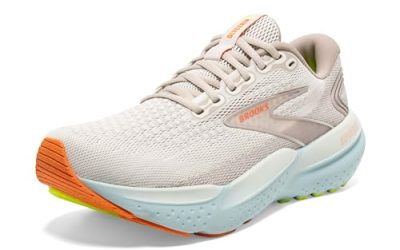
3. Brooks Adrenaline GTS 24
The Brooks Adrenaline GTS 24 is the stability pick for walkers, and it is the shoe to choose first if your foot rolls inward as you walk. Its GuideRails support system is designed to keep excess movement in check, guiding the heel and knee into a more aligned position without forcing the foot into a rigid path. That guidance takes strain off the plantar fascia, especially on long walks when tired muscles let the arch drop.
The midsole uses DNA Loft v3 foam, which is soft at landing and smooth through the stride, and the engineered air mesh upper fits securely while letting air move through the shoe. The Adrenaline GTS 24 is a supportive road shoe, so it has a firm heel counter and a stable platform under the foot. It is a popular choice for women who walk daily and need their shoes to keep working when their feet get tired.
Who it suits: women who overpronate, whose arches collapse on long walks, or who want a stable, guided walking shoe with soft cushioning and a secure heel fit.
Things to note: stability shoes feel firmer and more structured than neutral shoes. If your gait is neutral and you prefer a soft, free feel, the Clifton 9 or Bondi 8 may be more comfortable. The Adrenaline GTS 24 is also a full road shoe, so it is a little heavier than a minimal walking shoe.
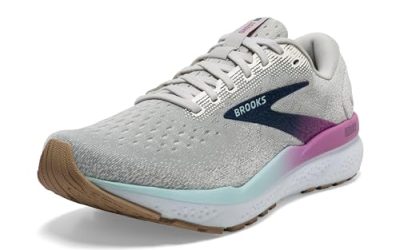
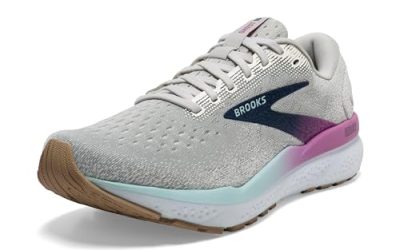
4. Brooks Ghost 16
The Brooks Ghost 16 is the all-rounder in this group: soft, smooth, and comfortable for walking, standing, and light activity. Its nitrogen-infused DNA Loft v3 midsole gives a soft landing, and the Segmented Crash Pad under the heel and forefoot smooths the transition from one step to the next. That smooth transition is what makes the Ghost 16 feel easy on a sore heel during a long walk.
The engineered air mesh upper uses a refined 3D Fit Print to hold the midfoot securely, and the RoadTack rubber outsole is built for grip and durability on pavement. The heel-to-toe drop is 12 millimeters, which many women with heel pain find comfortable because it eases tension on the back of the foot. The shoe weighs about 8.8 ounces in a women’s size. It also carries the APMA Seal of Acceptance and is a certified PDAC A5500 diabetic shoe, reflecting the attention Brooks gave to fit and foot health.
Who it suits: women who want one comfortable sneaker for walking, errands, and daily wear, with a smooth ride, a secure fit, and soft cushioning that holds up over a long day.
Things to note: the Ghost 16 is a neutral shoe, so it does not offer the guided stability of the Adrenaline GTS 24. If your foot rolls inward strongly, you may need an insole or a stability shoe. Some women find the midfoot fit slightly snug at first, so check the wide width if your forefoot is broad.
Comparison Table
| Sneaker | Best For | Support Type | Heel-to-Toe Drop | Upper | Standout Feature |
|---|---|---|---|---|---|
| HOKA Bondi 8 | Long walks and standing all day | Neutral | 6 mm | Engineered mesh | Maximum EVA cushioning with extended heel geometry |
| HOKA Clifton 9 | Light, brisk daily walks | Neutral | Moderate | Breathable mesh | Meta-Rocker geometry for a smooth forward roll |
| Brooks Adrenaline GTS 24 | Walkers who overpronate | Stability | Moderate | Engineered air mesh | GuideRails support with DNA Loft v3 cushioning |
| Brooks Ghost 16 | All-round walking and daily wear | Neutral | 12 mm | Engineered air mesh | DNA Loft v3 with Segmented Crash Pad |
Which One Is Right for You?
Think about how you walk and where your pain sits. If your heel hurts most when it hits the ground, and you want the softest landing you can get, start with the HOKA Bondi 8. Its thick midsole and extended heel are built for exactly that problem.
If you walk briskly and want a light shoe that helps your foot roll forward, the HOKA Clifton 9 is the better fit. Its rocker shape and light weight make long walks feel easier, and it packs well for travel.
If your foot rolls inward and your arch aches by the end of a walk, the Brooks Adrenaline GTS 24 is the most supportive choice. Its GuideRails system keeps the heel centered when your muscles tire.
If you want one shoe for walking, errands, and everything in between, the Brooks Ghost 16 is the balanced pick. It is soft, smooth, and comfortable across a long day, without the bulk of a maximum-cushion shoe or the firmness of a stability shoe.
Break in any new walking shoe gradually. Start with short walks around your neighborhood, then build up the distance over a week or two. A shoe that still feels good in the fourth hour is the one to keep.
Frequently Asked Questions
What should I look for in a walking sneaker for plantar fasciitis?
Look for soft heel cushioning, a firm heel counter, arch support that holds its shape, a roomy toe box, and a smooth heel-to-toe roll. A beveled heel and a flexible forefoot help the foot move naturally, and a moderate heel-to-toe drop eases tension on the heel.
Are walking sneakers different from running sneakers?
Yes, in the details. Walking sneakers are built for a heel-first stride and hours of wear, with a smoother roll and cushioning that lasts all day. Running shoes are built for impact and speed. Many running shoes work well for walking, including the ones in this guide, but a shoe with a rocker shape and a beveled heel usually feels better on a long walk.
How do I break in new walking sneakers with plantar fasciitis?
Start with short walks and build up slowly over a week or two. Wear them around the house first, then on short outings, then on longer walks. If pain increases sharply, shorten the walk and rest. A good shoe should feel better as your foot adapts, not worse.
Can I wear these sneakers with orthotics?
Yes. All four sneakers in this guide have removable insoles, so you can use a custom orthotic or a supportive insole. Check that the shoe still fits with the insert in place and that your heel sits securely in the heel counter.
Disclosure: As an Amazon Associate, we may earn from qualifying purchases.
Related guides
- Best Women’s Sneakers for Walking on Concrete: Cushioned Picks for Hard Pavement
- Best Women’s Sneakers for Walking Long Distances: Comfort That Lasts for Miles
- Best Women’s Sneakers for Walking in Italy: Comfort for Cobblestones and Hills
- Best Women’s Sneakers for Walking Around Europe: Comfort for Cobblestones and City Days
More from Amazon
Programs that pair well with the guide above. Offers and eligibility are set by Amazon and may change.
Free shipping on eligible items, Prime Video and more. Eligible new members can start with a free trial.
Start a Prime free trialAd-free music streaming. Eligible new subscribers can start with a free trial.
Try Music Unlimited freeA Prime membership for ages 18-24 with a trial period. Eligibility is set by Amazon.
See Prime for Young AdultsAudiobooks and podcasts to listen to on the go. Eligible new members can start with a free trial.
Try Audible freeAs an Amazon Associate we earn from qualifying purchases.
Write Your Review
No reviews yet. Be the first to share your experience!