
Key takeaways
- Find the best women's sneakers for plantar fasciitis 2026: cushioned, supportive picks with arch support, heel cushioning, and roomy fits for sore heels.
What's inside
As an Amazon Associate I earn from qualifying purchases. This post may contain affiliate links at no extra cost to you.
If your first steps in the morning feel like walking on a bruised heel, you already know how much plantar fasciitis can shape an ordinary day. The plantar fascia is a thick band of tissue that runs along the bottom of the foot, from the heel bone to the toes, and when it becomes irritated, every step can send a sharp ache through the heel and arch. The best women’s sneakers for plantar fasciitis 2026 are not the flashiest shoes on the shelf. They are the ones that cushion the heel, support the arch, and let the foot move in a smooth, natural rhythm instead of collapsing inward with each step.


This guide focuses on sneakers that are widely available on Amazon US and built for the kind of comfort that matters when the plantar fascia is sensitive. Every shoe below is a women’s road sneaker with real cushioning, a structured midsole, and a fit that works for daily wear, walking, and light running. We explain what to look for, compare four strong options side by side, and help you match a shoe to the way you actually spend your day.
A note before you shop: sneakers can ease the load on a sore heel, but they are not a medical treatment. If heel pain lasts more than a few weeks, gets worse, or keeps you from walking normally, talk with a doctor or a foot specialist. The right shoe helps. The right care plan helps more.
How to Choose Sneakers for Plantar Fasciitis
Plantar fasciitis pain usually centers on the heel, where the fascia attaches to the heel bone, and it often feels worst after rest. A good sneaker reduces the strain on that attachment point in several ways at once. Here is what to check before you buy.
Heel Cushioning Comes First
The heel takes the first impact of every step, so heel cushioning is the single most important feature. Look for a thick, soft midsole under the heel, with foam that compresses gently and then rebounds. Shoes with a higher heel stack and a beveled or extended heel edge tend to feel smoother at landing, because the foot rolls forward instead of slapping down flat. A thin, hard sole does the opposite: it sends impact straight into the heel.
Arch Support That Holds Its Shape
The arch needs support that stays supportive. A soft insole that flattens under body weight will not help for long. Look for a midsole with a firm arch structure, a molded insole, or a stability feature that keeps the arch from collapsing. Some shoes use a guidance system or a firmer foam on the inner side of the midsole. Others rely on a well-shaped footbed and a stable heel counter. Either approach can work, as long as the arch feels held up after an hour on your feet, not just in the first minute.
A Heel Counter That Locks the Foot in Place
The heel counter is the stiff cup at the back of the shoe. When it fits well, it keeps the heel centered and stops the foot from rolling too far inward. That inward roll, called overpronation, stretches the plantar fascia with every step. Press the back of the shoe: it should feel firm, not floppy. When you try the shoe on, your heel should feel held, not sliding up and down.
A Roomy Toe Box
A cramped toe box forces the toes together and changes how the foot loads. For plantar fasciitis, that is a problem, because the fascia works with the toes to support the arch. Choose a shoe with enough width across the forefoot that your toes can spread naturally. Many of the shoes below come in wide widths, and that option is worth using if your forefoot feels squeezed in a standard width.
Heel-to-Toe Drop
Heel-to-toe drop is the difference in height between the heel and the forefoot of the shoe. A moderate drop, around 8 to 12 millimeters, often feels comfortable for sore heels, because it takes some load off the Achilles tendon and the fascia. A very low drop or a flat shoe can pull harder on the back of the heel. A very high drop can push weight forward onto the forefoot. Most of the sneakers in this guide sit in that moderate range.
Weight and Flexibility
A heavy shoe makes tired feet work harder. A shoe that is too stiff fights the natural bend of the foot. Look for a sneaker that feels light for its cushioning and bends at the forefoot, where the toes flex, while staying firm through the middle. That combination gives you protection without making each step feel like a chore.
Fit Tips That Matter
Try sneakers on later in the day, when feet are slightly larger. Wear the socks you normally walk in. Leave about a thumb’s width between your longest toe and the end of the shoe. Walk around for several minutes, not just a few steps, and pay attention to the heel and the arch. A shoe that pinches in the store will not improve at home. If you use custom insoles or orthotics, check that the shoe has a removable insole so your insert fits without crowding the foot.
Top Picks
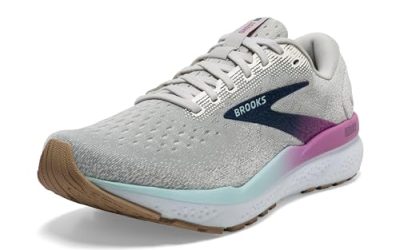
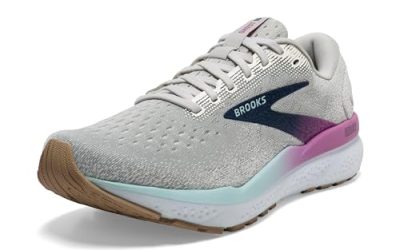
1. Brooks Ghost 16
The Brooks Ghost 16 is a neutral road sneaker built around soft, smooth cushioning, and it is a natural starting point for women with plantar fasciitis who want one shoe for walking, daily wear, and easy runs. Its midsole uses nitrogen-infused DNA Loft v3 foam, which gives the shoe a soft landing without feeling mushy. A Segmented Crash Pad under the heel and forefoot helps the foot transition smoothly from landing to toe-off, so each step flows instead of jolting the heel.
The upper is engineered air mesh with a refined 3D Fit Print, which wraps the midfoot securely while letting air move through the shoe. The outsole uses RoadTack rubber, a compound designed for durability and grip on pavement. The heel-to-toe drop is 12 millimeters, which suits many women with heel pain because it eases tension on the back of the foot. The shoe weighs about 8.8 ounces in a women’s size, light for the amount of cushioning it carries.
The Ghost 16 also carries the APMA Seal of Acceptance and is a certified PDAC A5500 diabetic shoe, which reflects the care Brooks put into its fit and foot health features. That does not make it a medical device, but it does signal that the shoe was designed with sensitive feet in mind.
Who it suits: women who want a soft, neutral sneaker for walking, standing, and light running, with a smooth heel-to-toe transition and a secure midfoot fit.
Things to note: the Ghost 16 is a neutral shoe, so if your foot rolls inward a lot, you may want a stability shoe instead. Some women find the fit slightly snug in the midfoot at first, so consider your usual width and check the wide option if your forefoot is broad.
2. ASICS Gel-Kayano 31
The ASICS Gel-Kayano 31 is the stability option in this group, and it is the pick to look at first if your arch collapses inward or your ankles roll when you walk. Its 4D Guidance System is designed to give adaptive stability, guiding the foot into a more balanced stride instead of forcing it into one rigid position. Rearfoot PureGEL technology adds soft cushioning at the heel, right where plantar fasciitis pain usually sits, while FF BLAST PLUS ECO foam in the midsole keeps the ride light and responsive.
The upper is engineered mesh, which improves airflow and adapts to the shape of the foot. The shoe has a 10 millimeter heel-to-toe drop and weighs about 266 grams, or 9.3 ounces, in a women’s size. Cushioning is rated at the maximum level in the ASICS lineup, so the Kayano 31 feels protective on long walks and on hard pavement.
Who it suits: women who overpronate, who need a stable heel and a guided stride, and who want maximum cushioning in a running-style sneaker they can also wear all day.
Things to note: stability shoes feel firmer than neutral shoes, and the Kayano 31 is no exception. If your gait is neutral and you prefer a softer, freer feel, the Ghost 16 or the Bondi 8 below may suit you better. The shoe is also a full-featured trainer, so it is heavier than a minimal walking shoe.
3. HOKA Bondi 8
The HOKA Bondi 8 is the maximum-cushion pick in this guide. It has one of the thickest midsoles of any road sneaker here, built from soft EVA foam that spreads impact across a wide platform. HOKA reworked the Bondi 8 with softer, lighter foams and a new extended heel geometry, so the heel lands smoothly and the shoe rolls forward without a hard edge. The heel sits about 36 millimeters high with a 6 millimeter drop, which gives a lot of protection under the heel while keeping the ride balanced.
That thick cushioning makes the Bondi 8 a strong choice for women who spend long hours on their feet or who want the softest possible landing for a sore heel. The engineered mesh upper is breathable, and the wide platform under the foot adds stability even though the shoe is a neutral model. It weighs about 8.9 ounces in a women’s size, which is light for a shoe with this much foam.
Who it suits: women who want maximum heel cushioning above all else, who stand or walk for long stretches, and who like a soft, rolling ride.
Things to note: the Bondi 8 is a tall, thick shoe, and some women find the stack height takes a little getting used to. It is a soft shoe, not a firm stability shoe, so if you need strong arch control, pair it with your usual insole or look at the Kayano 31 instead.
4. New Balance Fresh Foam X 1080v13

The New Balance Fresh Foam X 1080v13 is a max-cushion neutral trainer that works well as an everyday sneaker for plantar fasciitis. Its Fresh Foam X midsole is soft under the heel and forefoot, with a smooth, even feel that suits long walks and daily wear. The shoe is designed as a daily trainer, so it balances cushioning with a stable, predictable ride rather than chasing speed.
The upper is a breathable mesh with a comfortable, accommodating fit, and the shoe is available in a range of widths, which matters for women whose feet swell during the day or who need extra room across the forefoot. The outsole uses rubber in high-wear areas for grip on pavement and indoor floors.
Who it suits: women who want a soft, roomy, everyday sneaker with generous cushioning, especially those who need a wide width or a forgiving fit.
Things to note: the 1080v13 is a soft neutral shoe, so it does not offer the guided stability of the Kayano 31. If your foot rolls inward strongly, you may need an insole or a stability model to go with it.
Comparison Table
| Sneaker | Best For | Support Type | Heel-to-Toe Drop | Upper | Standout Feature |
|---|---|---|---|---|---|
| Brooks Ghost 16 | All-round walking and light running | Neutral | 12 mm | Engineered air mesh | DNA Loft v3 cushioning with Segmented Crash Pad |
| ASICS Gel-Kayano 31 | Overpronation and guided stability | Stability | 10 mm | Engineered mesh | 4D Guidance System with rearfoot PureGEL |
| HOKA Bondi 8 | Maximum heel cushioning | Neutral | 6 mm | Engineered mesh | Thick EVA midsole with extended heel geometry |
| New Balance Fresh Foam X 1080v13 | Soft everyday comfort and wide fits | Neutral | Moderate | Breathable mesh | Fresh Foam X max-cushion midsole |
Which One Is Right for You?
Start with your gait. If your ankles roll inward and your shoes wear down on the inner edge, the ASICS Gel-Kayano 31 is the most supportive choice here. Its guidance system and firm heel structure are built for exactly that pattern.
If your heel hurts most at impact and you want the softest landing possible, the HOKA Bondi 8 is the pick. Its thick midsole and extended heel spread the load and take the sting out of hard surfaces.
If you want one shoe that does a bit of everything, the Brooks Ghost 16 is the balanced choice. It is soft, smooth, light for its cushioning, and comfortable for walking, standing, and easy runs.
If fit is your biggest problem, especially width or a forefoot that swells during the day, the New Balance Fresh Foam X 1080v13 is worth trying first. Its roomy fit and range of widths make it easier to get a comfortable, non-pinching fit.
Whichever shoe you choose, give it a proper trial. Wear it around the house for a few days, then on short walks, before you commit to a long day on your feet. A shoe that feels good in the first hour and still feels good in the fourth hour is the one to keep.
Frequently Asked Questions
What makes a sneaker good for plantar fasciitis?
A good sneaker cushions the heel, supports the arch, and keeps the foot from rolling inward. Look for a thick, soft midsole, a firm heel counter, a roomy toe box, and a moderate heel-to-toe drop. The shoe should feel supportive after an hour of walking, not just when you first put it on.
Should I choose a neutral shoe or a stability shoe?
It depends on your gait. If your foot rolls inward noticeably, a stability shoe like the Gel-Kayano 31 can help guide your stride. If your gait is neutral and you simply need cushioning, a neutral shoe like the Ghost 16 or Bondi 8 is usually more comfortable. A foot specialist can check your gait if you are unsure.
How long should I wear new sneakers before deciding they help?
Give a new pair at least a week of regular wear. Walk in them for short periods first, then build up to longer days. Heel pain often improves gradually as the foot adapts to better support, so a single day is not enough to judge a shoe.
Can I use my orthotics with these sneakers?
Yes, in most cases. All four sneakers in this guide have removable insoles, so you can swap in a custom orthotic or a supportive insole. Make sure the shoe still fits well with the insert in place, and check that your heel sits securely in the heel counter.
Disclosure: As an Amazon Associate, we may earn from qualifying purchases.
Related guides
- Best Women’s Sneakers for Walking on Concrete: Cushioned Picks for Hard Pavement
- Best Women’s Sneakers for Walking Long Distances: Comfort That Lasts for Miles
- Best Women’s Sneakers for Walking in Italy: Comfort for Cobblestones and Hills
- Best Women’s Sneakers for Walking Around Europe: Comfort for Cobblestones and City Days
More from Amazon
Programs that pair well with the guide above. Offers and eligibility are set by Amazon and may change.
Free shipping on eligible items, Prime Video and more. Eligible new members can start with a free trial.
Start a Prime free trialAd-free music streaming. Eligible new subscribers can start with a free trial.
Try Music Unlimited freeA Prime membership for ages 18-24 with a trial period. Eligibility is set by Amazon.
See Prime for Young AdultsAudiobooks and podcasts to listen to on the go. Eligible new members can start with a free trial.
Try Audible freeAs an Amazon Associate we earn from qualifying purchases.
Write Your Review
No reviews yet. Be the first to share your experience!