
Key takeaways
- Find the best orthopedic sneakers for women with arch support, with cushioned, stable picks, roomy fits, and all-day comfort for sensitive feet.
What's inside
As an Amazon Associate I earn from qualifying purchases. This post may contain affiliate links at no extra cost to you.
The best orthopedic sneakers for women with arch support do more than cushion your steps. They hold the arch in a supported position, spread pressure evenly across the foot, and keep the heel steady so long days on your feet feel manageable instead of punishing. If your arches ache by midday, or if flat, unsupportive shoes leave your feet tired and sore, the right pair can change how your whole day feels.
Orthopedic-friendly sneakers are not only for people with a diagnosis. Many women choose them for everyday walking, standing work, travel, and light exercise, because a supportive shoe simply feels better hour after hour. The best options combine a contoured footbed, a firm heel counter, a stable midsole, and enough room in the toe box that toes can spread naturally. This guide explains what to look for and rounds up four well-built choices that pair genuine arch support with comfort you can wear all day.
How to Choose Orthopedic Sneakers With Arch Support
Shopping for supportive sneakers is easier when you know which features actually matter. Arch support is not a single feature. It is the result of several design choices working together, and a shoe that gets most of them right will serve you far better than one that only advertises a cushioned insole.
Look for a contoured footbed
A flat insole does almost nothing for an arch that needs support. Look for a footbed that rises gently under the arch and cups the heel. Some shoes use a removable insole, which is a real advantage: you can swap in a custom orthotic or a firmer insert without losing the shoe’s overall fit. If you already wear orthotics, check that the shoe has a removable sockliner and enough depth to fit the insert without making the shoe feel tight.
Check heel stability
A supportive sneaker should keep your heel from rolling inward or outward with each step. Hold the shoe and press the heel counter, the stiff cup at the back. It should resist collapsing when you squeeze it. A firm heel counter works with the midsole to control motion and reduce strain on the arch, the ankle, and the knee.
Choose cushioning that stays supportive
Soft cushioning feels wonderful for the first few minutes, but very soft foam can bottom out and leave the arch unsupported after an hour. The best orthopedic sneakers use cushioning that is soft on landing yet stable under load. Look for words like balanced cushioning, responsive foam, or a dual-density midsole, which usually means the shoe combines softness with structure.
Mind the toe box
Toes need room. A narrow, tapered toe box squeezes the forefoot, which can aggravate bunions, hammertoes, and general foot fatigue. A roomy toe box lets toes spread naturally and reduces pressure on the joints. Several of the shoes below come in wide widths, which is worth considering even if you do not normally buy wide shoes, because foot volume changes through the day and feet tend to spread with age.
Consider the heel-to-toe drop
Heel-to-toe drop is the height difference between the heel and the forefoot. A moderate drop, often around 8 to 12 millimeters, suits most walkers and standing workers, because it takes a little load off the Achilles tendon and the arch. A very low drop can feel harsh if you are used to a raised heel, while a very high drop can push weight forward onto the forefoot. If you have worn a certain drop comfortably before, staying close to it is a sensible choice.
Fit matters more than the brand name
Even the best-designed shoe will not help if it does not fit. Shop in the afternoon, when feet are slightly swollen, and wear the socks you normally use. There should be about a thumb’s width of space between your longest toe and the end of the shoe. The heel should feel secure without slipping, and the arch of the shoe should line up with the arch of your foot, not sit too far forward or too far back. Walk around the house on carpet for a while before committing, and keep the receipt until you have worn the shoes for a full day.
Top Picks
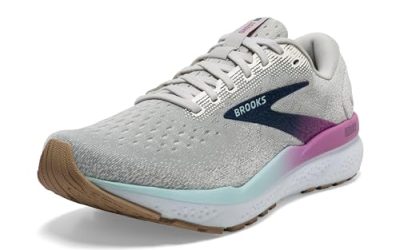
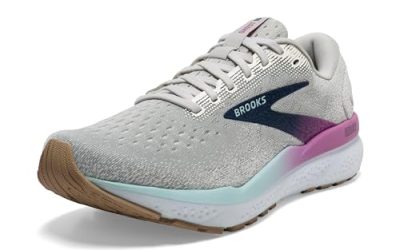
Brooks Ghost 15
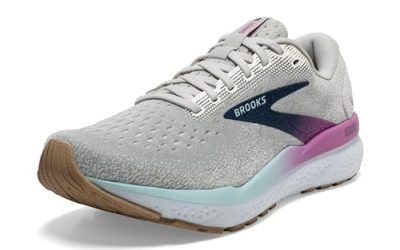
The Brooks Ghost 15 is a neutral running shoe that has become a favorite for all-day wear because its cushioning is soft without feeling unstable. Its DNA LOFT v2 midsole gives a smooth, balanced ride, while the Segmented Crash Pad helps each step roll evenly from heel to toe. For women who need arch support, the shoe’s structured midsole and engineered mesh upper work together to hold the foot in place without squeezing it.
The Ghost 15 carries the APMA Seal of Acceptance and is a certified PDAC A5500 diabetic shoe, which speaks to how seriously its fit and support are taken. It comes in medium and wide widths, so you can choose the fit that matches your foot volume. The engineered mesh upper breathes well, which matters if you wear the shoes for long stretches, and the 3D Fit Print adds structure around the midfoot without adding bulk.
Who it suits best: women who want one pair of sneakers for walking, errands, travel, and light workouts, with soft cushioning and a secure, comfortable fit. It is a strong choice if you spend most of the day on your feet and want support that does not feel rigid.
Things to note: the Ghost 15 is a neutral shoe, so it does not include built-in stability posting for severe overpronation. If your arches collapse significantly, you may want to pair it with a firmer insert or look at a stability model. The cushioning is plush rather than firm, so women who prefer a very firm feel underfoot may want a different option.
Hoka Bondi 8

The Hoka Bondi 8 is built around maximum cushioning. Its thick midsole and wide base create a stable platform that spreads pressure across the whole foot, which is exactly what tired arches need. The engineered mesh upper is breathable and flexible, and the padded collar holds the ankle comfortably without rubbing.
What sets the Bondi 8 apart is how protective it feels. The deep cushioning absorbs impact with every step, while the shoe’s balanced geometry keeps the ride smooth rather than wobbly. The outsole uses durable rubber in high-wear areas, so the shoe holds up to daily walking on pavement. The Bondi 8 also comes in wide widths, and its roomy toe box gives toes space to spread, which helps reduce forefoot pressure.
Who it suits best: women who want the softest, most cushioned option for walking and standing, especially if they live with foot fatigue, sensitive joints, or long hours on hard floors. It is also a good pick for heavier walkers who need cushioning that does not flatten out quickly.
Things to note: the thick sole makes the shoe look and feel substantial, and it is heavier than a minimalist sneaker. If you prefer a low-profile shoe or need something very light for travel, this may feel like more shoe than you want. The cushioning is very soft, so women who need a firm, controlling feel may prefer a stability shoe instead.
ASICS Gel-Kayano 30
The ASICS Gel-Kayano 30 is a stability shoe, which means it is designed for feet that need extra guidance as well as cushioning. Its 4D Guidance System helps control excess inward rolling, while FF BLAST PLUS cushioning and PureGEL in the heel give a soft landing without sacrificing support. The heel drop is 10 millimeters, a moderate height that suits most walkers and runners.
For arch support, the Kayano 30 is one of the most structured options in this guide. The midsole is firmer under the arch than a neutral shoe, which helps hold the foot in a neutral position through the whole gait cycle. The engineered mesh upper fits securely around the midfoot, and the shoe is available in wide widths for women who need extra forefoot room.
Who it suits best: women whose arches roll inward when they walk, or who have been told they overpronate. It is also a strong choice for anyone who wants a supportive shoe for walking and light running in a single pair.
Things to note: stability shoes feel firmer and more structured than neutral shoes, which some women find less comfortable at first. Give yourself a few days to adjust. The Kayano 30 is also a performance running shoe, so if you only need a casual walking shoe, a simpler design may be enough.
New Balance Fresh Foam X 1080v13
The New Balance Fresh Foam X 1080v13 is a premium neutral trainer built around the brand’s Fresh Foam X midsole, which delivers soft, responsive cushioning with a smooth transition from heel to toe. The engineered mesh upper is breathable and adapts to the shape of the foot, and the shoe is available in narrow, medium, wide, and extra-wide widths, which is rare and genuinely useful for women with hard-to-fit feet.
For arch support, the 1080v13 works well because its cushioning is deep and consistent, and the wide and extra-wide options let you get a fit that does not compress the arch or the forefoot. The heel counter is structured enough to keep the foot steady, while the roomy fit means you can add an orthotic insert without the shoe feeling cramped.
Who it suits best: women who need a wide or extra-wide fit, or who want a plush, premium-feeling sneaker for walking, travel, and everyday wear. It is also a good choice if you have struggled to find a supportive shoe in your size.
Things to note: this is a generously cushioned shoe with a soft feel, so it is not the firmest option here. If you need strong motion control, a stability shoe may suit you better. As with any new shoe, try it with your usual socks and inserts before wearing it for a full day.
Comparison Table
| Feature | Brooks Ghost 15 | Hoka Bondi 8 | ASICS Gel-Kayano 30 | New Balance 1080v13 |
|---|---|---|---|---|
| Support type | Neutral | Neutral, max cushion | Stability | Neutral |
| Cushioning | DNA LOFT v2 foam | Thick, plush midsole | FF BLAST PLUS foam with PureGEL | Fresh Foam X foam |
| Heel-to-toe drop | 12 mm | Low, balanced | 10 mm | Moderate |
| Width options | Medium, wide | Medium, wide | Medium, wide | Narrow, medium, wide, extra wide |
| Upper | Engineered mesh | Engineered mesh | Engineered mesh | Engineered mesh |
| Best for | All-day walking and light workouts | Maximum cushioning and standing | Overpronation and guided support | Wide feet and plush comfort |
| Removable insole | Yes | Yes | Yes | Yes |
Which One Is Right for You?
Start with how your feet behave. If your arches are low and your ankles roll inward, the ASICS Gel-Kayano 30 gives the most guidance, and its stability design will do the most work for you. If your arches are normal to high and you simply want soft, reliable support for long days, the Brooks Ghost 15 or the New Balance 1080v13 are both excellent, with the New Balance winning if you need a wide or extra-wide fit.
If comfort is your top priority and you want the softest landing possible, the Hoka Bondi 8 is hard to beat. Its deep cushioning is especially kind to feet that hurt after hours on hard floors. Think about where you will wear the shoes most: the Ghost 15 and the 1080v13 are the most versatile for mixed use, the Kayano 30 is the best pick if you also run, and the Bondi 8 is the best pick for pure walking and standing comfort.
Whatever you choose, remember that arch support works best when the shoe fits properly. Measure both feet, try the shoes late in the day, and give a new pair a few short outings before wearing them for a full day. If you use custom orthotics, bring them when you try shoes on, and choose a model with a removable insole and enough depth to fit them.
FAQ
What makes a sneaker orthopedic?
An orthopedic-friendly sneaker supports the natural shape of the foot. It has a contoured footbed that supports the arch, a firm heel counter that keeps the heel steady, cushioning that absorbs impact without collapsing, and enough room in the toe box for toes to spread. It should also have a removable insole so you can use an orthotic insert if you need one.
Can I put my own orthotics in these sneakers?
Yes, all four shoes in this guide have removable insoles. Take out the factory insole before adding your orthotic, and check that the shoe still fits comfortably with the insert in place. If the fit feels tight, try the next width up or a half size larger.
Do I need a stability shoe or a neutral shoe?
It depends on how your foot moves. If your arch collapses and your ankle rolls inward when you walk, a stability shoe like the Gel-Kayano 30 can help guide your foot. If your arch holds its shape and you mainly want cushioning and comfort, a neutral shoe like the Ghost 15, Bondi 8, or 1080v13 is usually enough. A podiatrist or a running store gait check can help you decide.
How often should I replace orthopedic sneakers?
Most cushioned sneakers lose a noticeable amount of support after 300 to 500 miles of walking, or roughly every six to twelve months of daily wear. If the cushioning feels flat, the heel counter leans to one side, or your foot pain returns, it is time for a new pair, even if the uppers still look fine.
Disclosure: As an Amazon Associate, we may earn from qualifying purchases.
Related guides
- Best Women’s Sneakers for Walking on Concrete: Cushioned Picks for Hard Pavement
- Best Women’s Sneakers for Walking Long Distances: Comfort That Lasts for Miles
- Best Women’s Sneakers for Walking in Italy: Comfort for Cobblestones and Hills
- Best Women’s Sneakers for Walking Around Europe: Comfort for Cobblestones and City Days
More from Amazon
Programs that pair well with the guide above. Offers and eligibility are set by Amazon and may change.
Free shipping on eligible items, Prime Video and more. Eligible new members can start with a free trial.
Start a Prime free trialAd-free music streaming. Eligible new subscribers can start with a free trial.
Try Music Unlimited freeA Prime membership for ages 18-24 with a trial period. Eligibility is set by Amazon.
See Prime for Young AdultsAudiobooks and podcasts to listen to on the go. Eligible new members can start with a free trial.
Try Audible freeAs an Amazon Associate we earn from qualifying purchases.
Write Your Review
No reviews yet. Be the first to share your experience!