
Key takeaways
- Find the best women's walking sneakers for wide feet with true wide widths, roomy toe boxes, and all-day comfort that never pinches or squeezes.
What's inside
As an Amazon Associate I earn from qualifying purchases. This post may contain affiliate links at no extra cost to you.
The best women’s walking sneakers for wide feet are not just regular sneakers in a bigger size. They are built on a wider last, with a roomier toe box, a broader forefoot, and an upper that gives your foot space to spread naturally with every step. If you have wide feet, you already know the difference: a standard-width shoe can pinch at the little toe, squeeze across the ball of the foot, and leave you with sore spots, numbness, or blisters long before the walk is over. Sizing up in length is not a real fix, because a longer shoe leaves the heel slipping while the width stays wrong.
This guide is about fit first. Every pick below is a women’s walking sneaker that is genuinely available in a wide width, with the width verified on the product listing rather than assumed. We cover what makes a wide fit work and which models suit different foot shapes.
How to Choose
1. True Wide Width Versus a Roomy Standard Fit
Not every shoe described as roomy is actually made in a wide width. A true wide width, usually marked D in women’s sizing, is built on a wider last, which means the whole forefoot and midfoot are broader, not just the toe area. Some brands also offer extra wide, marked 2E, for feet that need even more room. A standard-width shoe with a stretchy upper can feel forgiving at first, but the sole underneath is still narrow, so your foot hangs over the edges and the shoe wears unevenly. When shopping, look for the width letter in the size selection itself. If the listing only offers medium width, the shoe is not a wide fit, no matter how soft the upper feels. Always select the D or 2E option explicitly when you order.
2. Toe Box Shape and Forefoot Room
The toe box is where wide feet feel the difference most. Look for a toe box that is wide and rounded or squared, rather than tapered to a point. Your toes should be able to spread and wiggle without pressing against the sides or the front of the shoe. The widest part of the shoe should line up with the widest part of your foot, which is usually across the ball of the foot, just behind the toes. If the shoe is widest further back, it will pinch even in the right size. Shoes with a straight or gently curved last tend to suit wide feet better than sharply curved ones.
3. Upper Materials That Flex With Your Foot
The upper of a wide walking sneaker should work with your foot, not fight it. Engineered mesh and knit uppers stretch gently across the forefoot, which helps when feet swell during a long walk or on a warm day. Leather and suede uppers offer more structure and durability, but they need a break-in period and may feel stiff at first. Look for uppers without stiff overlays or rigid seams across the widest part of the foot, since those are the places that rub and cause hot spots. A seamless or low-profile interior reduces friction, and a stretchy collar around the ankle helps the shoe go on easily without squeezing the midfoot. If you have a bunion, a soft, flexible upper with no seam over the bunion area makes a real difference to comfort.
4. Arch Support and Midfoot Hold
A wider foot still needs proper support. A shoe that is wide in the forefoot but loose in the midfoot can let the foot slide around, which causes blisters and instability. Look for a midfoot that holds securely without pinching, with laces that let you adjust the fit across the instep. Good arch support matters too: many wide-footed walkers overpronate, meaning the foot rolls inward, so a supportive midsole or a removable insole that can be swapped for an orthotic is valuable. Check whether the insole is removable before you buy, because that single feature decides whether you can use custom inserts. A contoured footbed that cups the heel also helps keep the foot centred in the wider platform.
5. Cushioning for Long Days on Your Feet
Wide feet often carry more pressure across the forefoot, so cushioning that stays supportive matters. Look for a midsole foam that absorbs impact without feeling mushy, and a heel cushion that softens each step. A moderate stack height gives protection from hard pavement without making the shoe feel unstable. Heel-to-toe drop is worth considering as well: a drop of around 8 to 12 mm suits many walkers and eases pressure on the calves and Achilles, while a lower drop encourages a flatter, more natural stride. If you walk for hours at a time, prioritise cushioning that rebounds well over many miles rather than foam that feels soft in the shop and flattens by afternoon.
6. Heel Fit and Slipping
One of the most common problems for wide-footed walkers is a shoe that fits the forefoot but slips at the heel. Because many wide shoes are built on a last that is wider everywhere, the heel can feel loose even when the front fits perfectly. Look for a heel counter that is firm enough to hold your heel in place, with padding that grips gently without digging in. A heel-lock lacing technique, using the top eyelet to create a loop, can reduce slipping without tightening the forefoot. When trying shoes on, walk up a slope or a ramp if one is available: heel lift shows up most clearly on inclines. If the heel slips more than a small amount, try a different model rather than a different size, since the heel shape varies between brands.
7. Sizing, Break-In, and When to Return
Wide feet are often slightly different sizes from each other, so always fit the larger foot first. Measure your feet late in the day, when they are at their largest, and measure both length and width. Many shoe brands publish width charts, and a quick measurement with a ruler can tell you whether you need a D or a 2E width. When a new pair arrives, wear it around the house for an hour or two before committing: the forefoot should feel roomy without the heel slipping, and there should be about a thumb’s width of space in front of your longest toe. Leather uppers may need a few short walks to soften, while mesh and knit uppers usually feel right immediately. If you feel pinching, numbness, or pressure on the little toe after a short indoor walk, return the shoe rather than hoping it will stretch, because a shoe that pinches on day one rarely becomes comfortable.
Top Picks
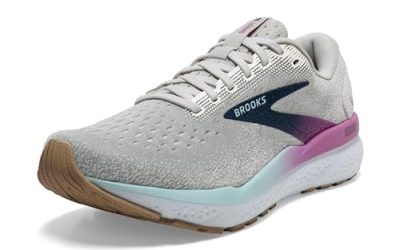
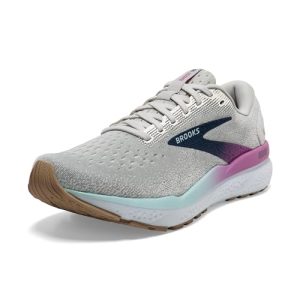
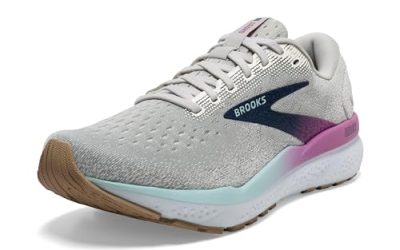
Brooks Women’s Ghost 16 Wide

The Brooks Ghost 16 in Wide is a cushioned walking sneaker built on a genuinely wider last, and it is one of the most reliable wide-fit options for daily walking. The wide version, marked D, gives the forefoot real extra room while keeping the heel and midfoot secure, which solves the most common wide-fit problem in one stroke. The DNA LOFT v3 midsole is soft and smooth, and the engineered mesh upper breathes well and flexes with the foot as it swells during long walks.
Key specs include a wide D width option alongside the standard medium, a DNA LOFT v3 nitrogen-infused midsole for soft cushioning, a breathable engineered air mesh upper, a segmented crash pad in the outsole for smooth heel-to-toe transitions, and a 10 mm heel-to-toe drop. The outsole rubber is placed in high-wear areas for durability on pavement.
This pick suits walkers with a broad forefoot who want a plush, cushioned shoe for daily miles. It works especially well for neighbourhood walks, errands, and long days on hard surfaces, where the soft midsole protects the feet from pavement impact. The wide fit also suits walkers whose feet swell in warm weather, since the mesh upper gives a little and the roomy toe box never feels restrictive.
Points to note: the Ghost 16 is a neutral shoe, so walkers who need strong motion control or heavy stability features may want a more supportive model. The cushioning is soft, which some walkers love and others find less stable on uneven ground. Because the shoe comes in multiple widths, double-check that you have selected Wide, marked D, in the size menu before ordering, since the medium width looks identical in photos.
New Balance Women’s 608 v5 Wide

The New Balance 608 v5 in Wide is a classic walking and cross-training shoe that has earned its following among wide-footed walkers. New Balance is one of the few major brands that offers its walking shoes in a full range of widths, and the 608 v5 comes in Wide, marked D, with a roomy toe box and a supportive leather and mesh upper. The ABZORB cushioning in the heel absorbs impact, while the durable rubber outsole grips well on pavement and indoor floors.
Key specs include a Wide D width option, a leather and mesh upper for structure and durability, ABZORB cushioning in the heel for shock absorption, a lightweight EVA foam midsole, a slip-resistant rubber outsole, and a padded collar and tongue for ankle comfort. The insole is removable, which makes it easy to swap in an orthotic or a thicker insole if needed.
This pick suits walkers who want a sturdy, supportive shoe for everyday wear and long periods on their feet. It is a strong choice for work, errands, and daily walking, and the leather upper holds its shape well over time. The wide fit is particularly good for walkers with a broad forefoot and a higher-volume foot, since the upper has more depth than a low-profile mesh sneaker.
Points to note: the leather upper needs a short break-in period, so wear the shoes for a few shorter walks before a long day. The 608 v5 is heavier than a lightweight mesh walking shoe, which is the trade-off for its durability and structure. As with any New Balance model, confirm the width code in the size selection, and remember that the Wide version is marked D in women’s sizing.
Skechers Women’s GO Walk 6 Grand Horizon Wide

The Skechers GO Walk 6 Grand Horizon in Wide is a slip-on walking sneaker designed for effortless comfort, and its wide version gives broad feet the room they need without any laces to adjust. The stretch-fit knit upper flexes across the forefoot, which is ideal for feet that swell during the day, and the lightweight ULTRA GO cushioning midsole keeps the shoe feeling light on long walks. The Air-Cooled Goga Mat insole adds soft underfoot comfort, and the wide fit is built into the last rather than added as an afterthought.
Key specs include a Wide width option with a roomier last, a stretch-fit engineered knit upper that flexes with the foot, a lightweight ULTRA GO cushioning midsole, an Air-Cooled Goga Mat comfort insole, a slip-on design with no laces, and a durable traction outsole for pavement and smooth paths. The shoe is machine washable, which helps keep light colours looking fresh.
This pick suits walkers who want an easy, slip-on shoe for daily errands, travel, and relaxed walks. It is especially good for walkers who find laces fiddly or who need a shoe that goes on and off quickly, and the stretchy upper is forgiving for feet that change size during the day. The wide fit works well for a broad forefoot combined with a lower instep, since the slip-on design relies on the upper’s stretch rather than laces for its hold.
Points to note: because there are no laces, the fit depends entirely on choosing the right size and width, so measure carefully and check the width selection before ordering. The slip-on design gives less midfoot adjustability than a lace-up shoe, so walkers with a very high instep may prefer a lace-up model. The knit upper is breathable and comfortable but less protective in wet weather than a leather shoe.
Comparison Table
| Feature | Brooks Ghost 16 Wide | New Balance 608 v5 Wide | Skechers GO Walk 6 Wide |
|---|---|---|---|
| Width offered | Wide (D) | Wide (D) | Wide |
| Toe box | Roomy, rounded | Roomy, structured | Roomy, stretch knit |
| Upper | Engineered mesh | Leather and mesh | Stretch-fit knit |
| Cushioning | DNA LOFT v3, soft | ABZORB heel, EVA midsole | ULTRA GO, Goga Mat insole |
| Closure | Laces | Laces | Slip-on |
| Insole | Removable | Removable | Removable |
| Best for | Daily cushioned walking | Supportive everyday wear | Easy slip-on comfort |
| Weight feel | Light for its cushioning | Sturdy, substantial | Very light |
| Break-in needed | Minimal | Short break-in | Minimal |
Which One Is Right for You?
Choose the Brooks Ghost 16 Wide if you want the softest, most cushioned walk of the three and you cover a lot of miles on pavement. Its wide fit is genuinely roomy in the forefoot while the heel stays secure, and the breathable mesh upper is kind to feet that swell. It is the best pick for walkers who prioritise plush comfort and a smooth, easy stride.
Choose the New Balance 608 v5 Wide if you want structure, support, and durability. The leather upper holds its shape, the heel cushioning absorbs impact, and the removable insole makes it easy to use orthotics. It is the best pick for walkers who spend long hours on their feet, who need a shoe that looks smart enough for work, and who prefer a supportive, stable feel over maximum softness.
Choose the Skechers GO Walk 6 Grand Horizon Wide if you want the easiest shoe to live with. The slip-on design, stretchy upper, and feather-light feel make it ideal for errands, travel, and relaxed daily walking. It is the best pick for walkers who struggle with laces, who want a shoe that adapts to swelling feet, and who value convenience as much as comfort.
If you are torn between two, think about your foot shape as well as your walking routine. A high-volume foot with a high instep usually does better in a lace-up shoe like the Ghost 16 or the 608 v5, where you can adjust the fit. A lower-volume foot that simply needs more width often does very well in the stretchy Skechers. And whatever you choose, order the wide width explicitly, try the shoes on indoors first, and walk in them for an hour before deciding to keep them.
Frequently Asked Questions
How do I know if I need a wide width?
If your little toe presses against the side of a standard-width shoe, if you feel pinching across the ball of your foot, or if you regularly size up in length just to get more width, you probably need a wide width. Measuring your foot width with a ruler and checking it against the brand’s size chart is the most reliable way to decide between D and 2E.
Should I order wide or extra wide?
Most wide-footed walkers are comfortable in a D wide, which is the standard wide width in women’s sizing. Extra wide, marked 2E, suits feet that are very broad across the forefoot, or feet with a bunion that needs extra space. If a D wide still pinches after a short indoor walk, try 2E before sizing up in length. Remember that extra wide shoes are also wider in the heel, so if your heel is narrow, a 2E may slip, and a D with a stretchy upper may fit better.
Can I wear wide walking sneakers if only one foot is wide?
Yes, and this is common. Fit the wider foot first, and choose the width that suits it. For the narrower foot, use the laces to snug the midfoot, or add a thicker sock on that side. Heel-lock lacing can help keep the narrower foot secure without squeezing the wider one. If the difference is large, a shoe with a removable insole lets you add a thin insert under the narrower foot to take up extra volume.
Do wide walking sneakers need a break-in period?
Mesh and knit wide sneakers usually feel comfortable straight away, because the upper flexes with the foot. Leather wide sneakers, like the New Balance 608 v5, benefit from a few short walks to soften the upper around the forefoot. In both cases, wear new shoes indoors for an hour or two first, then take a short walk before committing to a long day. If a shoe pinches or causes numbness during that first indoor wear, it is the wrong width or shape, and breaking it in will not fix the problem.
Disclosure: As an Amazon Associate, we may earn from qualifying purchases.
Related guides
More from Amazon
Programs that pair well with the guide above. Offers and eligibility are set by Amazon and may change.
Free shipping on eligible items, Prime Video and more. Eligible new members can start with a free trial.
Start a Prime free trialAd-free music streaming. Eligible new subscribers can start with a free trial.
Try Music Unlimited freeA Prime membership for ages 18-24 with a trial period. Eligibility is set by Amazon.
See Prime for Young AdultsAudiobooks and podcasts to listen to on the go. Eligible new members can start with a free trial.
Try Audible freeAs an Amazon Associate we earn from qualifying purchases.
Write Your Review
No reviews yet. Be the first to share your experience!