
Key takeaways
- Find the best women's sneakers for walking and hiking with trail grip, toe protection, and all-day cushioning for pavement, gravel, and light trails.
What's inside
As an Amazon Associate I earn from qualifying purchases. This post may contain affiliate links at no extra cost to you.
The best women’s sneakers for walking and hiking are the ones that refuse to pick a side. They feel as comfortable on a morning pavement loop as they do on a gravel path, a packed dirt trail, or a rocky stretch of parkland. If your days mix sidewalks, canal towpaths, woodland trails, and the occasional steep, uneven climb, a single-purpose road walking shoe can leave you slipping on loose ground, while a heavy hiking boot feels stiff and overbuilt for everyday miles. A walking and hiking crossover sneaker sits in the middle: sneaker-light and flexible, with a grippy lugged outsole, a protective toe, and cushioning that holds up over long distances.
This guide focuses on that crossover category. Every pick below is a women’s trail-capable sneaker, not a heavy specialist hiking boot, and each one is built to move comfortably between hard surfaces and natural terrain. Before choosing, think honestly about where you actually walk, because your most common surface should decide the balance of cushioning and grip.
How to Choose
1. Outsole Grip and Lug Depth
Grip is what separates a walking and hiking crossover sneaker from an ordinary walking shoe. Look for a rubber outsole with visible lugs, the small raised blocks that bite into loose dirt, gravel, and wet grass. Shallow, closely spaced lugs work well on pavement and hard-packed paths, while deeper, more widely spaced lugs shed mud and grip better on soft or rocky ground. Multi-directional lug patterns help on both uphill climbs and downhill descents, where slipping is most likely. Check that the rubber extends across the heel and forefoot rather than leaving large exposed foam areas, which wear quickly on rough surfaces. A durable rubber compound matters too: soft, sticky rubber grips wet rock well but can wear faster on asphalt, so a balanced compound is the best compromise for mixed use.
2. Cushioning That Lasts for Miles
Walking and hiking days are long, and cushioning that feels plush for the first mile can flatten by mile six. Look for a midsole foam designed for sustained comfort rather than a soft first impression. A moderate stack height gives protection from stones and roots without making the shoe feel tall or unstable on uneven ground. Heel-to-toe drop, the height difference between heel and forefoot, also matters: a lower drop encourages a more natural stride, while a higher drop can ease pressure on the Achilles and calves on long climbs. If you walk for several hours at a time, prioritise cushioning that rebounds well and a midsole that resists packing down. Removable insoles are a bonus, because they let you swap in your own orthotic or a thicker insole if you need extra arch support.
3. Toe Protection and Upper Durability
Trails are full of things that catch toes: rocks, roots, and hidden stones. A reinforced toe cap, usually a rubber or tough synthetic overlay at the front of the shoe, shields your toes from stubs and scrapes and extends the life of the upper. Look also at the materials around the sides of the shoe. A breathable mesh upper keeps feet cool on warm days, but thin mesh can tear on brush and scree, so the best crossover sneakers reinforce high-wear zones with welded overlays. A gusseted tongue, one attached to the sides of the upper, helps keep out grit and small stones. If you often walk through dewy grass or shallow puddles, consider a water-resistant version of the same model, but remember that waterproof membranes reduce breathability on hot days, so choose based on your climate.
4. Fit, Width, and Foot Shape
Trail miles punish a poor fit far faster than pavement miles do. Your feet swell during long walks, especially in heat, so a shoe that feels snug in the shop can become painfully tight by afternoon. Look for a roomy toe box that lets your toes spread naturally on descents, when your feet slide forward. The heel should feel secure without pinching, and the midfoot should hold your foot in place on sideways slopes. Many women find that a women’s-specific last, shaped for a narrower heel and a different arch profile, fits better than a scaled-down men’s design. If you wear thicker hiking socks, try the shoe on with those socks. And if you have a wider forefoot, check whether the model comes in a wide width rather than sizing up in length, which can leave the heel slipping.
5. Weight and Flexibility
A heavy shoe adds up over thousands of steps. Crossover sneakers are generally much lighter than hiking boots, and that lightness keeps your legs fresher on long days. But weight alone is not the whole story: a very light shoe with a thin sole can feel every stone underfoot. Look for a balance of protection and lightness, and check flexibility by bending the shoe at the forefoot. It should flex where your foot naturally bends, roughly at the ball of the foot, rather than in the middle of the arch. A shoe that is too stiff forces your foot to fight it with every step, while one that is too floppy offers little support on rocky ground. A rock plate, a thin protective layer in the midsole, is worth having if you regularly walk over sharp rocks, though it adds a little stiffness.
6. Stability on Uneven Ground
Uneven trails demand more from a shoe than flat pavement does. A wide, stable base helps you stay balanced on cambered paths and loose surfaces. Look for an outsole that flares slightly at the heel and forefoot, and a midsole that is not so soft that your foot rolls inward on slopes. If you have ankles that turn easily, a lower, more stable platform and a snug midfoot fit give more confidence than a tall, soft stack. Lacing matters here too: a well-designed lacing system with a heel-lock eyelet lets you tighten the ankle area without squeezing the forefoot. Gaiter attachment points, small hooks or loops at the heel, are a useful extra if you walk in sandy or dusty terrain and want to keep debris out.
7. Breathability and Weather Readiness
Walking and hiking happen in all seasons, and your shoe needs to handle the weather you actually face. A breathable mesh upper with good airflow prevents overheating and blisters on warm days, and it dries quickly if you step through a stream. In wet climates, a water-resistant treatment or a waterproof version of the same shoe keeps feet drier, but it also traps heat, so weigh the trade-off honestly. Drainage is another detail worth noting: some trail shoes include small drainage ports or quick-drying linings that help after a creek crossing. Whatever you choose, pair the shoe with moisture-wicking socks, because even the best upper cannot compensate for cotton socks that stay damp.
Top Picks
HOKA Women’s Challenger 7
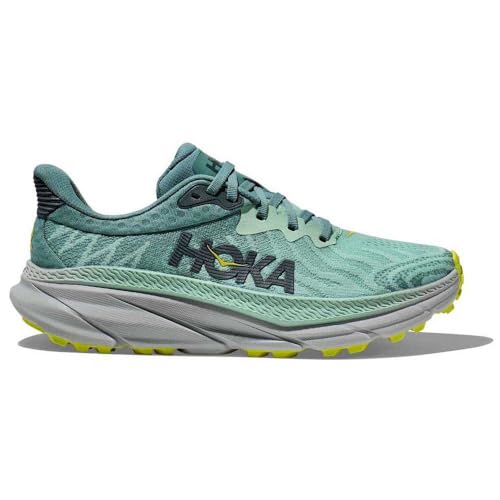
The HOKA Challenger 7 is a road-to-trail crossover built for walkers who split their miles between pavement and light trails. Its thick, cushioned midsole gives a soft, protective ride on hard surfaces, while the lugged rubber outsole provides the traction needed for gravel paths, packed dirt, and dry grassy slopes. The engineered mesh upper breathes well on warm days, and the shoe stays light enough that long days on foot feel manageable.
Key specs include a high-cushion midsole, a durable lugged outsole with multi-directional traction, a breathable engineered mesh upper, and a gusseted tongue that helps keep trail debris out of the shoe. The heel collar is padded for comfort, and the outsole rubber is placed across the main contact areas to resist wear on asphalt as well as on trails.
This pick suits walkers who want maximum cushioning for long days and who move between neighbourhood streets, park paths, and gentle trails in the same outing. It is a strong choice if you cover a lot of distance on hard ground before reaching the trailhead, or if you want one pair that handles a daily walk and a weekend woodland route equally well. The roomy, cushioned feel also works well for walkers who are on their feet for hours at a time.
Points to note: the tall, soft cushioning can feel less planted on very steep or technical rocky ground than a lower, firmer trail shoe, so it is best for light to moderate trails rather than scrambling. The mesh upper is breathable rather than waterproof, so feet will get wet in heavy rain or deep puddles. Because the cushioning is generous, try the shoe on with your usual walking socks and take a few laps around the shop to check that the heel stays secure.
Merrell Women’s Antora 4

The Merrell Women’s Antora 4 is a women’s-specific trail sneaker designed for walkers who spend most of their time off the pavement. It combines a lightweight, breathable mesh upper with a grippy outsole and a protective toe, making it a natural fit for gravel tracks, forest paths, and uneven terrain. Merrell builds this model on a women’s-specific last, which many walkers find gives a more secure heel fit and a more comfortable forefoot shape than a unisex design.
Key specs include a FloatPro foam midsole for lightweight cushioning, a Quantum Grip rubber outsole with aggressive lugs for traction on loose and uneven ground, a breathable engineered mesh upper with supportive overlays, and a reinforced toe cap for protection against rocks and roots. The shoe also has a flexible forefoot that bends naturally with the walking stride.
This pick suits walkers who lean more towards the trail side of the walking and hiking balance. If your regular routes include woodland paths, canal banks, rocky park trails, or hilly terrain, the Antora 4 gives you the grip and protection those surfaces demand while staying far lighter and more flexible than a hiking boot. It is also a good option for walkers with narrower heels who struggle to find a secure fit in unisex trail shoes.
Points to note: the cushioning is lighter and firmer than a maximum-cushion road shoe, so if your walks are mostly on concrete and asphalt, you may prefer a more heavily cushioned crossover. The aggressive lugs grip well on trails but can feel firm underfoot on long stretches of hard pavement. As with any trail shoe, check the fit after a longer walk, since feet swell in heat and on hilly routes.
New Balance Women’s Fresh Foam X Hierro v8
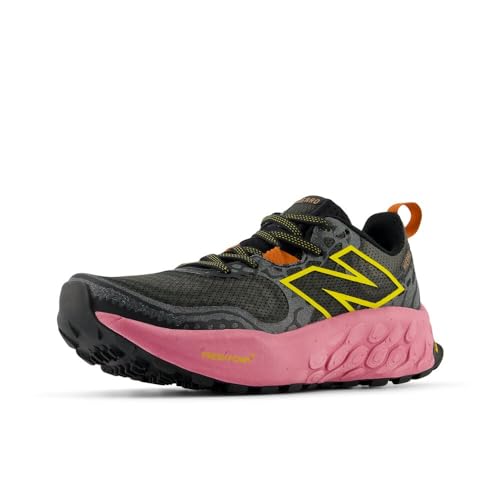
The New Balance Women’s Fresh Foam X Hierro v8 is a trail running shoe that doubles as a strong walking and hiking crossover, thanks to its deep cushioning and serious outsole. The Fresh Foam X midsole is thick and protective, which helps on long days, while the Vibram outsole delivers confident grip on loose gravel, wet leaves, and rocky paths. A Toe Protect overlay shields the front of the foot, and the breathable mesh upper keeps airflow moving on warm climbs.
Key specs include a Fresh Foam X midsole for soft, sustained cushioning, a Vibram Eco-Step outsole with aggressive lugs for trail traction, a Toe Protect reinforced front, a breathable synthetic and mesh upper, and a 6 mm heel-to-toe drop that suits a natural walking stride. The shoe is built with a roomy forefoot for its category, which helps on descents when toes need space.
This pick suits walkers who want a cushioned, protective shoe for rougher trails and longer distances. If your hikes include steep descents, loose scree, or muddy stretches, the Vibram outsole and toe protection give real confidence. It also works well for walkers who like a soft, plush feel underfoot but need more grip than a road walking shoe can offer.
Points to note: the Hierro v8 is a substantial shoe, so it feels heavier and more built-up than a minimalist trail sneaker. The deep lugs are excellent on trails but can feel pronounced on flat indoor floors. If you walk mostly on pavement with only occasional gentle trails, a lighter crossover may feel more natural. Make sure to choose your usual walking size, and check that the heel collar sits comfortably around your ankle before committing to a long first walk.
Comparison Table
| Feature | HOKA Challenger 7 | Merrell Antora 4 | New Balance Hierro v8 |
|---|---|---|---|
| Best for | Pavement plus light trails | Mostly trail walking | Rough trails and long days |
| Cushioning | High, soft | Light, responsive | High, plush |
| Outsole grip | Lugged, multi-directional | Aggressive Quantum Grip lugs | Vibram lugged outsole |
| Toe protection | Moderate overlay | Reinforced toe cap | Toe Protect overlay |
| Upper | Breathable engineered mesh | Breathable mesh with overlays | Breathable mesh and synthetic |
| Women’s-specific fit | Women’s sizing | Women’s-specific last | Women’s sizing |
| Weight feel | Light for its cushioning | Light and nimble | Substantial, protective |
| Water resistance | Breathable, not waterproof | Breathable, not waterproof | Breathable, not waterproof |
Which One Is Right for You?
Choose the HOKA Challenger 7 if most of your miles are on pavement and hard-packed paths, with trails as a regular but secondary part of your routine. Its generous cushioning is the most forgiving of the three on concrete and asphalt, and the lugged outsole is more than enough for gravel, grass, and gentle dirt trails. It is the best all-rounder for a walker whose week mixes city streets, park loops, and weekend nature walks.
Choose the Merrell Antora 4 if your heart is on the trail. When your regular routes are woodland paths, hilly terrain, and uneven ground, the women’s-specific fit, grippy outsole, and protective toe cap make it the most trail-focused of the three, while still feeling like a sneaker rather than a boot. It is the pick for walkers who want agility and ground feel on natural surfaces.
Choose the New Balance Fresh Foam X Hierro v8 if your hikes are longer, steeper, or rougher, and you want maximum protection underfoot. The plush Fresh Foam X cushioning and Vibram outsole handle descents, loose surfaces, and long days better than a lighter crossover, and the Toe Protect overlay is genuinely useful on rocky paths. It is the pick for walkers who prioritise grip and underfoot protection above all else.
If you are still unsure, think about your last ten walks. Count how many were mostly pavement and how many were mostly trail. The majority surface should decide the pick, because a shoe that excels on your most common terrain will serve you best overall. Break any new pair in gradually with shorter walks before a full-day route.
Frequently Asked Questions
Can one pair of sneakers really work for both walking and hiking?
Yes, for light to moderate hiking. A crossover sneaker with a lugged outsole, toe protection, and durable cushioning handles pavement, gravel, packed dirt, and gentle rocky trails well. It is not a substitute for a stiff hiking boot on steep, technical, or very rough mountain terrain, where ankle support and a rigid sole matter more. For mixed walks, park trails, and day hikes on established paths, a good crossover is often the most comfortable choice.
Should I size up in a walking and hiking sneaker?
Many walkers go up half a size from their everyday shoe size, because feet swell during long walks and on descents your toes need room to move forward. However, sizing up too much can cause heel slipping, which leads to blisters. The safest approach is to try the shoe on late in the day, when your feet are at their largest, wearing the socks you will walk in. There should be about a thumb’s width of space in front of your longest toe, and the heel should stay put when you walk uphill.
How do I keep trail sneakers from wearing out quickly?
Rotate between two pairs if you walk daily, so the foam has time to recover between outings. Clean off mud after trail walks and let the shoes air dry away from direct heat, which can damage adhesives and foam. Replace the shoes when the outsole lugs are worn smooth, the midsole feels flat and unresponsive, or the upper develops holes at flex points.
What socks work best with walking and hiking sneakers?
Moisture-wicking socks made from merino wool or synthetic blends are the best match, because they move sweat away from the skin and reduce friction. Choose a cushion level that matches your shoe fit: a thick sock in a snug shoe can make it too tight, while a thin sock in a roomy shoe can allow slipping. Crew-length socks protect the ankle from the shoe collar and from trail debris, and a smooth, flat toe seam helps prevent blisters on long days.
Disclosure: As an Amazon Associate, we may earn from qualifying purchases.
Related guides
More from Amazon
Programs that pair well with the guide above. Offers and eligibility are set by Amazon and may change.
Free shipping on eligible items, Prime Video and more. Eligible new members can start with a free trial.
Start a Prime free trialAd-free music streaming. Eligible new subscribers can start with a free trial.
Try Music Unlimited freeA Prime membership for ages 18-24 with a trial period. Eligibility is set by Amazon.
See Prime for Young AdultsAudiobooks and podcasts to listen to on the go. Eligible new members can start with a free trial.
Try Audible freeAs an Amazon Associate we earn from qualifying purchases.
Write Your Review
No reviews yet. Be the first to share your experience!