
Key takeaways
- Find harness car seats for a 5-year-old with autism, using only listing limits, SensorSafe alerts, and honest notes on sensory needs and fit.
What's inside
As an Amazon Associate I earn from qualifying purchases. This post may contain affiliate links at no extra cost to you.
For families of children with autism, the car seat decision is rarely about a label on the box. It is about whether a child stays buckled for the whole ride, tolerates the harness and fabrics against their skin, and still fits inside the weight and height limits printed for that exact seat. A five-year-old who unbuckles mid-trip or finds a chest clip position distressing needs a practical fit check, not a promise that any seat solves sensory needs on its own.
This guide is for parents and caregivers comparing ordinary harness seats and one buckle accessory on the facts their listings actually state. Every range below comes from the Amazon listing for that model. Where a listing names a relevant feature, such as an alert when a chest clip opens, that feature is described in the listing’s own terms and no further.
Quick Picks
As an Amazon Associate we earn from qualifying purchases.
| Product | Best for | Key spec from title |
|---|---|---|
| Cybex Sirona S with SensorSafe | Caregivers who want a chest clip alert | SensorSafe technology in chest clip |
| Diono Radian 3QXT SafePlus | Narrow back seats and three-across plans | 17 inches wide, folds flat |
| Chicco MyFit ClearTex Harness + Booster | Staying in a padded 5-point harness longer | Harness mode 26.5-65 lbs |
| Britax Grow With You ClickTight | One-hand harness and headrest adjustment | 9-position harness and headrest |
| Eztotz BuckleShield | Covering the vehicle buckle that holds a seat in place | Seat belt lock cover, universal fit |
How to Choose
Start With Weight, Height, and the Harness Ceiling
Ignore age as the deciding number and measure your child first. A five-year-old belongs in a harness only while their weight and standing height stay inside the harness range printed for that seat and the harness straps still sit correctly on their shoulders. Compare those two figures against each listing here: several harness modes end at 65 lbs, while overall seat limits that reach higher figures belong to booster use and must never be read as harness room. Check the label on the physical seat as well, because the label and manual govern if a listing summary and the seat itself ever differ.
Think Honestly About Buckling and Unbuckling
If your child works at the chest clip or buckle during trips, separate two different problems before buying anything. One is the child’s own harness, which a caregiver buckles and checks before moving. The other is the vehicle belt buckle that holds an installed seat in place. An accessory that covers the second buckle does not change the first one, and its own listing may limit where it can be used. The Sirona S listing names SensorSafe technology in the chest clip, described on the listing as an alert when the chest clip is unbuckled. That is an alert for the caregiver, not a lock, and it should be weighed as exactly that.
Consider Sensory Needs Without Assuming a Fix
Sensory needs differ widely between children with autism, so use fabric, padding, and headrest descriptions as starting points for an in-person check rather than as guarantees of comfort. Only features a listing actually states are mentioned in this guide: one seat names stay-put harness pads intended to keep straps from rubbing the neck, another names dual-density foam padding, and several name multi-position headrests. None of that tells you how a particular child will react to a texture or to pressure on the shoulders. If possible, let your child sit in a seat before committing, and involve the professionals who already know them.
Plan the Next Mode Before You Need It
A child who still needs a harness today may outgrow its ceiling by weight, by height, or by harness strap position sooner than expected. Note what each seat becomes next: some convert to a high-back booster, one rotating convertible has no booster mode named in its banked listing details, and one pick here is an accessory rather than a seat at all. Knowing the next step in advance helps you avoid a rushed purchase on the week a limit is reached. Also check the expiration label on any seat already in your vehicle before assuming it can simply be handed down or kept longer.
The 5 Best Options
Cybex Sirona S with SensorSafe

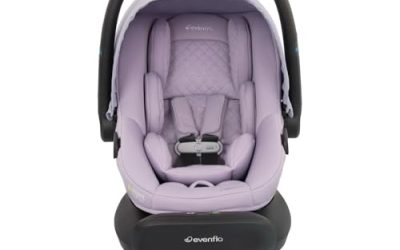
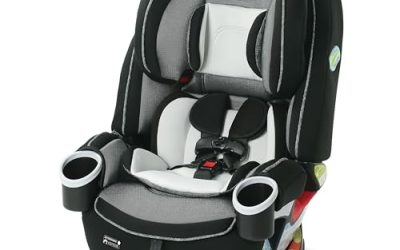
The Sirona S earns its place here for one specific, listing-stated reason: its title names SensorSafe technology in the chest clip, and the listing describes that system as alerting a caregiver when the chest clip is unbuckled. For a family whose five-year-old fiddles with the chest clip, an alert is a concrete piece of information, separate from any broader claim. The seat itself is a rotating convertible with rear-facing use from 4 to 50 lbs and forward-facing use from 22 to 65 lbs, so a child at five would ride forward-facing inside that range if their height also fits.
Specs
- Rear-facing: 4 to 50 lbs
- Forward-facing: 22 to 65 lbs
- Maximum height: 49 inches
- Rotation: 360-degree swivel on base, one-hand
- Recline positions: 12
- SensorSafe technology in chest clip named in title
- Load leg and linear side-impact protection named in listing copy
Best for: Caregivers who want the chest clip alert named on this listing, inside a rotating convertible.
Watch out for: There is no booster mode in these listing details, so the 65 lbs forward-facing ceiling is the end of this seat’s use.
ASIN: B085S7JJ2S
Diono Radian 3QXT SafePlus

The Radian 3QXT is a straightforward factual pick: its listing gives a forward-facing harness range of 22 to 65 lbs and a slim 17-inch width that folds flat. That narrow profile can matter when a caregiver needs to sit beside a child in the back seat, or when siblings share the row, because space beside the seat is sometimes part of the daily routine. The listing also names a high-back booster range of 40 to 120 lbs for later use. Nothing on the listing presents this seat as made for any medical or developmental need, and this guide does not either.
Specs
- Rear-facing: 4 to 50 lbs
- Forward-facing harness: 22 to 65 lbs
- High back booster: 40 to 120 lbs
- Maximum height: 57 inches
- Headrest: 12 positions
- Width: 17 inches, folds flat
- Item weight: 32 pounds
- Dimensions: 16 x 17 x 28.5 inches
Best for: Families who need a narrow harness seat now and a high-back booster in the same seat later.
Watch out for: The 120 lbs figure is the booster total, not harness room; the harness ends at 65 lbs.
ASIN: B084Q46Y8R
Chicco MyFit ClearTex Harness + Booster

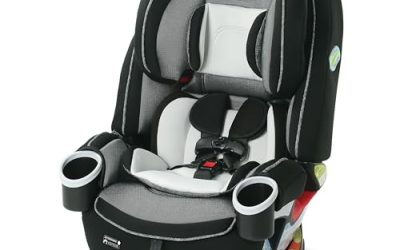
The MyFit is a forward-facing harness booster whose listing states a padded, easy-adjust 5-point harness system and a harness mode for children from 26.5 to 65 lbs and up to 54 inches tall. For a five-year-old who should remain harnessed, that ceiling is the central fact, and the listing’s 9-position headrest and 4-position recline describe how the seat adjusts as a child grows. The listing also names an extra deep, contoured ErgoBoost seat with dual-density foam padding. Those are the listing’s comfort words, offered here so caregivers can check the feel in person rather than assume it suits every child.
Specs
- Harness mode: 26.5 to 65 lbs, up to 54 inches
- Booster mode: 40 to 100 lbs, up to 57 inches
- Harness: padded, easy-adjust 5-point harness system
- Headrest: 9 positions
- Recline: 4 positions
- Installation: belt lock-off or LATCH system
- Item weight: 25 pounds
Best for: A five-year-old staying in a padded 5-point harness, with a high-back booster step built in.
Watch out for: This seat is forward-facing only, and booster use still requires meeting the booster minimums on the listing.
ASIN: B0B5HM5FYB
Britax Grow With You ClickTight

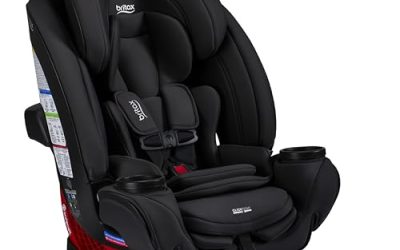
The Grow With You ClickTight listing states a 5-point harness with forward-facing use from 25 lbs and a harness ceiling of 65 lbs, followed by a belt-positioning booster mode within an overall maximum of 120 lbs. Two listing details may matter for daily buckling routines: the harness and headrest adjust across 9 positions with one hand and no rethreading, and the listing names stay-put harness pads intended to keep a child’s neck from rubbing against the harness strap. Installation uses ClickTight, which the listing describes in three steps: open, buckle and close. As with every seat here, the listing makes no claim about developmental needs.
Specs
- Forward-facing minimum child weight: 25 pounds
- Forward-facing harness maximum: 65 pounds
- Maximum weight recommendation: 120 pounds, for booster use overall
- Harness type: 5-Point
- Harness and headrest: 9 positions, one-hand adjustment, no rethreading
- Installation: ClickTight technology
- Item weight: 25 pounds
- Dimensions: 21 x 19 x 25 inches
Best for: Caregivers who adjust the harness often and want the stay-put harness pads named on the listing.
Watch out for: The listing page for this variant showed other sellers rather than a featured offer at crawl time, so confirm availability before planning around it.
ASIN: B0BDSX1L2L
Eztotz BuckleShield Seat Belt Lock Cover

This fifth pick is not a car seat. The BuckleShield is a small ABS plastic cover that, in the listing’s words, is designed to prevent the accidental release of a seatbelt buckle on a carseat, slipping over the vehicle buckle and releasable by adults with any slim item or another buckle. Used alongside a harness seat installed with the vehicle belt, it addresses the buckle that holds the seat in place. It does not cover or lock your child’s own harness buckle, and it is not a restraint on its own. Read its warning below before considering it, and check your car seat manual about accessories.
Specs
- Type: seat belt lock cover accessory, not a car seat
- Material named on listing: ABS plastic
- Item weight: 1.41 ounces
- Package dimensions: 6.06 x 4.8 x 0.63 inches
- Fit described on listing: slips over virtually any buckle
- Adult release described on listing: with any slim item or another buckle
Best for: Guarding the vehicle buckle that secures a belt-installed harness seat, within the listing’s stated limits.
Watch out for: The listing’s own safety warning says it is only for use on seatbelts that hold carseats in place, not for use on a primary restraint seatbelt.
ASIN: B07KJVGVGS
Which One Fits Your Situation
Your Child Keeps Opening the Chest Clip
Start with the Sirona S, because its listing is the one that names SensorSafe technology in the chest clip and describes an alert when that clip is unbuckled. Read the alert as information for the driver, not as a barrier, and pull over safely to re-buckle rather than reaching back while moving. If the behaviour continues, raise it with your child’s doctor or therapist, who can suggest strategies beyond seat choice.
Space Beside the Seat Matters Every Day
Choose the Radian 3QXT when an adult or sibling needs room alongside. Its listing gives a 17-inch width and a flat fold, the narrowest profile in this group, while still offering a 22 to 65 lbs harness range for a five-year-old who fits by height as well. Measure your back seat before ordering, because vehicle seat shapes vary and a narrow listing width does not guarantee a three-across fit in every car.
You Want the Harness Stage to Last
Look at the MyFit or the Grow With You ClickTight, both forward-facing harness boosters with harness ceilings of 65 lbs on their listings. The MyFit states its harness height limit as up to 54 inches, while the Britax adjusts its harness and headrest across 9 positions with one hand. Either way, the booster mode that follows should wait until your child meets its minimums and can sit correctly with a vehicle belt for the entire trip.
The Vehicle Buckle Holding the Seat Gets Pressed
Consider the BuckleShield only for the narrow job its listing describes: covering the vehicle buckle that holds a belt-installed car seat in place. Its own warning excludes use on a primary restraint seatbelt, so it is not an answer for a booster rider’s belt or for a child’s harness buckle. Confirm compatibility with your vehicle’s buckles, as the listing’s legal note instructs, and stop using it if release becomes awkward for adults.
Common Mistakes
- Assuming any seat is made for children with autism when its listing never says so, and buying on that assumption instead of on fit.
- Reading a 120 lbs overall limit as harness capacity, when the harness on those seats ends at 65 lbs.
- Using a buckle cover on a child’s own restraint belt, against the accessory listing’s own safety warning.
- Keeping a child in a harness after they pass its weight or height limit, because the seat still looks roomy.
- Skipping a sitting trial and a talk with the child’s own professionals when sensory needs drive the purchase.
Frequently Asked Questions
Is any car seat made specifically for children with autism?
No seat in this guide is presented that way, because none of these listings makes that claim. These are ordinary harness seats and one buckle accessory, chosen for listing-stated features such as a chest clip alert, harness range, width, or padding descriptions. Families with specific medical or postural needs should ask their child’s doctor or therapist whether a specialised seat, arranged through professional channels, is more appropriate.
How long should a five-year-old with autism stay in a harness?
Base the decision on the seat’s printed limits and on behaviour, not age alone. A child can stay harnessed while weight and height remain inside the harness range, here up to 65 lbs on several listings, and the straps fit correctly. Moving to a booster also requires sitting properly with the vehicle belt for the whole trip. Your child’s doctor or therapist can help weigh readiness alongside those limits.
What help exists for families who need a specialised seat?
Support routes vary, and this guide does not name specific programmes because eligibility and availability differ by place and by insurer. A practical starting point is your child’s doctor, occupational therapist, or physical therapist, who can document needs and point you toward funding or loan programmes for special-needs restraints in general terms. A certified child passenger safety technician can also check the fit of a standard seat in the meantime.
Can I add accessories to make a standard seat work better?
Only with caution. The buckle cover here carries its own warning limiting it to seatbelts that hold car seats in place, and car seat manuals commonly restrict unapproved additions. Check the manual for your exact seat, confirm any accessory does not interfere with buckling or release, and ask a certified technician if unsure. Never place padding behind or under a child unless the seat maker allows it.
Related guides
More from Amazon
Programs that pair well with the guide above. Offers and eligibility are set by Amazon and may change.
Free shipping on eligible items, Prime Video and more. Eligible new members can start with a free trial.
Start a Prime free trialAd-free music streaming. Eligible new subscribers can start with a free trial.
Try Music Unlimited freeA Prime membership for ages 18-24 with a trial period. Eligibility is set by Amazon.
See Prime for Young AdultsAudiobooks and podcasts to listen to on the go. Eligible new members can start with a free trial.
Try Audible freeAs an Amazon Associate we earn from qualifying purchases.

Write Your Review
No reviews yet. Be the first to share your experience!