
Key takeaways
- Compare five car seats for a baby, from a removable infant carrier to convertibles that start rear-facing at 4 or 5 lbs, with inserts for small babies.
What's inside
As an Amazon Associate I earn from qualifying purchases. This post may contain affiliate links at no extra cost to you.
Choosing a car seat for a baby starts with one practical decision: do you want a carrier you can lift out of the car with a sleeping baby inside, or a convertible seat that stays installed and grows with your child? That choice shapes cost over time, how you handle errands in the first months, and how soon you will shop again. Neither answer suits every household, so start there before comparing colours or extra features.
This guide is for parents preparing for a first baby, families replacing an expired seat, and caregivers who need one seat that begins in the newborn period. The five models below were selected from their Amazon product names and listed specifications, focusing on rear-facing starting weights, newborn inserts or supports, and the upper limits that decide how long each seat can stay in use.
Quick Picks
As an Amazon Associate we earn from qualifying purchases.
| Product | Best for | Key spec from title |
|---|---|---|
| Graco 4Ever DLX | Families wanting one seat from birth through booster stages | Rear-facing 4 to 40 lbs |
| Graco Extend2Fit | Babies who may stay rear-facing longer by weight | Rear-facing 4 to 50 lbs |
| Chicco OneFit ClearTex | Newborns needing an insert starting at 5 lbs | Rear-facing 5 to 40 lbs |
| Chicco KeyFit 35 | Parents who want a removable infant carrier | Rear-facing 4 to 35 lbs |
| Chicco Fit360 | Caregivers who want a rotating convertible seat | Rear-facing 4 to 40 lbs |
How to Choose
Carrier or Convertible From the Start
A removable carrier, represented here by the KeyFit 35, clicks in and out of a base and lets you carry a sleeping baby into a home, cafe, or appointment without unbuckling the harness. A convertible stays fixed in the vehicle, so transfers mean lifting the baby alone. Families with one car and frequent short trips often value the carrier. Families who dislike buying a second seat within the first couple of years, or who have limited storage, often prefer starting with a convertible that continues forward-facing after the rear-facing stage ends.
Rear-Facing Starting Weight and Newborn Support
Look first at the lowest weight on the listing, not at a general newborn label. Four models here start rear-facing at 4 lbs, while the OneFit ClearTex starts at 5 lbs. That single pound matters for a small baby leaving hospital care. Then check what support the listing names for the smallest passengers: the OneFit ClearTex lists an infant insert for babies 5 to 11 lbs, the KeyFit 35 lists a newborn positioner for babies 4 to 11 lbs, and the Fit360 lists removable body support for infants 4 to 11 lbs. Follow each manual for when that support must be removed.
How Long the Rear-Facing Stage Can Last
Upper rear-facing limits differ enough to change your timeline. The Extend2Fit lists rear-facing use from 4 to 50 lbs, the widest rear-facing weight span in this group. The 4Ever DLX, OneFit ClearTex, and Fit360 each list rear-facing use up to 40 lbs, while the KeyFit 35 carrier lists up to 35 lbs with a maximum height of 32 inches. Weight alone does not decide the switch. Height limits and head position rules on the listing also apply, so a tall baby may outgrow a seat by height before reaching its weight ceiling.
Installation Method and Everyday Adjustments
Check how the seat installs in the vehicle you actually use. The 4Ever DLX and Extend2Fit list LATCH installation, the Fit360 names a LeverLock self-tensioning lock system, and the KeyFit 35 lists LATCH, a European belt path, or a belt lock-off. Harness adjustment also affects daily life: the 4Ever DLX lists 10 harness height positions, and the OneFit ClearTex lists a 10-position headrest with a 9-position ReclineSure leveling foot. Compare those listed details against your car, your parking space, and who will adjust the seat most often.
The 5 Best Options
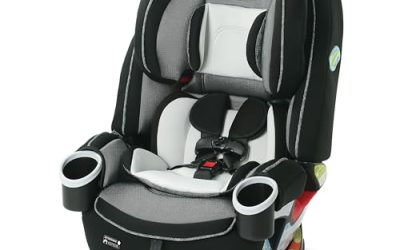
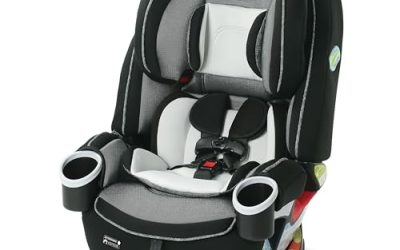
Graco 4Ever DLX

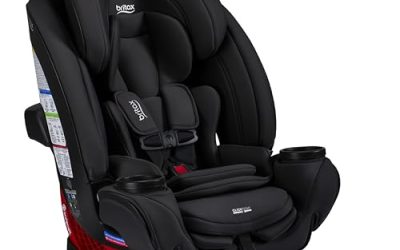
Parents who want to buy once and keep the same seat through several stages will find the 4Ever DLX the broadest option here. It begins rear-facing at 4 lbs, continues forward-facing, and carries a maximum weight overall of 120 lbs across its later stages, with the listing title stating 10 years of use. That long span suits a main family car where the seat will stay installed. Its 23-pound item weight and fixed installation mean it is not a seat you will move between vehicles casually, so plan on leaving it in place.
Specs
- Rear-facing: 4 to 40 lbs
- Forward-facing minimum: 22 lbs
- Forward-facing maximum: 65 lbs
- Maximum weight overall: 120 lbs, listed as 54 kilograms
- Maximum height: 57 inches
- Harness: 5-point, 10 height positions
- Installation type: LATCH
- Item weight: 23 pounds
- Dimensions: 20 x 21.5 x 24 inches
- Title states 10 years of use
Best for: Families who want one installed seat that starts rear-facing at 4 lbs and continues through later stages.
Watch out for: The 120 lbs figure is the maximum weight overall, not the harness limit; the forward-facing maximum listed is 65 lbs.
ASIN: B07J37RTPG
Graco Extend2Fit

The Extend2Fit suits babies who may remain rear-facing for a longer stretch, because its listing gives the highest rear-facing ceiling in this group at 50 lbs, starting from 4 lbs. A 4-position extension panel adds up to 5 inches of additional rear-facing legroom, according to the listing copy, which can make the later rear-facing months more comfortable. At 19 pounds it is the lightest convertible here, though still a seat meant to stay installed. Families focused mainly on the rear-facing years, rather than on booster stages, will get the clearest value from this model.
Specs
- Rear-facing: 4 to 50 lbs
- Forward-facing: 22 to 65 lbs
- Extension panel: 4-position, up to 5 inches of additional rear-facing legroom (listing copy)
- Rear-facing height rule on listing: head at least 1 inch below the top of the headrest
- Forward-facing maximum height: 49 inches
- Installation type: LATCH
- Harness: 5-point
- Item weight: 19 pounds
- Dimensions: 21.5 x 19.5 x 23.5 inches
Best for: Parents who prioritise a higher rear-facing weight limit and extra rear-facing legroom.
Watch out for: Check the rear-facing height rule on the listing, since head position can end rear-facing use before the 50 lbs weight limit is reached.
ASIN: B019EGMGR0
Chicco OneFit ClearTex

The OneFit ClearTex fits families who want a convertible that also reaches a booster mode, with booster use listed from 40 to 100 lbs after the harness stages. Its rear-facing range starts higher than the others here, at 5 lbs, and the listing names an infant insert for babies 5 to 11 lbs to support that starting range. A 10-position headrest and a 9-position ReclineSure leveling foot give a wide set of listed adjustments for installation angle and fit. At 25 pounds, it is a stay-in-the-car seat rather than one to swap between vehicles often.
Specs
- Rear-facing: 5 to 40 lbs
- Forward-facing: 25 to 65 lbs
- Booster mode: 40 to 100 lbs
- Maximum height: 57 inches
- Headrest: 10 positions
- Leveling foot: 9-position ReclineSure
- Infant insert for babies 5 to 11 lbs
- Item weight: 25 pounds
Best for: Families who want a convertible with a named infant insert and a later booster mode.
Watch out for: The rear-facing starting weight is 5 lbs, higher than the 4 lbs starting point listed for the other models in this guide.
ASIN: B09LKL9NWZ
Chicco KeyFit 35
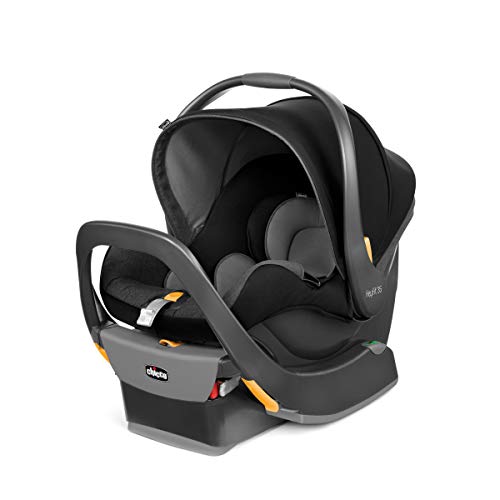
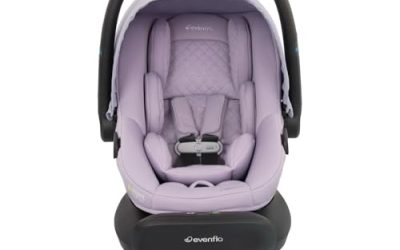
The KeyFit 35 is the only removable carrier in this group, and that difference defines its role. You can lift the carrier out with the baby buckled in, which helps with sleeping transfers, quick errands, and appointments during the first months. The listing gives rear-facing use from 4 to 35 lbs, a maximum height of 32 inches, and a newborn positioner for babies 4 to 11 lbs. Remember that the listed item weight of 18.5 pounds is for the product as sold, including the base, so it is not the weight of the carrier portion alone that you would carry.
Specs
- Rear-facing: 4 to 35 lbs
- Maximum height: 32 inches
- Headrest height positions: 5
- Harness: 5-point
- Newborn positioner for babies 4 to 11 lbs
- Installation: LATCH system, European belt path, or belt lock-off
- Canopy described on listing as UPF 50+ coverage
- Item weight: 18.5 pounds for the listed product
- Dimensions: 28 x 16.5 x 24 inches
Best for: Parents who want to move a sleeping baby in and out of the car without unbuckling the harness.
Watch out for: A carrier stage ends at 35 lbs or 32 inches on this listing, so a convertible seat will still be needed afterwards.
ASIN: B089HG2QTT
Chicco Fit360

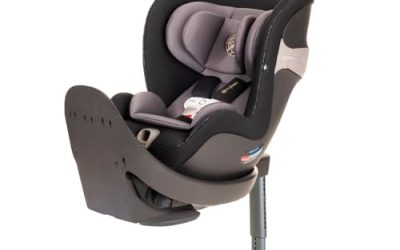
The Fit360 suits caregivers who load a baby from the side of the car many times a day and want the seat to turn toward them. Its listing describes 360-degree rotation with one hand, working in both rear-facing and forward-facing modes, plus a LeverLock self-tensioning lock system named in the title. Rear-facing use starts at 4 lbs, and the listing names removable body support for infants 4 to 11 lbs. The rear-facing maximum height is listed separately at 43 inches, within an overall maximum height of 49 inches, so check both figures when judging fit.
Specs
- Rear-facing: 4 to 40 lbs
- Forward-facing: 26.5 to 65 lbs
- Maximum height: 49 inches
- Rear-facing maximum height: 43 inches
- Rotation: 360 degrees, one-hand, works in rear-facing and forward-facing modes
- Installation: LeverLock self-tensioning lock system named in title
- Removable body support for infants 4 to 11 lbs (listing copy)
Best for: Caregivers who want a rotating convertible that still supports the 4 to 11 lbs newborn range.
Watch out for: Forward-facing use on this listing starts at 26.5 lbs, a higher minimum than the 22 lbs listed for the two Graco convertibles.
ASIN: B0CXBRJR9F
Which One Fits Your Situation
Your First Seat for One Main Family Car
Choose the 4Ever DLX if one vehicle handles nearly every trip and you want the longest overall span from a single purchase. It starts rear-facing at 4 lbs and lists a maximum weight overall of 120 lbs across its stages. Leaving it installed also avoids repeated fitting work. Measure your back seat first, since its listed dimensions are 20 x 21.5 x 24 inches.
A Baby Who May Rear-Face for a Long Time
Pick the Extend2Fit when the rear-facing years are your main concern. Its listing allows rear-facing use up to 50 lbs, higher than any other model here, and its extension panel adds up to 5 inches of rear-facing legroom. Keep tracking height as well as weight, because the listing also sets a head position rule that can end the stage sooner for a tall child.
Frequent Short Trips With a Sleeping Baby
Take the KeyFit 35 if your days involve several stops and you want to carry the baby inside without undoing the harness each time. The removable carrier format is its central advantage over the four convertibles. Plan ahead for the next seat, though, because this carrier lists limits of 35 lbs and 32 inches, and its listed product weight of 18.5 pounds includes the base.
Tight Parking Spaces and Daily Side Loading
Consider the Fit360 if you usually load the car in a narrow garage or a tight parking bay. Rotation toward the door can make buckling easier without reaching across the seat, and the listing confirms rotation in both rear-facing and forward-facing modes. Its removable body support covers infants from 4 to 11 lbs, so the newborn stage is addressed within the same installed seat.
Common Mistakes
- Choosing by age alone instead of checking the listed starting weight, so a 5 lbs minimum seat is bought for a smaller baby.
- Treating a maximum weight overall, such as 120 lbs, as if it were the harness or rear-facing limit for that seat.
- Leaving a newborn insert, positioner, or body support in place past the weight range named for it on the listing.
- Assuming a carrier and a convertible last the same length of time, without checking height limits as well as weight limits.
- Moving a fixed convertible between cars every day without weighing the effort against its listed item weight.
Frequently Asked Questions
Do I need a carrier before a convertible seat?
No. A carrier is a convenience choice, not a required first step. The KeyFit 35 lets you carry the baby out in the seat, while the four convertibles here start rear-facing at 4 or 5 lbs and stay installed. Decide based on how often you transfer a sleeping baby and whether you accept buying another seat after the carrier limits are reached.
When does a baby outgrow the KeyFit 35 carrier?
On its listing, the KeyFit 35 covers rear-facing use from 4 to 35 lbs with a maximum height of 32 inches. Reaching either limit ends the stage, even if the other limit has not been reached. At that point the baby needs a convertible seat used rear-facing, chosen by its own listed weight and height ranges.
What does a newborn insert or positioner actually do?
It supports fit for the smallest babies within a stated weight range. The listings here name an infant insert for 5 to 11 lbs on the OneFit ClearTex, a newborn positioner for 4 to 11 lbs on the KeyFit 35, and removable body support for 4 to 11 lbs on the Fit360. Remove each support when the manual says to, not by guesswork.
Can one seat really cover a baby through booster age?
Some models here list stages that reach that far. The 4Ever DLX lists a maximum weight overall of 120 lbs, and the OneFit ClearTex lists a booster mode from 40 to 100 lbs. Each stage has its own minimums and maximums, so a child must meet the listed limits for the next mode before moving to it, regardless of age.
Related guides
More from Amazon
Programs that pair well with the guide above. Offers and eligibility are set by Amazon and may change.
Free shipping on eligible items, Prime Video and more. Eligible new members can start with a free trial.
Start a Prime free trialAd-free music streaming. Eligible new subscribers can start with a free trial.
Try Music Unlimited freeA Prime membership for ages 18-24 with a trial period. Eligibility is set by Amazon.
See Prime for Young AdultsAudiobooks and podcasts to listen to on the go. Eligible new members can start with a free trial.
Try Audible freeAs an Amazon Associate we earn from qualifying purchases.

Write Your Review
No reviews yet. Be the first to share your experience!